
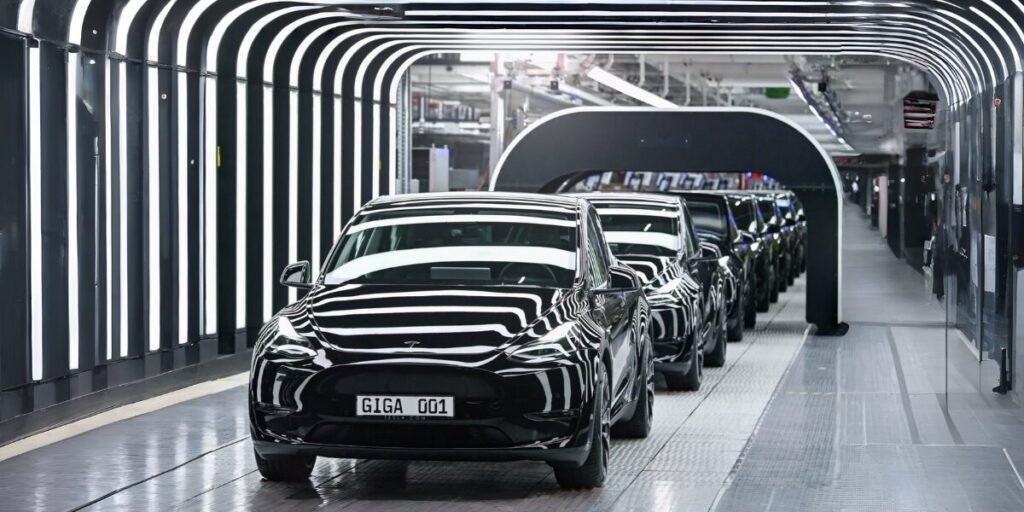
US EV Production Investments Accelerate Across the Automotive Industry
US EV Production Investments are rapidly increasing as automakers expand electric vehicle manufacturing operations to meet rising domestic demand and benefit from federal clean energy incentives.
Major automotive companies are investing billions of dollars into EV assembly plants, battery production facilities, and charging infrastructure across the United States. Industry experts believe the shift toward electric vehicles is becoming one of the most important transformations in modern automotive history.
Growing consumer interest in sustainability and fuel efficiency is pushing manufacturers to accelerate EV production strategies.
For official automotive industry updates, visit
US Department of Energy
Why US EV Production Investments Are Rising
The rapid growth of US EV Production Investments is being driven by multiple economic and policy factors.
Government incentives, environmental regulations, and advances in battery technology are encouraging automakers to expand electric vehicle production capacity nationwide.
Key Drivers Behind EV Expansion
- Federal clean energy incentives
- Rising consumer demand for EVs
- Battery technology improvements
- Expansion of charging infrastructure
- Lower long-term operating costs
These factors are helping accelerate the transition from traditional fuel-powered vehicles to electric transportation.
Read more clean energy updates on
Reuters Autos & Transportation
Automakers Expand Manufacturing Facilities
Large-scale factory expansion remains a major part of the US EV Production Investments strategy.
Automotive companies are building new EV manufacturing plants while upgrading existing facilities to support electric vehicle assembly and battery production.
Several states are becoming major hubs for EV manufacturing due to favorable regulations and workforce availability.
Major Areas of Investment
- Battery manufacturing plants
- EV assembly facilities
- Charging infrastructure networks
- Semiconductor supply chains
- Advanced robotics and automation
These investments are expected to create thousands of new manufacturing jobs across the country.
Learn more about electric vehicle innovation at
Tesla Official Website
Battery Production Becomes a Critical Priority
Battery technology plays a central role in the future of US EV Production Investments.
Automakers are increasing domestic battery production to reduce supply chain dependency and improve long-term manufacturing stability.
Lithium-ion battery demand is expected to rise significantly as EV adoption continues expanding globally.
Why Battery Manufacturing Matters
- Improves supply chain security
- Reduces production costs
- Supports faster EV production
- Strengthens domestic manufacturing
- Encourages clean energy innovation
Industry analysts believe battery efficiency improvements could make EVs more affordable in the coming years.
For battery technology insights, visit Panasonic Energy
Federal Incentives Continue Supporting EV Growth
Government policy remains one of the biggest drivers behind US EV Production Investments.
Federal tax credits and clean energy programs are encouraging both manufacturers and consumers to adopt electric vehicles more aggressively.
Several states are also introducing additional incentives to attract EV-related investments and manufacturing operations.
Benefits of Federal EV Incentives
- Increased consumer affordability
- Faster EV adoption rates
- Expansion of charging stations
- Growth in domestic manufacturing
- Reduction in carbon emissions
Experts believe government support will continue playing a major role in the EV transition throughout 2026.
Read more about sustainability initiatives at US Environmental Protection Agency
Challenges Facing the EV Industry
Despite strong momentum, the EV industry still faces several operational challenges.
The expansion of US EV Production Investments requires large amounts of raw materials, advanced semiconductors, and stable energy infrastructure.
Supply chain disruptions and rising manufacturing costs remain major concerns for automakers.
Key Challenges for EV Manufacturers
- Battery material shortages
- Semiconductor supply constraints
- High production costs
- Charging infrastructure limitations
- Market competition pressures
However, industry leaders remain optimistic about long-term EV market growth.
For automotive market coverage, visit CNBC Autos
Future Outlook for US EV Production Investments
The future of US EV Production Investments appears highly positive as electric vehicles become more mainstream across the automotive sector.
Industry analysts expect continued expansion in EV manufacturing, battery innovation, and charging infrastructure over the next several years.
Automakers are likely to remain focused on improving production efficiency, affordability, and vehicle performance.
As consumer demand and government support continue growing, electric vehicles could become one of the largest sectors driving future industrial and clean energy growth in the United States.
For additional industry updates, visit Bloomberg Energy
Internal Links
Read our latest analysis on
Electric Vehicle Market Growth
Explore our detailed report on
Battery Manufacturing Industry Analysis
Check our latest clean energy coverage at
Renewable Energy Investment Report
Discover more automotive market insights in
US Automotive Industry Trends

