
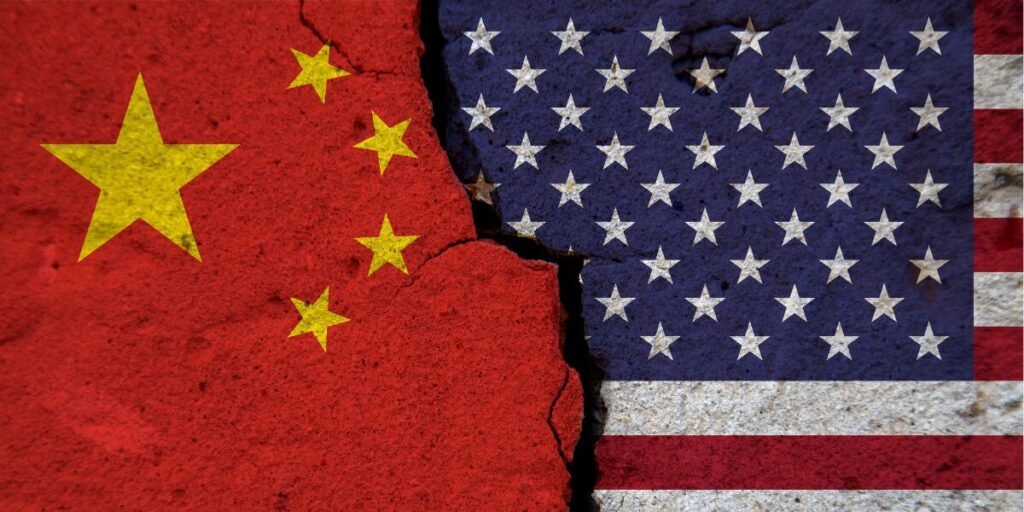
US-China Trade Tensions Create Global Industry Concerns
US-China Trade Tensions are once again creating uncertainty across global industries as both countries continue discussions around tariffs, trade restrictions, and advanced technology exports.
The latest developments are affecting international supply chains, semiconductor manufacturing, electronics production, and global investment activity. Businesses worldwide are closely monitoring the situation because the United States and China remain two of the most influential economies in the world.
Investors are becoming increasingly cautious as geopolitical uncertainty continues to impact financial markets and industrial growth forecasts.
Read more global market updates on
Reuters World News
Why US-China Trade Tensions Are Increasing
The latest US-China Trade Tensions are largely connected to advanced technology restrictions and ongoing tariff negotiations.
Governments are focusing heavily on protecting domestic industries and reducing dependency on foreign supply chains. Technology exports, especially semiconductors and AI-related systems, have become major areas of concern.
Key Reasons Behind the Tensions
- Semiconductor export restrictions
- National security concerns
- Technology competition
- Manufacturing dependency risks
- Tariff policy disagreements
These issues are reshaping international trade relationships and forcing companies to reconsider long-term business strategies.
Read more global market updates on
Reuters World News
Technology Export Restrictions Impact Global Industries
Technology companies remain heavily affected by the growing US-China Trade Tensions.
Restrictions on semiconductor exports and advanced AI technologies are creating uncertainty for manufacturers and suppliers worldwide.
Many businesses rely on Chinese manufacturing networks and US technology partnerships simultaneously. This creates operational challenges whenever trade restrictions increase.
Industries Most Affected
- Semiconductor manufacturing
- Consumer electronics
- Artificial intelligence
- Automotive production
- Telecommunications
Global technology firms are now exploring alternative manufacturing locations to reduce geopolitical risks.
Learn more about global technology policy at
World Economic Forum
Semiconductor Industry Faces Major Pressure
The semiconductor sector has become one of the biggest areas impacted by US-China Trade Tensions.
Advanced chips are essential for artificial intelligence, cloud computing, cybersecurity, and modern electronics. Restrictions on semiconductor exports could significantly influence global production capacity and pricing.
Industry analysts believe governments will continue investing heavily in domestic chip manufacturing to improve supply chain security.
Why Semiconductor Companies Are Concerned
- Rising production costs
- Export compliance challenges
- Supply chain disruptions
- Slower global trade flows
- Increased geopolitical uncertainty
These concerns are encouraging companies to diversify manufacturing operations globally.
For semiconductor industry insights, visit
Intel Official Website
Financial Markets Respond to Trade Uncertainty
Financial markets are reacting carefully to the latest US-China Trade Tensions developments.
Investors are monitoring trade negotiations closely because tariff increases and export restrictions can affect corporate earnings, manufacturing costs, and global economic growth.
Despite market volatility, analysts believe industries connected to domestic manufacturing and infrastructure investment could benefit over the long term.
Market Sectors Watching Trade Policies Closely
- Technology stocks
- Industrial manufacturing
- Logistics companies
- Automotive firms
- Semiconductor suppliers
Investor sentiment may continue fluctuating as new policy announcements emerge.
For financial market analysis, visit
CNBC Global Markets
Global Supply Chains Continue to Shift
One major result of the ongoing US-China Trade Tensions is the restructuring of global supply chains.
Companies are increasingly diversifying production locations across Asia, North America, and Europe to reduce exposure to geopolitical risks.
Many manufacturers are investing in regional supply chain networks to improve operational stability.
Business Strategies Emerging From Trade Tensions
- Nearshoring manufacturing operations
- Expanding domestic production
- Reducing supplier concentration
- Increasing inventory flexibility
- Investing in automation technologies
Experts believe these adjustments could permanently reshape global industrial operations.
Read more about international economic trends at
International Monetary Fund
Future Outlook for US-China Trade Tensions
The future of US-China Trade Tensions remains uncertain as both countries continue balancing economic competition with global trade stability.
Analysts expect technology restrictions and tariff discussions to remain major topics throughout 2026. Businesses may continue prioritizing supply chain diversification and domestic manufacturing investments.
Global industries will likely remain sensitive to future geopolitical developments and international policy changes.
However, many experts believe companies that adapt quickly to changing trade conditions could gain long-term competitive advantages.
For additional international business coverage, visit
Bloomberg Economics

