
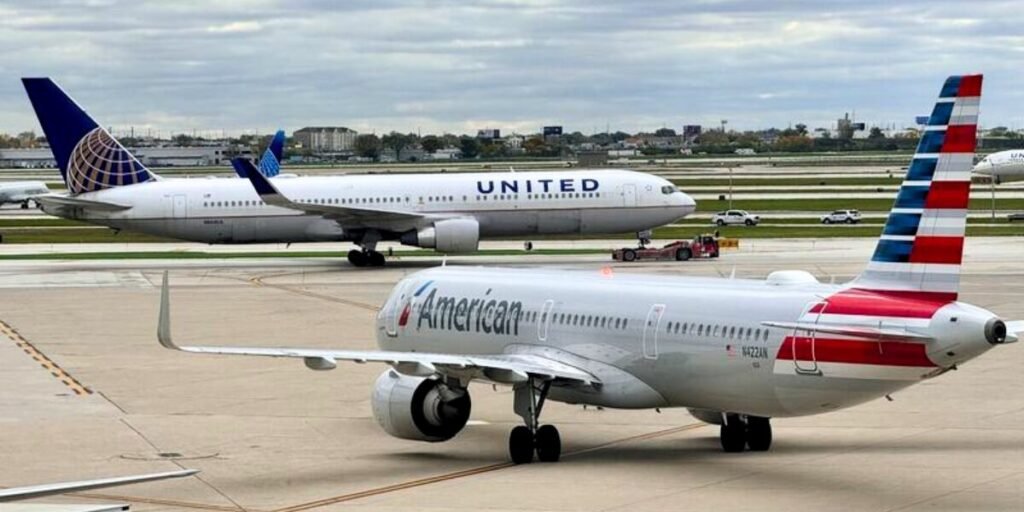
The aviation industry is buzzing following reports that a United American Airlines merger was reportedly pitched to President Donald Trump during a White House meeting on February 25, 2026. United Airlines CEO Scott Kirby allegedly floated the idea of combining the two carriers to create a dominant U.S. “National Champion” capable of competing more aggressively against foreign-flag airlines. +1
While no formal deal has been signed, the mere mention of a United American Airlines merger has sent shockwaves through Wall Street, with American Airlines (AAL) stock surging over 8% following the news.
The Logic Behind a United American Airlines Merger According to sources familiar with the discussion, Kirby’s pitch focused on the growing “trade deficit” in international aviation. Currently, nearly two-thirds of long-haul seats to and from the U.S. are operated by foreign carriers, despite 60% of those passengers being U.S. citizens. +1
Potential benefits of the merger include:
- Global Scale: A combined entity would be the largest airline in the world by seat capacity.
- Network Synergy: Harmonizing United’s massive Dulles and Chicago hubs with American’s Dallas and Miami strongholds.
- Cost Efficiency: Streamlining fleet maintenance and fuel procurement amidst rising jet fuel prices.
Significant Antitrust and Regulatory Hurdles Despite the potential for a “National Champion,” a United American Airlines merger faces a daunting path to approval. If realized, the new carrier would control approximately 33% to 40% of the U.S. domestic market, far surpassing Delta and Southwest.
The “Big Four” to the “Big Three” Since the early 2000s, the U.S. market has already consolidated from a dozen major airlines down to the “Big Four.” Antitrust experts suggest that the Department of Justice (DOJ) would likely demand massive asset “divestitures”—meaning the airlines would have to give up valuable landing slots at major airports like JFK, LAX, and O’Hare—to prevent a monopoly. +1
Impact on Passengers: Fares and Loyalty Programs For travelers, a United American Airlines merger brings both risks and rewards. The most immediate concern for consumers is the potential for higher ticket prices due to reduced competition on overlapping routes. Furthermore, the merger would force a historic union between the Star Alliance (United) and oneworld (American). Integrating these two global networks and their respective loyalty programs would be the most complex technical task in aviation history.

