
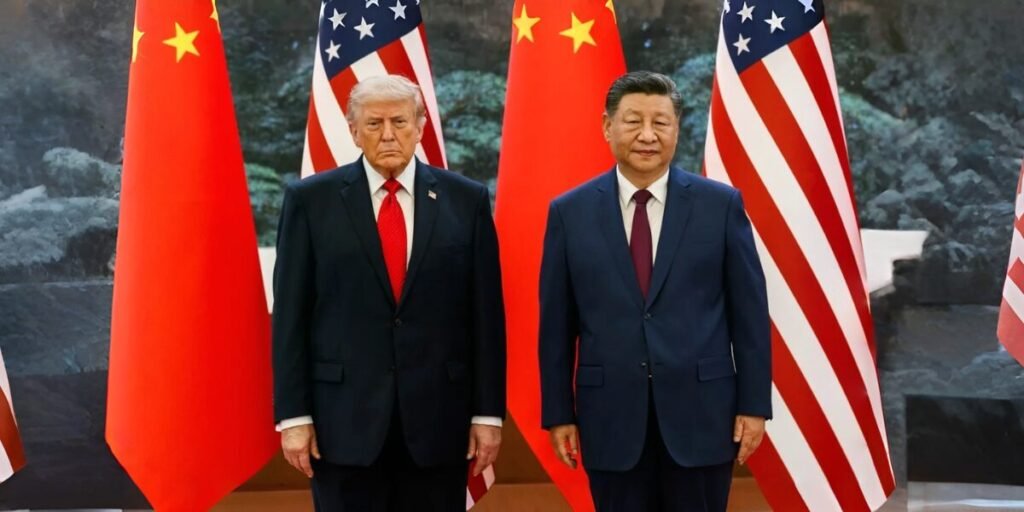
Global Market Selloff pressures have reached a critical flashpoint on Monday morning, May 18, 2026, as international equity benchmarks suffer steep contractions. Wall Street futures and European equity indexes dropped sharply following a highly anticipated weekend summit in Beijing between US President Donald Trump and Chinese President Xi Jinping that concluded with absolutely no major policy breakthroughs. The tech-heavy Nasdaq shed over 410 points in early trading, signaling a severe collapse in investor optimism as geopolitical friction points remain completely unresolved.
Compounding this diplomatic gridlock is a troubling macro backdrop. Stronger-than-expected inflation data released over the past week has forced a dramatic repricing of bond yields, with major global debt instruments flashing warnings unobserved in nearly two decades. With international equities abandoning hopes for near-term rate relief, the capital flight away from high-multiple tech giants is accelerating at an unprecedented pace. You can monitor live global index drops and currency tracking via the comprehensive Reuters Business Markets Desk.
Anatomy of the Global Market Selloff: The Three Shocks
To understand why the Global Market Selloff has intensified so rapidly, investors must look at the three converging catalysts that shattered market confidence over the weekend.
1. The Trump-Xi Summit Failure
The primary shock stems from the absolute lack of deliverables following Donald Trump’s state visit to China. While the rhetoric focused heavily on “strategic stability,” the reality is a brutal stalemate on trade, technology controls, and critical minerals. Xi Jinping conceded nothing to his U.S. rival, leaving pending tariffs unaddressed and creating massive operational uncertainty for multinational corporations tracking global supply chains.
2. The Strait of Hormuz Closure and $111 Oil
The second ominous variable driving the Global Market Selloff is the ongoing closure of the Strait of Hormuz. Because the Trump administration remains locked in a stagnant war with Iran, crude oil supply chains are severely constricted. Brent crude oil is now stubbornly locked in triple digits above $111 a barrel. For import-dependent global economies, this severe energy shock is triggering a massive stagflation scare.
3. The Bond Market Turmoil and Higher Rates
The third pillar of this global volatility is the historic bloodbath in global sovereign debt. Hot wholesale inflation has forced yields to multi-decade highs. As global rates move higher, incoming Federal Reserve Chair Kevin Warsh faces an uphill battle to stabilize inflation. Investors are scrambling to sell bonds, which has immediately put a dampener on buoyant equity risk sentiment.
How the Global Market Selloff Impacts Tech Valuations
The high-growth tech sectors are absorbing the worst of the damage. For months, AI-driven optimism lifted the indices past historic milestones. However, this current rate-driven Global Market Selloff leaves zero room for high-multiple asset appreciation. When the risk-free rate on a 30-year Treasury matches levels unseen in nearly two decades, paying premium valuations for speculative future earnings becomes highly unviable.
Furthermore, supply chains are under a severe pincer movement. Rising energy inputs mean it is costlier to run advanced data center infrastructure, while unresolved U.S.-China technology export bans limit international scaling. Tech companies are being squeezed from both ends, prompting institutional portfolio managers to aggressively trim exposure to semiconductor and software-as-a-service providers.
Global Market Selloff Trends and the Flight to Defensive Liquidity
The behavioral shift during this Global Market Selloff mirrors the cautious hoarding behavior seen in traditional value-centric entities. Instead of deploying capital into volatile equity tranches, money managers are piling into cash instruments and defensive commodities. The G7 finance chiefs meeting in Paris underscores the severity of this systemic shift, as monetary authorities look for ways to manage the global bond market turmoil.
For the readers of The Success Digest, the structural takeaway from this mid-May correction is clear. The narrative has officially transitioned from model innovation to physical resilience. Companies with massive cash reserves and low exposure to volatile energy inputs are the only entities positioned to outlast this period of macro tightening.
Internal Links
Read our latest cloud technology coverage on
Technology News.
Explore more AI industry insights at
AI Industry Updates.

