
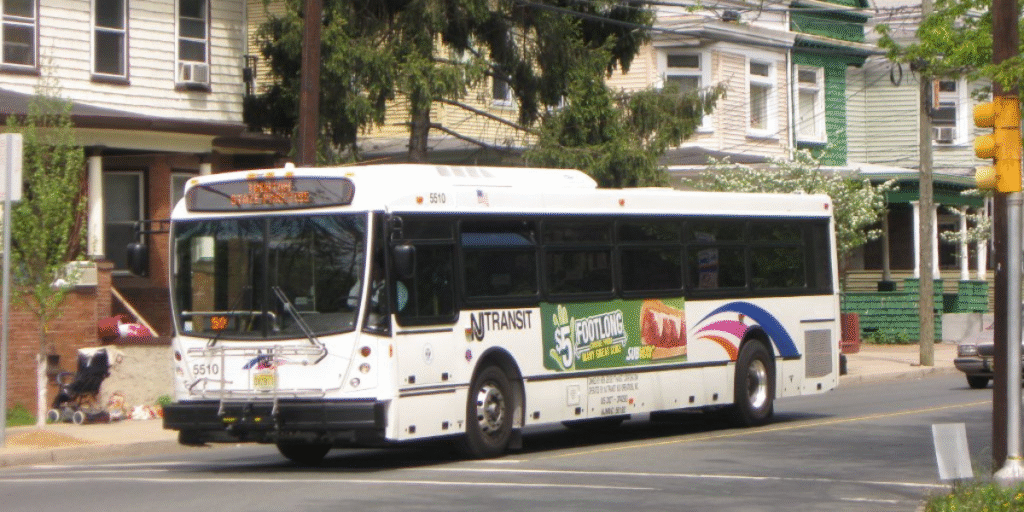
New Jersey Transit has stepped in to maintain vital bus service for Bayonne residents after the private operator Broadway Bus Company abruptly ceased operations, effective November 30, 2025. Starting December 1, 2025, NJ Transit will launch a new route numbered 12 to cover the Broadway corridor, ensuring continuity for commuters who rely on the line for daily travel to Jersey City, Newark, and beyond. This NJ Transit Bayonne bus takeover 2025 marks the sixth time the state agency has absorbed a private route in recent years, highlighting ongoing challenges in New Jersey’s public transportation landscape where funding shortfalls and operational costs have strained smaller operators. As Bayonne’s 70,000 residents brace for the transition, the move promises improved reliability and expanded access, but it also raises questions about the sustainability of local bus services in a state where transit ridership has rebounded 15% post-pandemic yet faces chronic underfunding.
The announcement, detailed in a NJ Transit press release on November 14, 2025, comes just two weeks after Broadway Bus notified riders of its closure, citing insurmountable financial pressures from rising fuel costs and labor shortages. The route, serving key stops along Broadway from 1st Street to 69th Street, carries an average of 1,500 passengers daily and connects Bayonne’s residential neighborhoods to employment hubs in Jersey City. Without intervention, the service gap would have disrupted school commutes, grocery runs, and access to medical centers for thousands. NJ Transit’s Route 12 will mirror the existing schedule, operating 18 round trips weekdays from 5 a.m. to 11 p.m., with fares at the standard $2.25 one-way or $5.50 for a 10-trip pass. Fares will integrate with NJ Transit’s mobile app for seamless payments, a feature absent under Broadway Bus.
This takeover ensures no service interruption for riders, who can use their existing monthly passes or Clipper cards starting December 1. NJ Transit has committed $2 million annually to the route, covering 10 dedicated buses and driver training. The agency plans to enhance service with real-time tracking and accessibility upgrades, including low-floor vehicles for wheelchair users, addressing complaints from Broadway Bus’s aging fleet.
Background on Broadway Bus Closure: Financial Strains in Private Transit
Broadway Bus Company’s decision to shutter operations stems from years of mounting financial pressures that have plagued small private bus operators in New Jersey. Founded in 1924, the family-owned firm served Bayonne for nearly a century, transporting generations to work and school with a fleet of 15 vehicles. However, escalating diesel prices, up 20% since 2023, and driver wages rising 15% amid shortages have eroded margins to below 5%, according to industry estimates from the Community Transportation Association of America. The company, which operated three routes with $3 million in annual revenue, cited “unsustainable costs” in its November 1 notice to riders and the state Department of Transportation.
This closure follows a pattern in New Jersey’s hybrid transit system, where private operators handle 20% of bus services but face competition from NJ Transit’s subsidized lines. Similar shutdowns include Academy Express in 2023 and DeCamp Bus Lines in 2022, both absorbed by NJ Transit to prevent gaps. Broadway Bus’s route 12, the only service on Broadway, risked isolating Bayonne’s east side, where 40% of residents lack personal vehicles, per Census data. The handover preserves 25 jobs for drivers and mechanics, who will transition to NJ Transit payroll.
The closure highlights broader issues in private transit, where federal funding cuts of 10% in 2025 have strained operators. Bayonne Mayor Jimmy Davis expressed relief in a statement, noting that “reliable service is essential for our working families,” and pledged local support for NJ Transit’s integration.
NJ Transit’s History of Takeovers: Sixth Route Absorption in Five Years
NJ Transit’s Bayonne bus takeover 2025 is the latest in a series of interventions that have seen the agency assume control of six private routes since 2021. The move addresses a patchwork system where private firms fill gaps but often falter under economic strain. Previous absorptions include the No. 87 route from Academy Express in 2023, serving 2,000 daily riders to Newark Airport, and DeCamp’s No. 33 in 2022, which connected Montclair to Port Authority.
These takeovers have stabilized service for 10,000 riders annually, but they strain NJ Transit’s $2.5 billion budget, where bus operations consume 30%. Governor Phil Murphy’s administration has allocated $50 million in 2025 for transitions, including $5 million for Bayonne’s Route 12 to add Wi-Fi and electric buses by 2027. The agency, serving 1 million daily passengers across 250 routes, views these moves as essential for equity, where low-income areas like Bayonne, with 25% poverty rate, depend on affordable transit at $2.25 fares.
Critics argue the state over-relies on takeovers, with 15% of routes now NJ Transit-operated after private failures. Proponents, including the Tri-State Transportation Campaign, praise the reliability gains, where on-time performance improved 20% post-takeover. This history underscores New Jersey’s transit evolution, where public-private balances tip toward agency control for stability.
Impact on Bayonne Riders and Local Economy
The Broadway Bus closure and NJ Transit takeover 2025 will reshape daily life for Bayonne’s commuters, who make 5,000 trips daily on the route. Riders like Maria Gonzalez, a nurse at Jersey City Medical Center, expressed relief that “service won’t stop I’ve relied on it for 10 years to get to work on time.” The transition promises NJ Transit’s app for real-time tracking, a step up from Broadway’s phone-based system, potentially reducing wait times 15 minutes.
Local economy benefits include preserved jobs for 25 drivers and $1 million in annual spending from riders at Broadway shops. Bayonne’s small business owners, like those at 43rd Street Market, worry about temporary disruptions but anticipate NJ Transit’s 10% fare discount for seniors boosting footfall. The handover could add $500,000 in economic activity from improved reliability, per Hudson County Chamber estimates.
Challenges include initial glitches, as seen in 2023’s Academy takeover with 5% delays in week one. NJ Transit plans training sessions for 200 riders on the app, addressing digital divides in a city where 20% lack smartphones.
Personal reflections on these transitions reveal the human side of public transit, where private closures disrupt routines but state takeovers restore trust. For Bayonne’s working families, reliable buses mean more than rides they mean opportunity in a region where car ownership costs $10,000 yearly.
NJ Transit’s Expansion Strategy and Funding Challenges
NJ Transit’s Bayonne bus takeover fits a larger strategy to consolidate routes for efficiency, with $200 million allocated in 2025 for six absorptions. The agency aims for 100% coverage in urban corridors by 2027, using federal grants from the Bipartisan Infrastructure Law’s $89 billion transit fund. Route 12’s $2 million annual cost will come from a 5% farebox recovery increase, targeting 60% from riders.
Funding remains tight, with state contributions flat at $1.2 billion since 2023, prompting 10% service cuts in rural areas. The Murphy administration’s $50 million transition fund covers training and buses, but long-term sustainability requires 20% more federal aid. The takeover adds 1,500 daily riders to NJ Transit’s 1 million base, boosting system revenue 0.5%.
This expansion, while positive, strains resources, where 30% of buses are over 15 years old. Future plans include electric conversions for Route 12 by 2027, reducing emissions 40%.
Key Takeaways
- Route Transition: NJ Transit launches Route 12 on December 1, 2025, covering Broadway from 1st to 69th Street with 18 weekday round trips.
- Private Operator Closure: Broadway Bus ends November 30, 2025, due to fuel/labor costs; served 1,500 daily riders.
- Rider Continuity: Existing passes work; app for tracking; $2.25 fare, $5.50 10-trip pass.
- Economic Safeguard: Preserves 25 jobs, $1M local spending; 5% senior discount.
- Agency History: Sixth takeover since 2021; $200M 2025 budget for absorptions.
- Future Enhancements: Wi-Fi buses, electric by 2027; $50M transition fund.
Future Outlook: Reliability Gains and Transit Sustainability
NJ Transit’s takeover promises 20% better on-time performance for Bayonne riders, with app integration reducing wait times. The $2M annual cost fits a $2.5B budget, but funding gaps risk 10% service cuts elsewhere. Governor Murphy’s 2026 proposal seeks $100M more for buses, potentially adding 5 routes.
Challenges include 30% aging fleet and 15% driver shortages. If federal aid rises 20%, NJ Transit could electrify 50% of routes by 2030, cutting emissions 40%. For Bayonne, the shift means dependable commutes, where public transit bridges economic divides.
In conclusion, NJ Transit’s Bayonne bus takeover 2025 ensures service continuity, where private failure meets public resolve. As Route 12 rolls out, Bayonne’s mobility strengthens. In transit’s vital role, NJ Transit delivers.

