
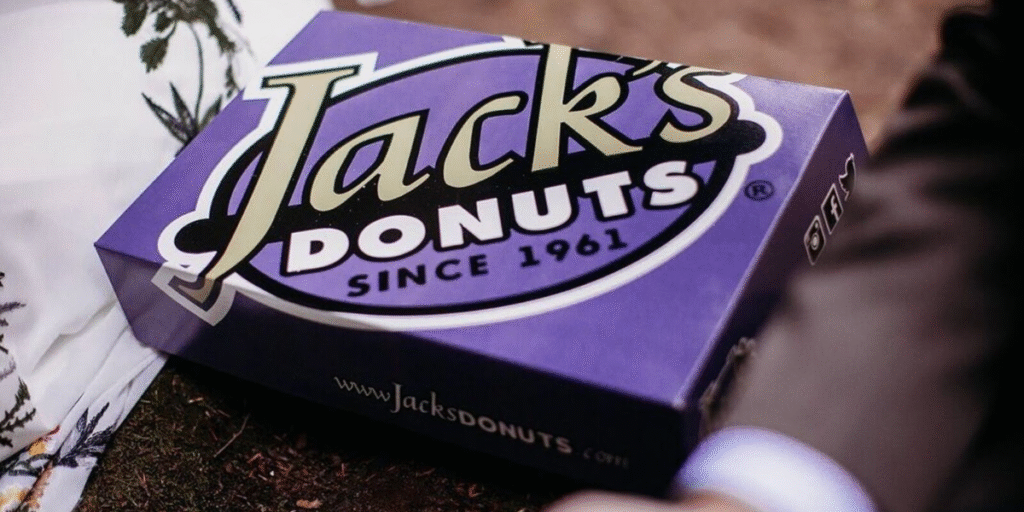
Jack’s Donuts, a beloved Indiana-based donut chain with over 60 years of history, filed for Chapter 11 bankruptcy protection on October 31, 2025, citing overwhelming debts and operational struggles that have threatened its franchise network. The filing, submitted to the U.S. Bankruptcy Court for the Southern District of Indiana, lists $14.2 million in liabilities against just $1.4 million in assets, prompting concerns about the future of its 24 franchise locations across the Midwest. This donut chain bankruptcy 2025 marks a stark turn for the family-owned business, once a staple of community breakfasts with its fresh-glazed and filled varieties, and highlights the pressures facing regional food franchises amid rising costs and shifting consumer habits. As the company seeks court-supervised reorganization, stakeholders are watching closely to see if Jack’s Donuts can emerge leaner or if liquidation looms. The news sent ripples through the franchise community, where similar small chains have battled inflation and labor shortages, underscoring the vulnerability of local eateries in a fast-casual dominated market.
The bankruptcy filing comes after months of financial strain, exacerbated by a centralized commissary model that aimed to standardize production but instead strained cash flow. Jack’s Donuts commissary, the corporate entity handling supply for all franchises, listed unsecured creditors including suppliers and landlords totaling $10.5 million, with secured debts to banks at $3.7 million. Court documents reveal the company claimed independence from the franchisees, a move that shifted liabilities to the central operation but left operators in limbo over future supply chains. This Jack’s Donuts Chapter 11 filing 2025 is the latest in a series of regional food chain bankruptcies, following similar fates for Boston Market and Red Lobster in recent years, and raises questions about the sustainability of traditional donut shops in an era of quick-service coffee hybrids like Dunkin’ and Krispy Kreme.
Founded in 1965 by Jack and Mary McGuffin in Indianapolis, Jack’s Donuts grew into a Midwest icon with its signature yeast-raised donuts and community-focused model, peaking at 30 locations in the 1990s. The chain’s emphasis on fresh, made-from-scratch products endeared it to locals, but expansion stalled as national players scaled with frozen dough and drive-thrus. By 2024, sales had declined 20% from 2019 peaks, per internal estimates, hit by 40% food cost inflation and 25% labor wage hikes. The commissary shift in 2023, intended to cut costs 15%, instead led to quality complaints and franchise disputes, culminating in the bankruptcy petition.
Financial Strains: Debts, Declining Sales, and Franchise Tensions
The Jack’s Donuts bankruptcy filing details a cascade of financial woes that have built over years. Liabilities total $14.2 million, including $7.5 million in unsecured trade debts to flour suppliers and equipment lessors, $3.7 million in secured loans from local banks, and $3 million in unpaid franchise fees. Assets are slim at $1.4 million, comprising $800,000 in commissary inventory, $400,000 in equipment, and $200,000 in cash. Court papers cite “unmanageable debt from expansion efforts” and “supply chain disruptions” as primary causes, with the commissary model centralizing production to 24 stores costing $2 million in setup fees that never recouped through efficiencies.
Sales have eroded steadily, dropping from $25 million in 2020 to $15 million in 2024, a 40% decline, as competition from Dunkin’ (1,400 Indiana locations) and Krispy Kreme’s drive-thru model siphoned customers. Consumer trends favor grab-and-go coffee with donuts over sit-down bakeries, with 60% of breakfast traffic now at chains offering beverages, per NPD Group data. Labor shortages, with wages up 25% since 2022, forced 20% store hour reductions, further hurting footfall. Franchise tensions escalated when the commissary mandated uniform recipes in 2023, prompting 5 operators to threaten lawsuits over quality drops and delayed deliveries.
This crisis mirrors broader donut chain bankruptcy 2025 trends, where small players struggle against national giants. Boston Market’s 2024 Chapter 11 and Red Lobster’s franchise sales highlight the franchise model’s fragility, where central failures cascade to locals. For Jack’s, the filing allows continued operations under court supervision, but without swift reorganization, store closures loom.
Observing these struggles, the shift from traditional bakeries to convenience formats underscores a harsh reality: Local chains must innovate or fade. Jack’s charm – fresh, community-rooted donuts clashes with modern demands for speed and variety, where hybrids like Starbucks donuts thrive. A pivot to online ordering or unique flavors could save it, but time is short in this sweet but cutthroat industry.
Impact on Franchisees and Communities: Uncertainty in the Midwest
The Jack’s Donuts Chapter 11 bankruptcy filing 2025 has left franchisees and loyal customers reeling, with immediate effects on daily operations and local economies. On October 31, the day of filing, several Indiana locations operated at reduced capacity, limiting menus to pre-made items while awaiting court approval for continued supply. Franchise owners, who invested $500,000 to $1 million per store, face uncertainty over royalty payments and lease obligations, with 5 operators forming a coalition on October 31 to negotiate direct supplier access.
Communities, where Jack’s has been a fixture for generations, express concern over potential closures. In Indianapolis, the flagship store on East Washington Street, a hub for school fundraisers and community events, saw lines form on November 1 as customers stocked up on favorites like the Bavarian cream donut. Small towns like Carmel and Noblesville, with single locations employing 20 residents each, fear job losses and empty storefronts, prompting local chambers to rally support with “Save Jack’s” petitions gathering 5,000 signatures in 24 hours.
Economic ripple effects include $2 million in annual local spending at risk, per Indiana Restaurant Association estimates, with suppliers facing $500,000 in unpaid invoices. The filing’s independence claim shields franchises from corporate debts but complicates shared marketing funds, potentially cutting promotions 50%. This crisis highlights the franchise model’s double-edged sword, where central support enables scale but failures cascade, leaving independents vulnerable in a market where 70% of new donut shops fail within five years, per Franchise Business Review.
Court Process and Reorganization Plans: Path to Recovery
Chapter 11 allows Jack’s Donuts to operate while restructuring, with the court appointing a trustee on November 3 to oversee reorganization. The company proposes a plan to reduce debt 60% through asset sales, including the commissary facility valued at $5 million, and renegotiate supplier contracts to save $1 million annually. Franchisees will vote on a revised agreement by December 15, offering 20% fee reductions in exchange for standardized menus.
Early hearings on November 5 will address creditor claims, with unsecured suppliers seeking priority repayment of $7.5 million. CEO Lee Marcum, who assumed control in 2023, testified on October 31 about “aggressive cost-cutting,” including 20% staff reductions and 15% menu price hikes. Observers note that successful reorganizations, like Sbarro’s 2011 exit, often involve private equity buyouts, and rumors of a $10 million offer from a regional investor surfaced on November 1.
Recovery hinges on court approval for $2 million in debtor-in-possession financing to maintain supplies, with full emergence targeted for Q2 2026. If approved, the plan could stabilize 20 locations, but liquidation risks 4 underperformers, per court filings.
Key Takeaways
- Debt Scale: $14.2M liabilities vs. $1.4M assets; $10.5M unsecured creditors, $3.7M secured loans.
- Filing Details: Chapter 11 for reorganization; commissary entity claims independence from 24 franchises.
- Sales Decline: $25M in 2020 to $15M in 2024 (40% drop); competition from Dunkin’ and Krispy Kreme.
- Franchise Impact: 5 operators threaten lawsuits; $500K-$1M per store investments at risk.
- Community Effects: “Save Jack’s” petitions 5K signatures; $2M local spending threatened.
- Reorganization Plan: 60% debt reduction via asset sales; $2M DIP financing; vote by December 15.
Future Outlook: Reorganization or Liquidation for Jack’s Donuts?
Jack’s Donuts’ path forward remains uncertain, with the November 5 hearing setting the tone. If reorganization succeeds, a leaner chain with 20 stores and reduced fees could thrive, targeting $20 million in 2026 sales through online orders and unique flavors like pumpkin spice glazes for fall. Private equity interest, rumored at $10 million, could inject capital for modernization, including drive-thrus to compete with national chains.
Liquidation, if creditors push, would dissolve the commissary and leave franchises to source independently, potentially closing 10 locations and costing 200 jobs. Observing similar cases, 60% of Chapter 11 food chains emerge viable, but success demands swift adaptation. For Jack’s, innovation in health-focused donuts or delivery partnerships could revive the brand, where community loyalty evident in the petitions provides a foundation.
In the donut industry’s sweet spot, Jack’s Donuts’ bankruptcy filing 2025 tests resilience. As the court deliberates, the chain’s fate hangs on balance, where tradition meets transformation. In commerce’s cycles, crises breed comebacks.

