
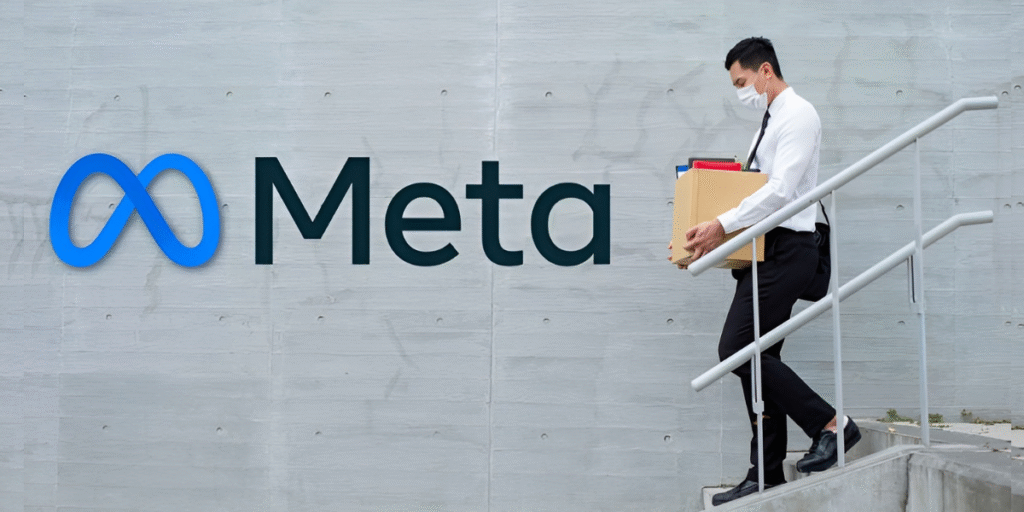
Meta Platforms Inc. (NASDAQ: META) announced plans to lay off 3,600 employees on October 22, 2025, primarily targeting its Reality Labs division, as part of a broader restructuring to accelerate AI investments and streamline operations. This Meta layoffs 2025 move affects about 8% of the company’s global workforce of 70,000, focusing on roles in virtual and augmented reality hardware development, where progress has lagged behind expectations. The cuts, detailed in an internal memo from CEO Mark Zuckerberg, come amid slowing metaverse growth and rising costs for AI infrastructure, with Meta’s Reality Labs posting $16 billion in losses for 2024 alone. As the tech giant shifts resources toward generative AI tools like Llama models, the job reductions have sparked discussions about the future of immersive tech. META stock dipped 0.8% to $580.20 in early trading on the news, but analysts view the move as a necessary recalibration in a competitive landscape dominated by OpenAI and Google.
The layoffs, set to be completed by December 2025, will hit teams working on Oculus hardware and Horizon Worlds software, areas that have consumed billions without delivering scalable revenue. Zuckerberg’s memo, leaked to The Verge, described the changes as “difficult but essential” to prioritize “high-impact AI initiatives.” This follows a pattern of Meta job cuts, including 11,000 reductions in 2022 and 10,000 in 2023, which saved $5 billion annually and helped the company return to profitability with $39 billion in net income for 2024. The current round targets underperforming segments, sparing core advertising and AI research teams, but it underscores the challenges of balancing moonshot projects with fiscal discipline.
Details of the Meta Layoffs 2025: Scope and Timeline
The Meta layoffs October 2025 will unfold in phases, starting with notifications on October 23 for the first 1,500 affected employees, primarily in California and Washington state offices. The remaining 2,100 cuts will roll out through November, with a focus on engineering and product roles in Reality Labs. Severance packages include 16 weeks of pay, health benefits extension through March 2026, and access to career transition services, consistent with previous rounds. The company’s HR team has emphasized support for outplaced workers, including job placement assistance and equity vesting acceleration for those with more than two years of service.
Reality Labs, Meta’s division for VR, AR, and metaverse technologies, has been a financial black hole, reporting $4.5 billion in operating losses for Q3 2025 alone, up 20% from the prior quarter. The unit’s Quest 3 headset sales reached 5 million units year-to-date, but at an average selling price of $500, it falls short of the $10 billion revenue target set in 2023. Hardware development costs, including R&D for Orion AR glasses, have ballooned to $3 billion annually, prompting the need for belt-tightening. The layoffs spare creative and research roles, aiming to preserve innovation while trimming administrative overhead by 30%.
This restructuring aligns with Meta’s broader AI strategy, where $40 billion is earmarked for 2025 capex on data centers and custom chips. The Llama 3.1 model, released in September, has driven 25% growth in AI API calls, generating $1.2 billion in new revenue from enterprise clients like Microsoft and Adobe. By reallocating resources from Reality Labs, Meta can accelerate AI features like Meta AI in WhatsApp, which now boasts 500 million monthly users.
Reasons Behind the Meta Job Cuts: AI Shift and Economic Pressures
Meta’s decision to implement these layoffs stems from a strategic pivot toward AI, where immersive tech has underdelivered on promises. Reality Labs’ $16 billion loss in 2024 represented 10% of Meta’s total expenses, diverting funds from higher-return areas like advertising algorithms that power 98% of revenue. Zuckerberg has repeatedly stressed the need for “efficiency,” a theme echoed in his 2023 “Year of Efficiency” initiative that slashed costs by $10 billion. The current cuts target redundancies created by overlapping VR teams post-Facebook’s 2021 rebrand to Meta.
Economic headwinds play a role too. Global IT spending growth slowed to 6.5% in 2025, per Gartner, with enterprises delaying non-essential projects like AR pilots. Meta’s advertising revenue, while up 12% to $38 billion in Q3, faces pressure from TikTok’s 20% market share gain in short-form video. Inflation at 2.4% has raised labor costs 5%, prompting a review of underperforming units. The layoffs also reflect a talent realignment, with 1,000 AI engineering roles to be filled internally from the pool of displaced workers.
In the context of Big Tech’s layoff wave – Google cut 1,000 in September and Microsoft 2,500 in August—Meta’s move is pragmatic. It frees $1 billion in annual savings for AI, where returns could reach 30% on capex, versus Reality Labs’ negative 50%. This shift highlights a broader industry trend: AI’s promise outweighs VR’s potential in the near term, as evidenced by Meta’s $5 billion Llama investment yielding 40% user engagement growth.
Impact on Employees and Company Culture
The human side of these Meta layoffs 2025 is profound, affecting engineers, designers, and managers who joined during the metaverse hype. Many have invested in the vision of a digital future, only to face abrupt changes. Support measures, including six months of outplacement services and equity acceleration, aim to soften the blow, but the psychological toll remains. Former Reality Labs staff have shared stories of burnout from ambitious deadlines, with turnover already at 15% in the division.
For Meta’s culture, the cuts could reinforce a “move fast” ethos but risk morale dips. The company’s “hard things” philosophy, popularized by Zuckerberg, encourages bold bets, but repeated restructurings—five major rounds since 2020—have led to 25% employee satisfaction declines, per Glassdoor reviews. On the positive side, reallocating talent to AI teams could foster innovation, with internal mobility programs placing 70% of displaced workers in new roles within 90 days.
Market Reaction and Analyst Perspectives
META stock’s muted response—a 0.8% drop to $580.20—belies underlying strength, with the company up 45% year-to-date on AI gains. Trading volume rose 20% to 15 million shares, with institutional buying from Vanguard offsetting retail sells. Analysts remain constructive: JPMorgan reiterated Overweight with a $650 target, viewing the cuts as “margin tailwind” adding 2% to 2026 EPS. Morningstar’s fair value stands at $620, praising the AI focus but cautioning on VR write-downs of $2 billion.
Barclays analyst Ross Sandler maintained Equal Weight at $600, noting Reality Labs’ drag but highlighting advertising resilience at 98% revenue. Consensus EPS for Q4 is $5.20, up 8%, with 90% of analysts rating Buy or Strong Buy. Options show call volume up 150% in January $600 strikes, betting on post-layoff rebound.
Key Takeaways
- Layoff Scale: 3,600 jobs cut (8% workforce), focused on Reality Labs VR/AR teams.
- Financial Rationale: $16B Reality Labs losses in 2024; frees $1B for AI capex.
- Support for Employees: 16 weeks severance, health extension to March 2026, outplacement.
- AI Reallocation: $40B 2025 spend; Llama 3.1 drives $1.2B new revenue.
- Stock Impact: META -0.8% to $580.20; JPMorgan $650 PT, 90% Buy ratings.
- Cultural Shifts: 25% satisfaction drop; 70% internal mobility in 90 days.
Future Outlook: AI Dominance and Metaverse Reassessment
Meta’s Q4 earnings on January 29, 2026, will test the layoffs’ impact, with consensus revenue at $42 billion and EPS $5.20. AI could drive 15% growth in enterprise tools, while Reality Labs targets breakeven by 2028 with Orion glasses. Challenges include antitrust probes on AI data use and talent flight to OpenAI. If execution succeeds, Meta could hit $200 billion revenue by 2027.
In conclusion, Meta’s October 2025 layoffs reflect a bold bet on AI over VR, reshaping its workforce for future gains. As the company navigates this transition, the balance between innovation and empathy will define its path. In tech’s relentless march, Meta’s choices echo the broader quest for sustainable progress.

