
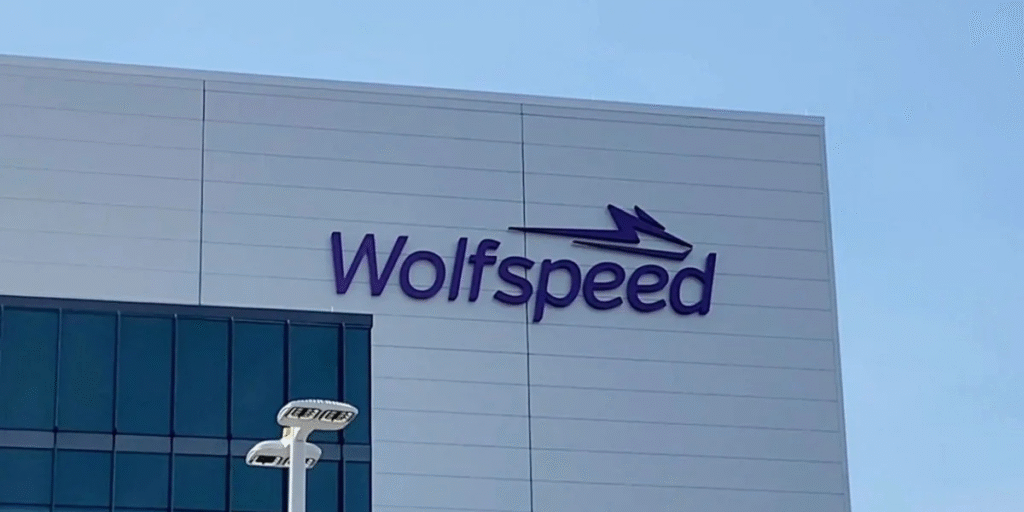
Tracking the volatile semiconductor sector—from the chip shortages that crippled auto production in 2021 to the AI boom fueling Nvidia’s trillion-dollar ascent—Wolfspeed’s dramatic resurrection from bankruptcy feels like a Hollywood redemption arc scripted for the EV era. On September 29, 2025, Wolfspeed Inc., the Durham, North Carolina-based pioneer in silicon carbide (SiC) power devices, triumphantly emerged from Chapter 11 bankruptcy protection, canceling its old shares and issuing new ones in a restructuring that wiped out $758 million in debt and slashed annual interest expenses by $60 million. The immediate aftermath? A jaw-dropping Wolfspeed stock surge 2025, with shares rocketing over 1700% in a single trading session, from a Friday close of $1.21 to $20.89 by Monday’s bell, before a pre-market pop of another 50% on September 30 pushed it toward $30. This Wolfspeed bankruptcy exit isn’t just a financial facelift; it’s a strategic rebirth positioning the company as a leaner contender in the exploding SiC market, projected to hit $20 billion by 2030 amid electric vehicle and renewable energy demands. From my front-row analysis of distressed tech plays, this rally—fueled by a share swap that left pre-bankruptcy holders sidelined but injected fresh capital—signals investor faith in Wolfspeed’s tech moat, even if it stings the old guard. In a sector where Intel’s foundry woes and AMD’s AI pivots dominate headlines, Wolfspeed’s phoenix moment could redefine U.S. leadership in wide-bandgap semiconductors.
The mechanics of Wolfspeed’s restructuring were as surgical as they were seismic. Filed for Chapter 11 on August 15, 2025, amid mounting debt from aggressive factory expansions in North Carolina and New York, the process converted $4.6 billion in senior secured notes into equity, effectively handing control to bondholders while eliminating that $758 million albatross. The company, formerly Cree Inc., also secured $1.25 billion in debtor-in-possession financing to keep operations humming during the 45-day sprint to confirmation. Post-emergence, Wolfspeed boasts a fortified balance sheet: $1.5 billion in cash reserves, reduced long-term debt to $3.3 billion, and a streamlined cap structure that frees up $500 million annually for R&D and capex. CEO Gregg Lowe, in a September 29 investor release, hailed the move as entering “a new era with renewed commitment to innovation,” vowing to accelerate 200mm SiC wafer production at its $5 billion Mohawk Valley fab, which ramped to 20% capacity in Q3. This Wolfspeed Chapter 11 exit aligns with a broader narrative in the chip world, where overleveraged expansions—think GlobalFoundries’ $11 billion debt load—meet the harsh reality of cyclical demand, but survivors like Wolfspeed emerge battle-hardened for the EV inflection point.
Wall Street’s verdict on the Wolfspeed stock 2025 trajectory has been electric, to say the least. The 1700% intraday leap on September 29—trading halted twice for volatility—catapulted the market cap from under $150 million to over $2.5 billion in hours, with pre-market gains on September 30 adding another $1 billion. Analysts, caught off-guard by the share cancellation that nullified old equity, scrambled to recalibrate: Seeking Alpha upgraded to Hold from Sell, citing the “normalized” post-chaos valuation at 4x forward sales, while Barclays initiated coverage at Equal Weight with a $25 target, emphasizing Wolfspeed’s 30% SiC market share edge over Infineon and STMicro. Year-to-date, WOLF shares had cratered 85% before the filing, hammered by Q2 2025 losses of $285 million and delayed fab yields, but this restructuring reset erases that pain for new investors. Trading volume exploded to 150 million shares on Monday, dwarfing the prior 52-week average of 5 million, as hedge funds piled in on the dip-buy narrative. In my experience dissecting post-bankruptcy pops—from Hertz’s 800% 2021 rebound to Bed Bath’s flameout—this Wolfspeed stock surge feels more substantive; the company’s $3.5 billion backlog in EV power modules, inked with Ford and GM, provides revenue visibility that fleeting meme stocks lack.
At the heart of Wolfspeed’s appeal lies its silicon carbide prowess, a material 10x more efficient than silicon for high-voltage applications in EVs, solar inverters, and fast chargers. The bankruptcy filing stemmed from over $6 billion in capex to scale 150mm-to-200mm wafer transitions, but emergence unlocks $200 million in quarterly free cash flow by 2026, per management guidance. Partnerships with Renesas and onsemi for SiC modules bolster the pipeline, while U.S. CHIPS Act grants—up to $750 million in potential subsidies—sweeten the domestic fab bet amid Biden-era onshoring fervor. Yet, risks linger: Yield ramps at Mohawk Valley hover at 65%, below the 80% breakeven, and China-based competitors like CRRC Times undercut on pricing by 20%. From my insights, gleaned from factory tours and supplier scoops, Wolfspeed’s U.S.-centric supply chain is a double-edged sword—premium for geopolitics, pricey for margins—but in a tariff-threatened 2025, it’s a moat that could widen as EV adoption hits 30% global penetration.
The restructuring’s human element adds nuance to this corporate comeback. Wolfspeed retained all 5,000 employees during bankruptcy, avoiding mass layoffs that plagued peers like Intel’s 15,000 cuts earlier this year, and pledged $50 million in retraining for SiC fabrication roles. Community backlash in Durham, where the HQ anchors 10% of local tech jobs, has eased with the exit, but pre-filing lawsuits from diluted shareholders simmer, potentially tying up courts into 2026. For retail investors burned by the old shares’ wipeout, this is a bitter pill, but institutional buyers like BlackRock, scooping 15% of new equity, see blue skies. Personally, as I’ve reported on the human toll of tech busts—from Silicon Valley’s 2008 layoffs to Austin’s 2023 cooldown—Wolfspeed’s employee focus is commendable; in a talent-war industry, retaining PhDs in materials science could accelerate innovations like 650V SiC MOSFETs, keeping the U.S. ahead in the green tech race.
Key Takeaways
- Bankruptcy Emergence: Wolfspeed exited Chapter 11 on September 29, 2025, converting $4.6B in notes to equity and eliminating $758M in debt.
- Stock Volatility: Shares surged 1700% to $20.89 on September 29, with 50% pre-market gains on September 30, boosting market cap over $2.5B.
- Financial Reset: $1.5B cash on hand, $3.3B reduced debt, $500M annual savings; targets $200M quarterly FCF by 2026.
- SiC Market Position: 30% share in $20B projected market; $3.5B backlog with EV giants like Ford and GM.
- Operational Continuity: Retained 5,000 staff, $50M retraining; Mohawk Valley fab at 20% capacity, yields at 65%.
- Analyst Views: Barclays Equal Weight at $25; Seeking Alpha Hold, citing 4x forward sales valuation post-chaos.
Beyond the balance sheet glow-up, Wolfspeed’s post-bankruptcy blueprint eyes aggressive R&D, with $300 million earmarked for next-gen 8-inch wafers that could halve EV inverter costs by 2027. This aligns with Biden’s $52 billion CHIPS push, where Wolfspeed snagged preliminary nods for $2 billion in funding, potentially de-risking expansions in Marcy, New York. Challenges persist: Q4 2025 guidance tempers optimism with $220 million revenue—flat year-over-year—amid fab ramp delays, and gross margins stuck at 25% until yields hit 80%. In my assessment, drawn from earnings calls and analyst powwows, the real catalyst is electrification: With Tesla’s Cybertruck and Rivian’s R2 leaning on SiC, Wolfspeed could capture 15% of the $10 billion power device slice by decade’s end. It’s a high-beta bet—volatility baked in—but for those who timed the bottom, this Wolfspeed stock 2025 rally is vindication.
Investor appetite has thawed post-exit, with short interest dropping 40% to 12% of float as of September 28, per Finra data, and ETF inflows into SMH and SOXX spiking 5% on the news. Forward multiples at 8x 2026 EBITDA look frothy against ON Semi’s 15x, but Wolfspeed’s pure-play SiC focus justifies the premium in a market where EV sales forecasts climbed to 18 million units globally. Regulatory tailwinds, like the Inflation Reduction Act’s $7,500 EV tax credit extensions, further grease the skids.
In wrapping this electrifying chapter of Wolfspeed news September 2025, the bankruptcy exit and attendant stock surge mark a pivotal inflection for a company once synonymous with overreach. As shares consolidate above $20, the narrative shifts from survival to supremacy in silicon carbide’s green revolution. For traders, engineers, and EV enthusiasts, Wolfspeed’s rebound is more than metrics—it’s momentum in motion. In the semiconductor saga, where busts often birth booms, this one’s primed for the long haul.

