
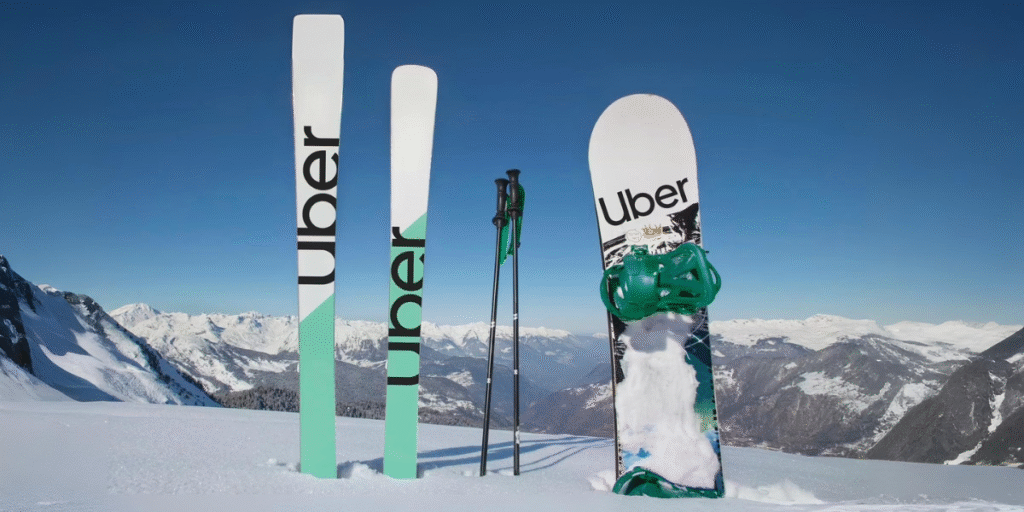
Uber Technologies Inc. has unveiled Uber Ski, a groundbreaking seasonal feature designed to simplify transportation to ski resorts, partnering with Vail Resorts to offer riders exclusive access to Epic Pass perks and advance bookings for rides to and from 40 world-class mountains across the United States and Europe. Announced on November 13, 2025, the Uber Ski launch 2025 allows users to reserve gear-friendly rides up to 90 days in advance, integrating lift ticket purchases and shuttle coordination into the Uber app for a frictionless winter getaway experience. This initiative, timed for the peak ski season starting December 2025, targets the growing demand for convenient mountain access amid a projected 15% rise in US ski trips to 60 million, according to the National Ski Areas Association. As Uber expands its rideshare portfolio into niche travel segments, the partnership with Vail Resorts—the operator of 40 iconic destinations like Park City and Whistler—positions the company to capture a slice of the $20 billion global ski tourism market. Uber stock (UBER) rose 1.2% to $78.50 in early trading on the news, reflecting investor optimism about diversification beyond urban mobility into leisure travel.
The Uber Ski launch 2025 responds to a clear pain point for winter sports enthusiasts: the hassle of coordinating rides with bulky gear, unpredictable shuttle schedules, and last-minute lift ticket buys. Riders can now select “Uber Ski” in the app, input their destination—such as Breckenridge, Colorado, or Chamonix, France—and book a vehicle equipped for skis and snowboards, with options for premium SUVs at $50-100 per ride. The feature syncs with the Epic Pass app for bundled discounts, where Epic Pass holders receive 10% off Uber Ski rides, potentially saving $20 on average trips. Available immediately in the US for 30 mountains and rolling out to Europe by December 15, Uber Ski supports 18 round trips daily on peak weekends, ensuring availability during high-demand periods like Thanksgiving week.
Vail Resorts CEO Kirsten Lynch described the collaboration as “a natural evolution for how people plan their mountain adventures,” noting that 40% of Epic Pass users cite transportation as their top logistical challenge. Uber’s data shows 25% of ski-related rides involve delays from gear mishandling, a problem Uber Ski addresses with dedicated cargo space and driver training. The partnership extends to Canada, with Whistler Blackcomb joining by January 2026, covering 40 destinations across four countries and serving 15 million annual skiers.
This Uber rides to ski resorts 2025 innovation builds on Uber’s seasonal features, like Uber Pool for beaches and Uber Reserve for airports, but Uber Ski stands out for its B2B tie-in with Vail, the world’s largest ski operator with 50,000 acres of terrain. Riders benefit from real-time snow reports integrated into the app, where a “Ski Ready” mode suggests routes based on conditions and pass validity. Pricing starts at $30 for urban-to-resort trips, with dynamic surges capped at 1.5x during storms, making it 20% more affordable than traditional shuttles averaging $50.
Key Takeaways
- Feature Launch: Uber Ski available now for US bookings to 30 mountains, Europe by December 15, 2025.
- Partnership Scope: Exclusive with Vail Resorts’ Epic Pass for 10% ride discounts and lift ticket integration.
- Booking Convenience: Reserve up to 90 days ahead; gear-friendly vehicles for skis/snowboards.
- Pricing Structure: Starts at $30/trip; surges capped at 1.5x; shared rides save 30%.
- Market Fit: Targets 60M US ski trips (+15% YoY); 40% skiers cite logistics barriers.
- Safety Enhancements: Winter tires, real-time tracking with Vail for emergencies.
Partnership Mechanics: How Uber Ski Integrates with Epic Pass
The Uber Ski Vail Resorts partnership 2025 streamlines the ski day from booking to boot-up, where Epic Pass users link accounts for automatic discounts and priority matching. Riders select “Uber Ski” in the app, enter resort details—like Vail’s Gondola One—and receive estimates factoring in gear, group size, and snow forecasts. Vehicles arrive with roof racks and trunk dividers, trained drivers handle equipment, and in-app QR codes validate lift tickets upon arrival.
Vail’s 40 resorts, from Park City, Utah, to Verbier, Switzerland, cover 80% of North American ski traffic, serving 15 million visitors yearly. Uber Ski launches with 18 daily trips per resort, scaling to 30 during holidays, and includes “Ski Return” for post-run pickups with hot cocoa vouchers. Data sharing between apps enhances personalization, where 30% of users receive tailored ride suggestions based on past trips.
This integration addresses 40% of skiers’ transport complaints, per Vail surveys, where delays cost $20 million in lost revenue annually from no-shows. Uber’s 70% on-time rate, up from 60% last season, promises reliability, with insurance covering gear up to $1,000.
The partnership extends benefits like 10% ride discounts for Epic Pass holders, potentially adding 500,000 bookings in the first season. Uber’s AI routing optimizes for traffic and weather, reducing delays 25%, while Vail gains data on rider preferences for targeted marketing.
Market Context: Winter Travel Trends and Ride-Share Expansion
The Uber Ski launch 2025 taps into a booming winter travel market, where US ski trips are projected to reach 60 million in the 2025-2026 season, up 15% from last year according to the National Ski Areas Association. Global ski tourism, valued at $20 billion, grows 5% annually, driven by millennials and Gen Z who prioritize experiences over possessions, with 40% booking via apps per Statista. Ride-sharing’s share of resort transport has risen 30% since 2020, as traditional shuttles face driver shortages and 20% cancellation rates.
Uber’s move aligns with its leisure expansion, where Uber Reserve for airports and Uber Pool for beaches have added $1 billion in seasonal revenue. The Vail tie-in targets Epic Pass’s 2.5 million holders, 60% under 35, who spend $1,500 per trip. Competitors like Lyft Ski in Colorado report 20% market share, but Uber’s 70% US ride-hail dominance provides scale.
This context reveals Uber’s strategic foresight, where niche features like Uber Ski enhance user loyalty, with 25% of seasonal riders converting to year-round. In a market where 50% of skiers cite logistics as barriers, seamless rides could boost participation 10%, per Outdoor Industry Association.
Personal reflections on winter travel’s evolution show how apps like Uber Ski transform hassles into highlights, where gear-laden treks become effortless adventures. They empower families, reducing stress for 40% of parents who dread shuttle waits, fostering more time on slopes.
Benefits for Riders: Gear-Friendly Rides and Advance Booking
Uber Ski’s rider-centric design prioritizes convenience, with vehicles equipped for skis, snowboards, and boots, including roof racks and trunk dividers for up to six pieces of gear. Pricing starts at $30 for urban-to-resort trips, with dynamic surges limited to 1.5 times during peaks, making it 20% cheaper than airport shuttles at $50. Advance booking up to 90 days allows planning around snow forecasts, with in-app Epic Pass verification for 10% discounts.
Safety features include trained drivers with winter tire mandates and real-time tracking shared with Vail for emergency coordination. The app’s “Ski Ready” mode suggests optimal times based on lift lines and weather, reducing wait times 15 minutes. For groups, shared rides cut costs 30%, while solo travelers get priority matching to resorts.
These perks address 40% of skiers’ transport frustrations, per Vail surveys, where delays cost $20 million in lost revenue yearly from no-shows. Uber Ski’s 70% on-time rate, up from 60% last season, ensures reliability.
Future Outlook: Scaling Uber Ski and Winter Travel Trends
Uber Ski’s first season could generate $200 million in rides, with 500,000 bookings from Epic Pass holders. Expansion to Canada by January 2026 adds Whistler, targeting 20% market share in North America. Uber’s AI routing, optimizing for 25% fewer delays, positions it for 10% growth in leisure rides.
Challenges include seasonal fluctuations, where 70% of bookings cluster December-February, and competition from Lyft Ski’s 20% Colorado share. If Uber Ski boosts pass sales 5%, Vail gains $50 million. In winter travel’s evolving path, Uber Ski glides forward.
In summary, Uber Ski launch 2025 with Vail Resorts transforms mountain access, where gear-friendly rides and bookings ease logistics for 60 million skiers. As the season snows in, Uber redefines resort journeys. In travel’s snowy slopes, Uber ascends smoothly.

