
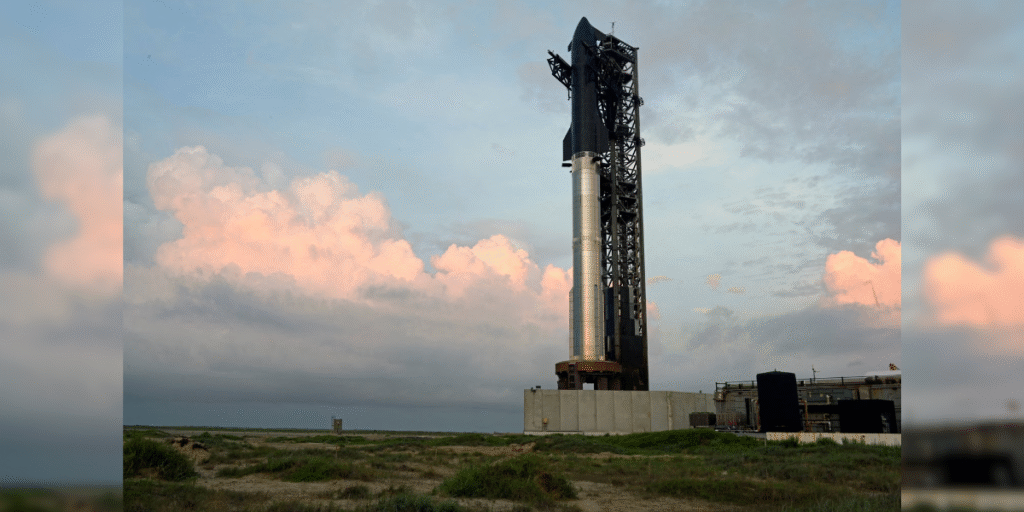
SpaceX is gearing up for a pivotal moment in its Starship program with the eleventh test flight scheduled for October 13, 2025, marking the final launch of the Version 2 Starship-Super Heavy configuration from its Starbase facility in Texas. This SpaceX Starship launch October 2025 comes as the company continues to push the boundaries of reusable rocket technology, aiming to validate key systems before transitioning to the more advanced Version 3 design. The launch window opens at 6:15 p.m. CDT (7:15 p.m. EDT), with a target for the Starship upper stage to achieve a soft landing in the Indian Ocean after a suborbital flight, building on the successes of previous tests. As excitement builds among space enthusiasts and investors, this SpaceX news 2025 highlights the rapid iteration that has defined Elon Musk’s vision for interplanetary travel. With recent delays in other missions, such as the postponed Amazon Project Kuiper satellite launch due to weather, SpaceX’s focus on Starship underscores its commitment to revolutionizing access to space.
The Starship Flight 11 details reveal a mission profile similar to Flight 10 in August, where the vehicle successfully completed all primary objectives, including a controlled reentry and ocean splashdown. For this test, SpaceX aims to refine heat shield performance and propulsion systems, critical for future crewed missions to the Moon and Mars under NASA’s Artemis program. The Super Heavy booster, equipped with 33 Raptor engines, will attempt a catch by the launch tower’s “chopstick” arms – a maneuver first demonstrated in Flight 9 while the Starship upper stage targets a precise water landing. Weather conditions at Starbase are favorable, with a 70% chance of launch per NOAA forecasts, but SpaceX has a multi-day window through October 15 if needed. This SpaceX Starship test flight October 2025 is expected to last about 65 minutes, with live streams available on the company’s website starting 30 minutes prior.
This launch represents a milestone as the last for Version 2 hardware, paving the way for Version 3 upgrades that include larger fuel tanks, improved Raptor engines, and enhanced thermal protection for re-entry. SpaceX has already begun assembling V3 prototypes at Starbase, with Flight 12 potentially showcasing the new design by late November. The company’s aggressive testing cadence, averaging a flight every two months in 2025 has drawn praise for accelerating development, but it also highlights the challenges of scaling reusable technology. Recent SpaceX missions, including the delayed Project Kuiper launch from Cape Canaveral on October 9 due to inclement weather, demonstrate the operational hurdles in maintaining a packed schedule across Starlink deployments, NASA contracts, and commercial payloads.
The broader SpaceX news October 2025 includes regulatory progress, with the FAA granting a launch license for Flight 11 after environmental reviews cleared the expanded Starbase site. This comes amid scrutiny over noise and wildlife impacts in the Boca Chica area, where local groups have pushed for stricter oversight. SpaceX’s Starlink constellation, now exceeding 6,000 satellites, continues to expand global broadband access, with Q3 2025 subscriber growth of 20% to 3.5 million users. Financially, the privately held company is valued at $210 billion following a June tender offer, with revenue projected at $15 billion for 2025 from launches and Starlink subscriptions. Stock proxies like the ARK Space Exploration ETF (ARKX), which holds SpaceX-linked firms, rose 1.2% on the news, reflecting indirect investor exposure.
From observing SpaceX’s trajectory, the Starship program’s iterative approach has transformed from early explosions to reliable demonstrations, proving the value of rapid prototyping in aerospace. This contrasts with traditional players like Boeing, whose Starliner delays highlight the risks of slower development. In the context of U.S. space policy, SpaceX’s dominance handling 80% of orbital payloads in 2025 – raises questions about dependency, but it also accelerates ambitions like Artemis lunar landings by 2026. The Flight 11 launch could solidify Starship’s path to certification for crewed missions, a step toward Musk’s Mars city vision by 2030.
Key Takeaways
- Launch Schedule: Starship Flight 11 targets October 13, 2025, from Starbase, Texas; window opens at 6:15 p.m. CDT, duration 65 minutes.
- Mission Objectives: Test heat shield, propulsion; Super Heavy tower catch attempt, Starship Indian Ocean splashdown.
- Version Transition: Final V2 flight; V3 prototypes in assembly for improved capacity and reentry.
- Regulatory Clearance: FAA license granted; environmental reviews completed for site expansions.
- Company Metrics: Starlink at 6,000 satellites, 3.5M subscribers; $210B valuation, $15B projected 2025 revenue.
- Broader Impact: 80% orbital payload market share; key for NASA Artemis, future Mars missions.
As SpaceX prepares for liftoff, the Starship Flight 11 launch October 2025 stands as a testament to the company’s relentless pace, with implications for commercial spaceflight and global connectivity. Delays in other programs, like the Kuiper mission, remind of the unpredictable nature of rocketry, but SpaceX’s track record suggests resilience. In the vast expanse of space exploration, this test flight is another step toward making multiplanetary life a reality. The SpaceX Starship program continues to captivate, blending engineering marvels with ambitious dreams.

