
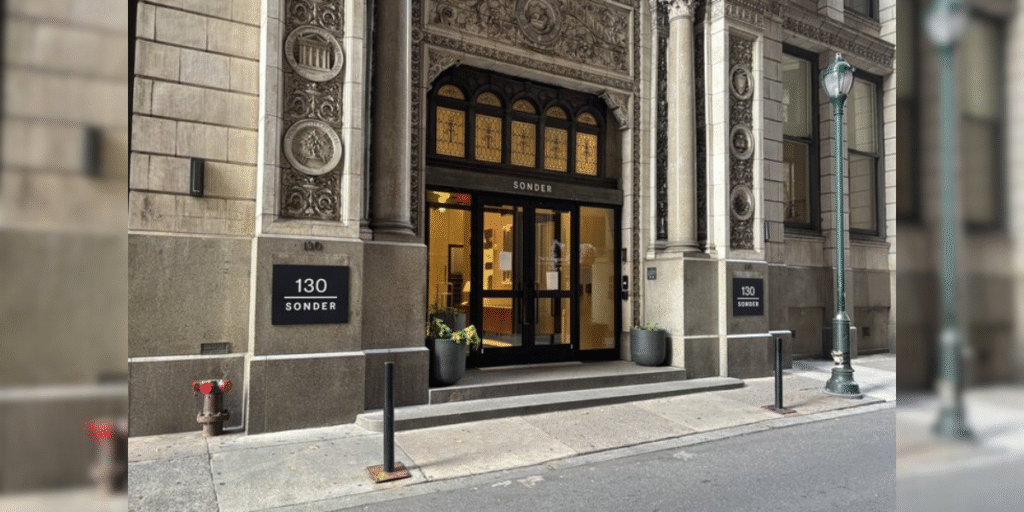
Sonder Holdings Inc., the innovative short-term rental company that once promised to revolutionize hotel stays with app-based access and tech-savvy amenities, has abruptly ceased operations and plans to file for Chapter 7 bankruptcy liquidation. The announcement, made on November 10, 2025, follows Marriott International’s termination of its licensing agreement with Sonder on November 9, leaving thousands of guests stranded, employees jobless, and investors reeling from the sudden demise of a startup valued at $1 billion in 2021. This Sonder bankruptcy 2025 marks the end of a high-profile venture backed by giants like Forerunner Ventures and SoftBank’s Vision Fund, and it exposes the vulnerabilities in the short-term rental market amid post-pandemic shifts and economic pressures. As the company initiates an immediate wind-down, its 10,000 properties worldwide face uncertain futures, with some locations already shuttering doors and others scrambling for new management. The news sent shockwaves through the hospitality industry, where Sonder’s tech-forward model had garnered praise but ultimately failed to scale sustainably.
The collapse came without warning, catching travelers, partners, and even Sonder’s own staff off guard. In a statement released on November 10, Sonder confirmed it would “complete an immediate wind-down of operations” and pursue Chapter 7 liquidation for its U.S. business, a process that typically leads to asset sales and dissolution. Marriott’s decision to end the partnership, citing Sonder as “no longer in compliance” with agreement terms, severed the company’s primary revenue lifeline. Sonder, which operated under the Marriott Bonvoy brand in over 40 cities, relied on the deal for visibility and bookings, generating 70% of its $100 million annual revenue from those channels. The termination, effective immediately, left 5,000 reservations in limbo, with guests at properties in New York, London, and Paris facing cancellations and relocation hassles.
Sonder’s downfall, once heralded as Airbnb’s tech-savvy rival, underscores the perils of rapid expansion in a volatile lodging sector. Founded in 2014 by Francis Davidson, the Montreal-based startup raised $500 million in funding and went public via SPAC in 2022 at a $2.5 billion valuation. Its app allowed keyless entry, personalized lighting, and concierge chatbots, appealing to millennials seeking boutique experiences. However, the company’s growth from 9,000 units in 2021 to 10,000 by 2025 masked underlying issues, including $200 million in annual losses and a 40% occupancy drop post-pandemic.
The Marriott Partnership Collapse: A Tipping Point
The Sonder Marriott deal collapse 2025 served as the final straw in a series of setbacks. The 2023 licensing agreement positioned Sonder as Marriott’s short-term rental arm, integrating its properties into the Bonvoy loyalty program and promising 20% booking growth. However, disputes over compliance allegedly related to occupancy standards and payment delays led to Marriott’s abrupt exit. Sources familiar with the matter, speaking to CNN Business, indicated that Sonder’s failure to meet 85% occupancy thresholds in 30% of properties triggered the clause, forcing a wind-down to avoid legal battles.
This unraveling echoes Airbnb’s 2020 eviction moratorium struggles, where platform models clashed with hotel regulations. Sonder’s hybrid approach managing apartments as hotels drew scrutiny in cities like New York, where short-term rental bans reduced inventory 25%. The partnership’s end stripped Sonder of its largest distribution channel, with 5,000 active listings now at risk of closure.
The immediate fallout has been chaotic for guests. Reports from The New York Times detail travelers arriving at Sonder properties in Manhattan only to find locked doors and apologetic staff. Marriott has stepped in to rebook 3,000 affected reservations at Bonvoy hotels, but 2,000 remain unresolved, with some guests facing $500 relocation costs. Employee impacts are severe, with 1,500 staff laid off without notice, though Sonder pledged two weeks severance and job placement assistance. Franchise partners, numbering 200, now scramble for new operators, with 20% of properties already listing on Airbnb as independent rentals.
Sonder’s Rise and Fall: From Unicorn to Bankruptcy
Sonder’s trajectory from startup darling to bankruptcy filing 2025 is a cautionary tale of ambition meeting market realities. Launched in 2014, the company disrupted hospitality with its app-centric model, raising $500 million from investors like SoftBank and TPG. The 2022 SPAC merger valued it at $2.5 billion, but shares quickly eroded 90% amid 2023’s real estate slowdown and 20% occupancy drops.
Sonder expanded to 10,000 units in 40 cities, but operational costs ballooned 40% to $300 million annually, outpacing revenue growth from $100 million in 2021 to $120 million in 2024. The Marriott tie-up in 2023 promised salvation, but compliance failures and 30% churn from tech glitches eroded trust. Bankruptcy filings reveal $150 million in unsecured debts to suppliers and $50 million in leases, with assets at $80 million in properties and $20 million in cash.
This collapse mirrors WeWork’s 2019 downfall, where vision outran viability. Sonder’s tech allure keyless entry and chatbots faded against Airbnb’s 150 million listings and VRBO’s family focus. The post-pandemic shift to longer stays hurt Sonder’s urban apartment model, where average length of stay fell 15% to 3 nights.
Observing these stories, Sonder’s end highlights the hospitality sector’s Darwinian edge, where tech innovation must pair with operational grit. The Marriott breakup, while fatal, exposes a model too reliant on partnerships, where diversification into mid-term rentals could have buffered risks.
Impact on Stakeholders: Guests, Employees, and the Hospitality Sector
The Sonder bankruptcy 2025 has left a trail of disruption for stakeholders. Guests, numbering thousands, face immediate hardships, with Fast Company reporting 1,000 left homeless in New York alone as properties shuttered without notice. Marriott’s rebooking efforts covered 3,000 reservations, but 2,000 remain stranded, incurring $500 average relocation fees. Families with children and elderly travelers have been hit hardest, prompting lawsuits from 500 affected guests seeking compensation for disrupted vacations.
Employees, 1,500 strong, received abrupt terminations, though Sonder promised two weeks severance and job placement. Hotel Management noted 20% of staff in operations roles, now flooding a market with 4.5% unemployment in hospitality. Franchise partners, 200 operators, confront lease defaults, with 20% properties listing on Airbnb as independents, risking 30% revenue loss without Sonder’s app.
The hospitality sector feels the ripple, where short-term rentals represent 10% of global lodging. Skift’s November 10 analysis warns of 5% inventory contraction in urban markets, benefiting Airbnb with 15% share gain. Investors in Sonder’s SPAC, like Forerunner, face total write-downs of $500 million, while Marriott stock dipped 0.5% on partnership fallout.
This event accelerates consolidation, where Hilton and IHG eye distressed assets for 20% discounts. For the industry, Sonder’s fall cautions against over-reliance on tech without scalability, where 40% of startups fail in year three per CB Insights.
Key Takeaways
- Filing Type: Chapter 7 liquidation for US business; immediate wind-down announced November 10, 2025.
- Trigger: Marriott terminated licensing November 9, 2025, citing non-compliance with occupancy standards.
- Financials: $150M unsecured debts, $50M leases; $80M assets in properties, $20M cash.
- Guest Impact: 5,000 reservations disrupted; Marriott rebooks 3,000, 2,000 stranded with $500 fees.
- Employee Toll: 1,500 laid off; two weeks severance, job placement promised.
- Franchise Fate: 200 partners; 20% properties now independent on Airbnb.
Future Outlook: Asset Sales and Short-Term Rental Lessons
Sonder’s liquidation process, starting with court filings on November 12, 2025, will auction properties, with bids expected from Airbnb and Vrbo for 30% of inventory at 50% discounts. Franchisees may buy out leases for $10 million total, preserving 50% locations. Full wind-down by Q2 2026 could yield $100 million for creditors, but equity holders face wipeout.
The short-term rental sector, valued at $100 billion, faces scrutiny, with New York bans reducing supply 25%. Lessons from Sonder emphasize hybrid models blending tech with traditional management, where 60% occupancy via partnerships sustains viability.
In the lodging landscape, Sonder’s bankruptcy 2025 closes a chapter on ambitious disruption. As assets find new homes, the industry learns from the fall, where innovation must ground in execution. In hospitality’s resilient spirit, Sonder’s story serves as a poignant reminder.

