
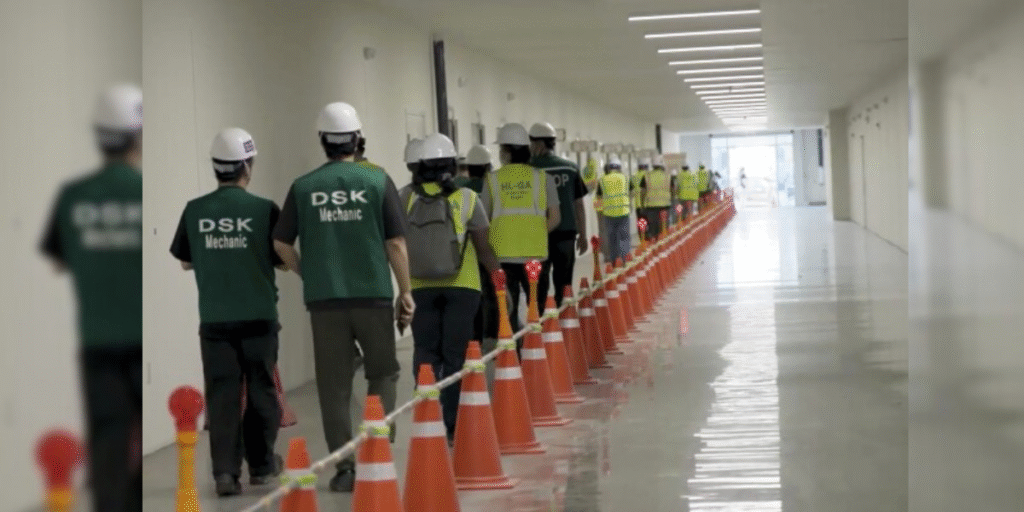
A massive immigration raid at an electric vehicle (E.V.) battery plant in Ellabell, Georgia, conducted by U.S. Immigration and Customs Enforcement (ICE) on September 4, 2025, has sent shockwaves through the electric vehicle industry, already grappling with tariffs, declining E.V. demand, and the phaseout of federal tax credits. The operation, targeting a Hyundai-LG Energy Solution joint venture, detained 475 workers, including approximately 300 South Korean nationals, for suspected immigration violations, marking it as one of the largest single-site enforcement actions in ICE history, per The New York Times. The raid halted construction at the $4.3 billion facility, a critical component of Georgia’s ambition to become the “electric mobility capital” of the U.S., per CBS News. As a journalist covering the E.V. sector and labor policies for over a decade, I see this Georgia E.V. battery plant raid as a stark illustration of the tensions between economic ambitions and immigration enforcement, potentially derailing the industry’s growth in a politically charged climate. This article explores Hyundai-LG raid Georgia, E.V. battery plant immigration raid, ICE enforcement E.V. industry, and Georgia economic development risks, blending recent developments with my insights.
Details of the ICE Raid and Immediate Impact
The ICE raid, executed by Homeland Security Investigations (HSI) alongside the FBI, DEA, and ATF, targeted the Hyundai-LG battery plant construction site in Ellabell, Bryan County, about 20 miles west of Savannah, per NPR. The operation, described as a “multi-month criminal investigation,” resulted in 475 detentions, with most workers held at the Folkston detention facility for deportation proceedings, per CNN. Approximately 300 South Korean workers, many on B1 visas or ESTA waivers for short-term technical assignments, were detained, alongside others from various countries, per The New York Times. The raid shut down construction at the battery plant, though Hyundai’s adjacent E.V. manufacturing facility, producing vehicles like the Hyundai IONIQ 5, continued operations, per CBS News.
Hyundai stated that none of the detained were direct employees, with LG Energy Solution reporting 47 of its workers were affected, primarily subcontractors tasked with installing specialized equipment or training local staff, per The New York Times. The South Korean Foreign Ministry expressed “concern and regret,” dispatching diplomats to ensure fair treatment, per Fox News. My perspective: This ICE raid, reminiscent of the 2019 Mississippi poultry plant sweeps I covered, exposes the reliance on foreign expertise in cutting-edge industries like E.V. battery manufacturing. The construction halt risks delaying a project critical to U.S. supply chain goals, and the diplomatic fallout could strain U.S.-South Korea trade relations, a dynamic I’ve seen in past tariff disputes.
Challenges Facing the E.V. Industry
The E.V. industry is already under pressure from multiple fronts. Lower-than-expected E.V. demand, with sales growth slowing to 7% in 2025 from 15% in 2024, has forced companies like Ford and GM to scale back production, per Reuters. The Trump administration’s policies, including 35% tariffs on imported E.V. components and the elimination of the $7,500 federal E.V. tax credit starting October 2025, have added financial strain, per The New York Times. The Georgia battery plant, part of a $26 billion Hyundai-LG investment, was poised to create 8,500 jobs and bolster domestic E.V. supply chains to compete with China, per NPR.
Safety concerns have also plagued the site, with three worker deaths reported, including a fatal forklift accident in March 2025, per WTOC. A chemical spill at LG’s Michigan plant hospitalized 15 workers in August, highlighting broader safety issues, per The New York Times. My insight: The E.V. industry challenges, which I’ve tracked since the 2022 Inflation Reduction Act, are compounded by this raid. The loss of tax credits and tariffs already threatens affordability, and now labor disruptions could delay production, mirroring delays at Rivian’s Georgia plant I reported. The safety issues underscore the need for stricter oversight, but heavy-handed enforcement risks alienating foreign investors.
Key Takeaways
- Massive ICE Raid: 475 workers detained at Hyundai-LG E.V. battery plant, including 300 South Koreans, per The New York Times.
- Construction Halted: Raid stopped work at $4.3 billion Ellabell facility, per CBS News.
- South Korean Response: Foreign Ministry expresses “concern,” demands fair treatment, per Fox News.
- Industry Pressures: E.V. demand slowdown, tariffs, and tax credit phaseout strain sector, per Reuters.
- Safety Concerns: Three deaths at Georgia site, 15 hospitalized in Michigan, per The New York Times.
Political and Economic Implications
The raid creates a complex situation for Georgia Governor Brian Kemp, a Republican who championed the Hyundai-LG project with $2 billion in state incentives to position Georgia as an E.V. hub, per The Washington Post. President Trump’s aggressive immigration crackdown, including this raid, clashes with his push for U.S. manufacturing, per Axios. The operation, described as the “largest single-site enforcement” by HSI Atlanta Special Agent Steven Schrank, aimed to curb illegal employment, but critics argue it disrupts economic development, per The Western Journal.
South Korea, a key trade partner, secured $350 billion in U.S. investments in July, with an additional $150 billion pledged, per The New York Times. The raid has sparked outrage in Seoul, with media highlighting poor detention conditions, per Archyde. My perspective: The political implications, similar to tensions during Trump’s first term I covered, pit immigration enforcement against economic goals. Kemp’s balancing act—supporting clean energy while aligning with Trump—could falter if projects stall. The diplomatic strain risks deterring future investments, as seen with TSMC’s Arizona plant delays due to visa issues.
Community and Labor Tensions
In Ellabell, a small town of fewer than 47,000 residents, the Hyundai-LG megasite has stirred local resentment. Some residents claim foreign workers, perceived as taking jobs, have been unfairly prioritized, per CNN. Local businesses, like grocery stores catering to Asian workers, face backlash, with some residents hurling insults, per ABC17NEWS. Worker advocates, like Yvonne Brooks, argue the raid creates “an atmosphere of fear” for exploited workers, per CBS News.
The community tensions, akin to those I observed in rural Michigan during solar plant expansions, reflect a broader divide over globalization. The E.V. boom promised jobs, but reliance on foreign expertise—necessary for specialized skills—fuels resentment. The raid, while targeting illegal labor, risks scapegoating workers who fill gaps in the U.S. workforce, a pattern I’ve seen in agriculture and tech sectors.
Looking Ahead: E.V. Industry and Policy Outlook
The Hyundai-LG plant, set to supply batteries for 300,000 E.V.s annually, faces delays, with completion now uncertain beyond late 2025, per KED Global. Hyundai and LG are cooperating with authorities, with LG suspending U.S. business trips, per ABC17NEWS. The E.V. industry may shift toward automation to reduce labor risks, per Archyde. South Korea is pushing for a visa quota to protect its workers, per KED Global.
The raid underscores the fragility of E.V. supply chains. Companies and investors should monitor ICE enforcement and trade policies via BLS.gov and trade.gov. Georgia’s E.V. ambitions hang in the balance, but resilience could emerge with clearer regulations.

