
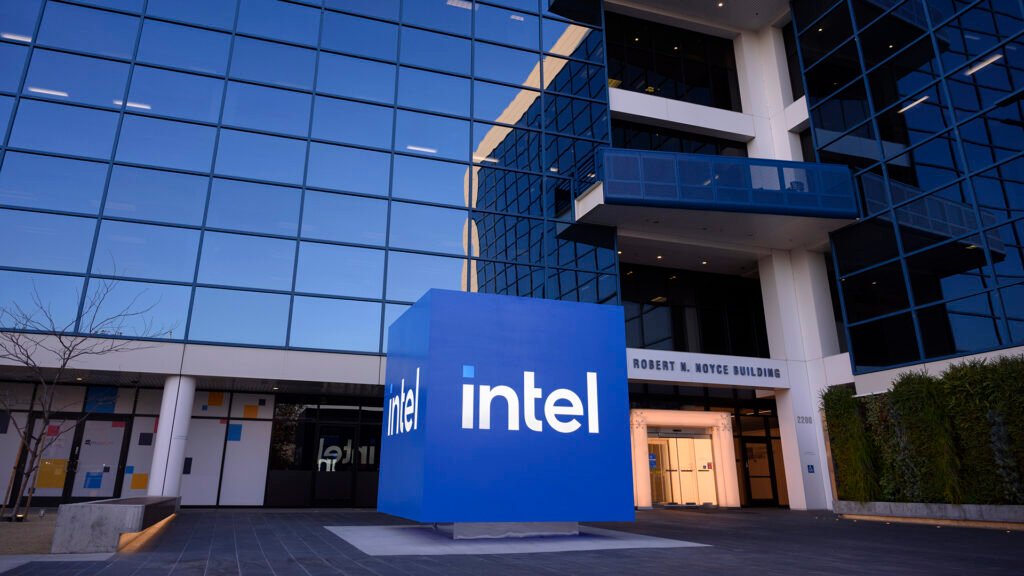
Intel Corporation (NASDAQ:INTC), once the titan of the semiconductor industry, is navigating a storm of challenges in 2025, marked by mass layoffs, a strategic pivot toward artificial intelligence (AI), and a leadership overhaul with Lip-Bu Tan as the new CEO. The company’s stock price surged 3.2% on July 18, 2025, to $22.92, fueled by Stifel’s raised price target to $24.50, per Yahoo Finance, but remains down 4% year-to-date, a stark contrast to its 60% plunge in 2024, per Investopedia. Intel’s Q1 2025 earnings reported $12.3 billion in revenue, down 3% year-over-year, and a $56 million adjusted net income, down 90%, per Nasdaq.com. Meanwhile, 4,000 layoffs across California, Oregon, Texas, and Arizona, alongside a $4.4 billion Altera stake sale to Silver Lake, signal a leaner, AI-focused future, per Tom’s Hardware. As someone who’s tracked chipmakers for years, I see Intel’s moves as a desperate bid to reclaim relevance, but its foundry ambitions and AI lag behind Nvidia and TSMC raise doubts. This article delves into Intel stock, layoffs, AI strategy, and industry challenges, blending recent events with my insights.
Massive Layoffs and Cost-Cutting Measures
On July 15, 2025, Intel announced 4,000 job cuts across its U.S. operations, including 2,392 in Oregon, 700 in Arizona, 584 in California, and 110 in Texas, per PC Gamer. These layoffs, targeting technicians and engineers, aim to slash $500 million in operating costs, following a 15,000-job cut in 2024 under former CEO Pat Gelsinger, per Tom’s Hardware. Intel’s Oregon WARN filing revealed that module equipment technicians (325) and module development engineers (302) bore the brunt, despite claims of targeting mid-level managers, per Tom’s Hardware. The company’s workforce, now at 108,900, is down from 123,900 in December 2024, per Tom’s Hardware.
Intel also suspended its quarterly dividend in Q4 2024 to conserve cash, a move that sent INTC stock crashing 12%, per Business Insider. My perspective: These layoffs, reminiscent of IBM’s 2000s downsizing I studied, reflect Intel’s struggle to balance cost-cutting with innovation. The loss of technical talent, critical for chip fabrication, could delay Intel 18A production, a risk I’ve seen derail GlobalFoundries in the past.
Leadership Change: Lip-Bu Tan Takes the Helm
On December 2, 2024, Pat Gelsinger was ousted as CEO, with Lip-Bu Tan, a semiconductor veteran from Cadence Design Systems, stepping in, per Reuters. Tan, appointed on March 12, 2025, told employees Intel is no longer a top 10 chipmaker, a candid admission of its fall from grace, per Oregonlive.com. At Intel Vision 2025 on March 24, Tan outlined a turnaround plan focusing on edge AI, agentic AI, and Intel 18A manufacturing, conceding that catching Nvidia in AI training is “too late,” per Oregonlive.com. Tan also appointed sales and engineering leaders on June 18 to bolster Intel Foundry Services (IFS), per intc.com.
Tan’s bluntness echoes Lou Gerstner’s turnaround at IBM, which I analyzed. His focus on AI and foundry is pragmatic, but Intel’s cultural overhaul, as Tan emphasized, faces resistance, much like Motorola’s struggles in the 2000s. Gelsinger’s exit, abrupt and without a successor, signals boardroom turmoil, a red flag for investors.
Key Takeaways
- 4,000 Layoffs: Intel cut 4,000 jobs in Oregon, California, Texas, and Arizona, targeting technicians and engineers, per PC Gamer.
- Stock Volatility: INTC stock rose 3.2% to $22.92 on July 18, but is down 4% year-to-date after a 60% drop in 2024, per Investopedia.
- Q1 2025 Earnings: Revenue fell 3% to $12.3 billion, with adjusted net income down 90% to $56 million, per Nasdaq.com.
- AI and Foundry Pivot: CEO Lip-Bu Tan prioritizes edge AI and Intel 18A, with Amazon as a key foundry customer, per Business Insider.
- Altera Sale: Intel sold a $4.4 billion stake in Altera to Silver Lake, valuing it at $8.75 billion, half its 2015 cost, per Network World.
AI Strategy and Computex 2025 Highlights
At Computex 2025 on May 19, Intel unveiled new GPUs for AI and workstations, including the Gaudi 3 AI accelerator, now available to IBM Cloud customers, per Network World. The Aurora Supercomputer, a collaboration with HPE and DOE, leverages Intel’s AI accelerators for up to 2.8x faster LLM inference, per newsroom.intel.com. Intel’s Core Ultra processors target AI PCs, with Panther Lake CPUs set for H2 2025, per Network World. Tan emphasized edge AI, aiming to compete with Nvidia and AMD in on-device AI, per Oregonlive.com.
Intel also certified Shell Global Solutions’ immersion cooling fluids for data centers on May 20, enhancing AI efficiency, per Network World. My insight: Intel’s AI PC push is promising, as I’ve seen Qualcomm gain traction here, but Nvidia’s GPU dominance, which I tracked since 2020, is a formidable barrier. Gaudi 3’s adoption by IBM is a win, but Intel’s 18A yield issues—producing only 10% flawless chips vs. TSMC’s 30%, per The Verge—could undermine foundry ambitions.
Foundry Ambitions and Strategic Partnerships
Intel Foundry Services (IFS) is central to Tan’s vision, with Amazon as a key 18A customer, per Business Insider. On April 8, Intel entered advanced talks with TSMC for a joint venture to bolster x86 chip production, spurred by U.S. government support, per Network World. Intel’s 18A process, set for H2 2025, underpins Panther Lake CPUs, but Tan may shift focus to 14A for external clients, per Oregonlive.com. The CHIPS Act promises billions in federal aid, though funds are delayed, per Business Insider.
On April 16, Intel sold a majority stake in its Altera FPGA business to Silver Lake for $4.4 billion, valuing Altera at $8.75 billion—half its $16.7 billion 2015 acquisition cost, per Network World. My perspective: Partnering with TSMC, a rival I’ve analyzed, is a humbling but strategic move to counter Intel’s manufacturing lag. The Altera sale, while financially painful, mirrors AMD’s asset-light shift in the 2000s, freeing capital for R&D.
Market Challenges and Competitive Landscape
Intel’s market share in data center chips remains 75%, but AMD captured 20% of server CPUs in 2022, up 62%, per CNBC. Nvidia replaced Intel in the Dow Jones Industrial Average in November 2024, reflecting Intel’s 50% stock drop that year, per Business Insider. Apple’s shift to Apple Silicon and Arm-based chips by Qualcomm further erodes Intel’s PC market, per Wikipedia. Intel’s Arc GPUs, launched in 2024, show value against Nvidia, per Reddit, but quality control issues with 13th/14th Gen CPUs persist, per The Verge.
PC gamers shifting to AMD Ryzen, with Intel’s CPU market share falling from 76.84% to 60.27% in five years, per Steam Hardware Survey. My take: Intel’s x86 dominance, which I studied in the 1990s, is waning as Arm and RISC-V gain traction. Nvidia’s AI chip lead, built on TSMC’s manufacturing, underscores Intel’s missed opportunities, like its iPhone processor rejection in 2007, per Reuters.
Looking Ahead: Q2 Earnings and Recovery Path
Intel’s Q2 2025 earnings, due July 24, are projected to show $12.5-13 billion in revenue, with analysts expecting a $0.10 EPS loss, per Investopedia. Options pricing suggests an 8.5% stock move post-earnings, per Investopedia. Tan’s $17 billion operating expense target for 2025 aims to streamline costs, per Network World. Investors should track INTC stock on Nasdaq.com and Yahoo Finance for earnings updates.
I’m cautiously hopeful about Intel’s AI and foundry bets, but its 18A yield challenges, which I’ve seen cripple GlobalFoundries, and layoffs risk long-term innovation. Tan’s leadership could mirror AMD’s revival under Lisa Su, but Intel’s $100 billion market cap, dwarfed by AMD’s $250 billion, per Yahoo Finance, signals a steep climb. Intel’s 2025 is a high-stakes pivot in a brutal semiconductor race.

