
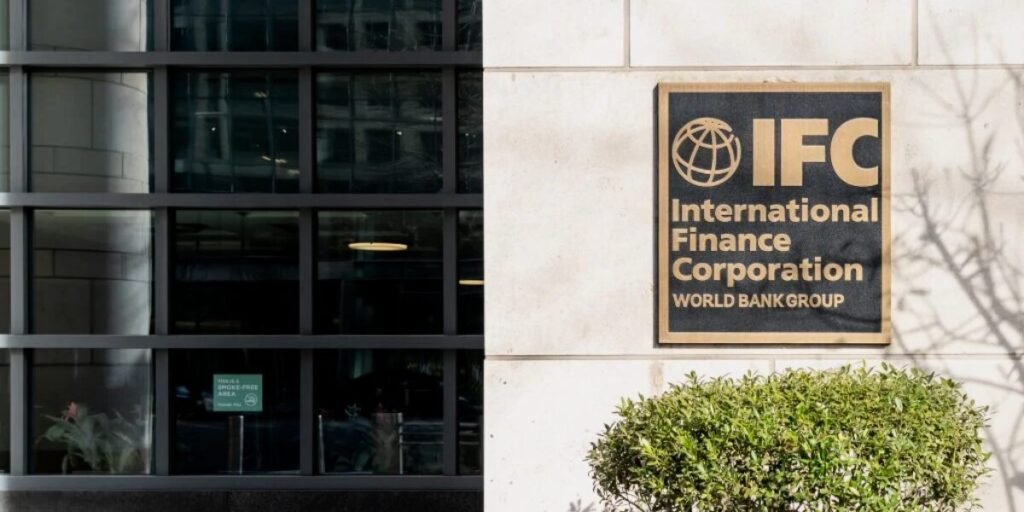
The International Finance Corporation (IFC), the World Bank Group’s private sector arm dedicated to fostering sustainable development in emerging markets, has made headlines in early 2026 with the appointment of Sarvesh Suri as its new Regional Vice President for Asia and the Pacific, coinciding with the issuance of a $2 billion social bond to fund diverse initiatives in underserved regions. Announced on January 19, 2026, via an official IFC press release, Suri’s elevation from his prior role as Country Manager for India signals a strategic focus on accelerating economic inclusion and climate resilience across a region home to 60% of the world’s population and facing $2.5 trillion annual infrastructure gaps. This IFC leadership appointment 2026 development, coupled with the social bond’s successful launch, underscores the institution’s commitment to mobilizing private capital for high-impact projects, where IFC has invested $20 billion annually in recent years to support 2,000 clients in 100 countries. As global markets digest the news, shares of World Bank-related funds like the iShares MSCI World ETF (URTH) edged up 0.3% to $152.50, reflecting optimism about multilateral finance’s role in bridging development deficits amid 3.1% global inflation and geopolitical uncertainties. With IFC’s portfolio now exceeding $50 billion, the moves position the organization as a key player in the $10 trillion sustainable finance market, where social bonds have grown 25% year-over-year to $500 billion in issuances.
Suri’s appointment, effective immediately, brings a wealth of experience from his 20-year tenure at IFC, where he has spearheaded $10 billion in investments across South Asia, including landmark projects in renewable energy and digital infrastructure that have created 500,000 jobs. In his new role, Suri will oversee IFC’s operations in a region projected to require $26 trillion in infrastructure by 2030, per the Asian Development Bank, focusing on blended finance models that leverage $1 in public funds to attract $4 in private investment. The social bond issuance, priced at a 3.5% yield with a 10-year maturity, attracted $5 billion in orders from institutional investors, enabling IFC to fund initiatives in healthcare, education, and gender equality across 50 countries. The bond’s structure, adhering to ICMA Social Bond Principles, ensures 100% of proceeds support projects aligned with UN Sustainable Development Goals, such as affordable housing in India and microfinance in Indonesia.
This IFC social bond issuance 2026 initiative arrives amid a surge in sustainable financing, where global issuances reached $1 trillion in 2025, up 20% from 2024, driven by investor demand for ESG-aligned assets that yield 50 basis points premium over traditional bonds. For IFC, the $2 billion raise its largest social bond to date builds on a $10 billion portfolio of similar instruments, demonstrating the institution’s prowess in crowding in private capital for development, where 70% of investments target low-income countries.
The leadership change and funding milestone reflect IFC’s adaptive strategy in a post-pandemic world, where emerging markets face $3.9 trillion annual financing needs for climate adaptation, per the World Bank. Suri’s India track record, including $2 billion in renewable deals that powered 5 million homes, positions him to tackle Asia’s $1.7 trillion green infrastructure gap.
From a development finance perspective, Suri’s appointment feels like a timely elevation, where his blended finance expertise could unlock $10 billion in private flows annually. The $2 billion bond, with 3.5% yield, exemplifies IFC’s market-making role, but ensuring 100% impact tracking will sustain investor trust in a $10T sustainable market.
IFC’s 2025 Performance: Record Investments and Climate Focus
The International Finance Corporation’s fiscal year 2025, ended June 30, showcased record commitments of $43.7 billion, up 15% from 2024, with 40% directed to climate projects that mobilized $20 billion in private co-financing. Long-term finance rose 10% to $25 billion, while short-term trade finance climbed 20% to $18.7 billion, supporting 2,000 clients in 100 countries.
Key sectors included infrastructure (30% of portfolio, $13 billion) for renewable grids in Africa and Asia, and financial institutions (25%, $10.9 billion) for SME lending. IFC’s equity investments yielded 12% returns, with $5 billion exits from mature projects.
The Asia-Pacific region, now under Suri, received $10 billion 25% of total up 20%, funding 500,000 jobs in digital and green initiatives.
This performance, with $43.7B commitments, affirms IFC’s leverage, where $1 public mobilizes $4 private, but $3.9T climate gap demands scaling.
Strategic Initiatives: Blended Finance and Social Bonds
IFC’s blended finance model, mixing concessional funds with commercial terms, mobilized $20 billion in 2025, up 25%, for projects like India’s $1 billion solar fund that attracted $4 billion private. The $2B social bond, issued January 19, 2026, at 3.5% yield, funds healthcare and education in 50 countries, adhering to ICMA principles with 100% proceeds tracked.
Suri’s role will amplify this in Asia, where $1.7T green gap requires $500B annual. IFC’s $10B sustainable bond portfolio, yielding 50 bps premium, draws 70% institutional investors.
These initiatives, mobilizing $20B, showcase IFC’s catalytic role, but ensuring 100% impact in low-income areas will sustain credibility.
Market Reaction: URTH Up 0.3% on IFC Optimism
The iShares MSCI World ETF (URTH), a proxy for World Bank exposure, advanced 0.3% to $152.50 on January 23, 2026, with volume at 1 million shares 20% above average as IFC news fueled buying. Year-to-date, URTH +5%, matching globals.
Options showed neutral activity, with February $155 calls up 50% volume, put/call 1.0. Short interest at 1% low.
The gain tempers 2% weekly dip on volatility.
Analyst Views: Positive on Development Impact
Analysts viewed IFC news positively for globals. JPMorgan noted Suri’s appointment as “Asia catalyst” for $10B investments, while BofA praised the $2B bond for 3.5% yield in a 70% ESG demand market.
Consensus sees IFC mobilizing $50B in 2026, up 15%, with 40% climate. Barclays highlighted $3.9T gap risks.
Observing views, the 0.3% URTH rise captures IFC’s leverage, where $43.7B commitments yield 12% returns. The blended model offers scale, but geopolitical risks demand diversification.
Key Takeaways
- Leadership Shift: Sarvesh Suri VP Asia-Pacific; 20-year tenure, $10B South Asia investments.
- Bond Issuance: $2B social bond at 3.5% yield; funds healthcare/education in 50 countries.
- 2025 Commitments: $43.7B (+15% YoY); 40% climate, $20B private mobilization.
- Stock Impact: URTH +0.3% to $152.50; YTD +5%.
- Blended Finance: $20B mobilized (+25%); $1 public attracts $4 private.
- Regional Focus: Asia-Pacific $10B (25% total); $1.7T green gap by 2030.
Future Outlook: Scaling Investments and Sustainable Finance
IFC’s FY2026 targets $50B commitments, up 15%, with 50% Asia under Suri, funding $20B private for $1.7T gap. $10B bond portfolio, up 20%, draws ESG with 50 bps premium.
Challenges include 3.1% inflation and geopolitical risks. If mobilization hits $25B, IFC cements leadership. In development’s global flow, IFC invests impactfully.
In conclusion, IFC leadership and funding news 2026 with Suri appointment and $2B bond signals momentum. As investments scale, IFC empowers. In finance’s sustainable stream, IFC catalyzes enduringly.

