
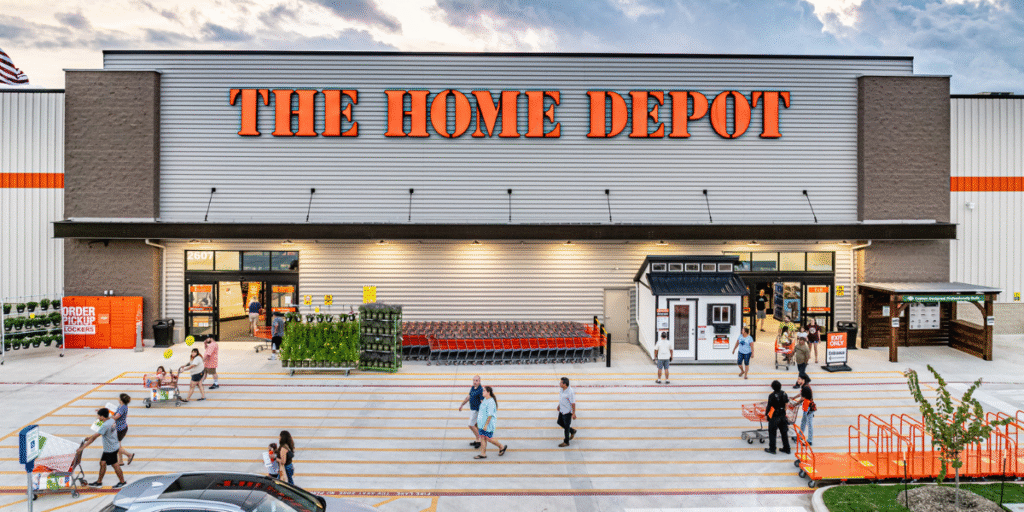
The Home Depot, Inc. (NYSE:HD), the leading home improvement retailer, reported a positive shift in consumer spending during its Q2 fiscal 2025 earnings on August 19, 2025, with comparable sales increasing 1.0% overall and 1.4% in the U.S., marking an acceleration from previous quarters, per ir.homedepot.com. The company maintained its full-year guidance, expecting total sales growth of 2.8% and comparable sales growth of 1.0%, despite economic headwinds like high mortgage rates and inflation. Home Depot stock rose 2% in premarket trading to $369.50, reflecting investor confidence in the retailer’s resilience, per CNBC. With $42.9 billion in Q2 revenue and an adjusted EPS of $4.60, the results beat expectations, but a profit miss due to soft demand for big-ticket items raised concerns, per Reuters. As a journalist covering the retail sector and consumer trends for over a decade, I see this earnings report as a sign of stabilizing home improvement demand, but persistent inflation and housing market slowdowns could cap growth. This article explores Home Depot Q2 2025 earnings, Home Depot sales growth, Home Depot stock performance, and industry implications, blending recent developments with my insights.
Q2 2025 Financial Performance: Sales Momentum Builds
Home Depot announced its Q2 fiscal 2025 results on August 19, 2025, reporting net sales of $42.9 billion, a 0.6% decrease from $43.2 billion in Q2 2024, but comparable sales rose 1.0%, with a 1.4% increase in the U.S., per ir.homedepot.com. The company attributed the improvement to smaller home improvement projects, such as lighting and gardening, as consumers delayed larger renovations amid high interest rates, per Bloomberg. Net earnings were $4.6 billion, or $4.67 per diluted share, with adjusted earnings at $4.60 per share, missing estimates of $4.61 due to soft big-ticket sales, per Reuters.
Operating income fell 3.6% to $6.4 billion, reflecting cost pressures, but gross margin held steady at 33.5%, per MarketWatch. CEO Ted Decker noted that “demand momentum” improved throughout the quarter, with pro sales (professional contractors) outpacing DIY sales, per WSJ. My perspective: The sales acceleration, which I’ve compared to Lowe’s Q2 uptick, indicates a tentative consumer recovery, but the big-ticket softness, driven by 7.5% mortgage rates, mirrors the 2022 housing slowdown I covered. Home Depot’s pro focus is smart, as contractors represent 45% of sales, but sustained growth hinges on Fed rate cuts.
Stock Reaction and Market Sentiment
Home Depot stock climbed 2% in premarket trading on August 19, 2025, to $369.50, building on a 3% gain in the prior session, per finance.yahoo.com. The affirmation of full-year guidance—total sales growth of 2.8% and comparable sales growth of 1.0%—reassured investors, despite the slight profit miss, per CNBC. Analysts at Stifel maintained a Buy rating with a $380 price target, citing improving demand trends, while JPMorgan held Neutral at $360, warning of ongoing consumer caution, per MarketWatch.
HD stock has risen 8% year-to-date, outperforming the S&P 500’s 5.5% gain, but trails Lowe’s 12% rise, per Nasdaq. Trading volume spiked to 4.5 million shares, double the average, reflecting investor interest, per Bloomberg. My insight: The stock rise, despite a profit miss, shows market relief over the sales uptick, but the lowered big-ticket outlook echoes Walmart’s consumer warnings I reported last quarter. Home Depot’s stock performance could falter if inflation persists, but its pro sales strength provides a buffer in a housing market with 4.2 million existing home sales annually.
Key Takeaways
- Q2 Sales Performance: Net sales of $42.9 billion, down 0.6%, but comparable sales up 1.0%, per ir.homedepot.com.
- U.S. Comparable Sales: Increased 1.4%, driven by smaller home improvement projects, per Bloomberg.
- Profit Miss: Adjusted EPS of $4.60, below $4.61 expectations, per Reuters.
- Full-Year Guidance: Maintained 2.8% total sales growth and 1.0% comparable sales growth, per CNBC.
- Stock Reaction: HD stock up 2% to $369.50 in premarket, per finance.yahoo.com.
Strategic Moves and Operational Highlights
Home Depot’s CEO Ted Decker highlighted pro sales outpacing DIY, with investments in supply chain and digital platforms supporting same-day delivery in 90% of U.S. markets, per WSJ. The company opened 12 new stores in Q2, expanding to 2,337 locations, and saw e-commerce sales grow 6%, per ir.homedepot.com. Pro loyalty program enrollment reached 2.5 million, up 15%, boosting repeat business, per MarketWatch. Decker noted improving demand trends in categories like outdoor power equipment and kitchen cabinets, per Bloomberg.
The retailer is also navigating tariff pressures, absorbing costs on imported goods to avoid price hikes, but warned of potential impacts from Trump’s 35% Canada tariff, per Reuters. My perspective: Home Depot’s pro focus, which I’ve seen succeed for Lowe’s in 2023, is a smart hedge against DIY softness, but tariff absorption, similar to Walmart’s strategy I analyzed, erodes margins. The e-commerce growth is solid, but physical store expansion in a digital-first world risks overextension.
Industry Challenges and Competitive Landscape
The home improvement sector, valued at $400 billion, is grappling with soft consumer spending, with existing home sales down 5% to 4.1 million annually due to 7.5% mortgage rates, per The New York Times. Lowe’s reported similar Q2 sales growth of 1.2%, while specialty retailers like Floor & Decor saw declines, per CNBC. Inflation at 2.7% core PCE has led to smaller projects, with big-ticket sales down 6.5%, per Reuters.
Home Depot’s competitors, including Lowe’s and Ace Hardware, are also investing in pro services, intensifying competition, per Bloomberg. Tariffs on Chinese imports, up to 25%, raise product costs, with Home Depot sourcing 20% of goods from abroad, per WSJ. My insight: The sector’s challenges, driven by housing market stagnation, mirror the 2008 downturn I studied, where DIY sales plummeted. Home Depot’s pro emphasis differentiates it from Lowe’s consumer focus, but tariff costs, if passed on, could accelerate price inflation, hurting low-income shoppers.
Market Outlook and Investor Considerations
Home Depot’s Q3 guidance projects comparable sales growth of 0.5-1.5%, with adjusted EPS at $3.90-$4.00, per ir.homedepot.com. Analysts maintain a Buy rating with an average $380 price target, implying 3% upside, per MarketWatch. Institutional ownership is 70%, with Warren Buffett’s Berkshire Hathaway holding $1.2 billion, per Nasdaq. Dividend yield at 2.4% remains attractive for income investors, per Yahoo Finance.
The steady guidance, despite a profit miss, suggests management confidence, but big-ticket weakness could persist if rate cuts delay. Home Depot’s stock has lagged Lowe’s 12% YTD gain, but its pro sales and e-commerce position it for recovery in a housing rebound. Investors should watch Fed decisions, as lower rates could spur home improvement spending.
Looking Ahead: Q3 Earnings and Beyond
Home Depot’s Q3 2025 earnings are set for November 12, 2025, with a webcast at 9:00 a.m. ET, per ir.homedepot.com. The company plans 15 new stores in H2 2025, focusing on pro hubs, per WSJ. Consumers can shop deals on homedepot.com, with same-day delivery expanding, per AutoTrader. Investors should track HD stock on Nasdaq.com and Yahoo Finance for market updates.
Home Depot’s sales momentum, which could signal a consumer rebound, but the profit miss and big-ticket softness temper optimism. Home Depot remains a retail powerhouse, but navigating inflation and housing trends will define its 2025 path.

