
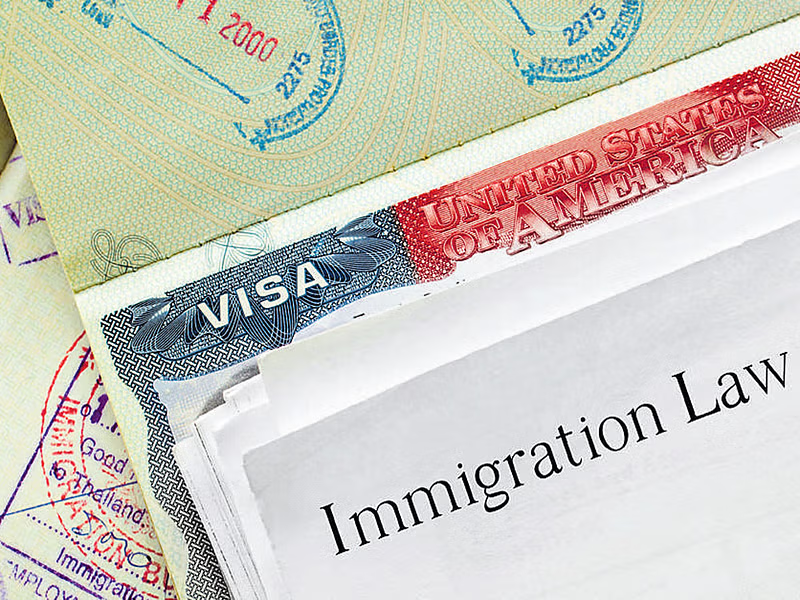
The highly anticipated results of the H-1B visa lottery were recently released, leaving many hopeful applicants – and the tech industry that relies on their skills – facing a mix of elation and disappointment. As the U.S. Citizenship and Immigration Services (USCIS) navigates an increasingly complex landscape, the fairness and effectiveness of the H-1B program continue to spark intense debate.
This year’s lottery, like previous years, saw a significant oversubscription, with demand far exceeding the available 85,000 visas (65,000 for bachelor’s degree holders and 20,000 for those with U.S. master’s degrees). This means many highly skilled foreign professionals, many of whom are already working in the U.S. under other visa categories, were not selected, putting their continued employment status in jeopardy.
The Impact on Tech and Other Sectors
The H-1B program is crucial for the U.S. tech sector, where companies often struggle to find qualified candidates for highly specialized roles. The visa allows companies to bring in talent from around the world in fields like software engineering, data science, and artificial intelligence. However, critics argue that the lottery system creates uncertainty and penalizes companies that invest in building teams with foreign talent.
Beyond tech, the H-1B program impacts various other sectors, including healthcare, finance, and academia. The annual scramble for visas has led to calls for reforms to better address the evolving needs of both U.S. businesses and the foreign workers seeking opportunities.
Recent Policy Changes and Legal Challenges
The H-1B program has been a frequent target of legal challenges and policy changes. The previous administration implemented stricter guidelines for eligibility, and the current administration has faced pressure to review and potentially alter the program further. These changes have led to increased scrutiny of applications and a greater sense of uncertainty for both employers and potential immigrants.
As someone who has followed the H-1B saga for years, I’ve witnessed the human stories behind the statistics. I’ve seen the hope in the eyes of talented individuals who dream of contributing to the U.S. economy, and the frustration when that hope is dashed by the randomness of a lottery system. The program, while aiming to bring in the best and brightest, often feels like a lottery with little predictability.
The debate over the H-1B isn’t just about visas; it’s about the larger question of how the U.S. attracts and retains global talent. While some argue for tighter restrictions to protect American jobs, the reality is that many of these positions require specialized skills that are hard to find domestically. We need a nuanced approach that balances workforce needs with the aspirations of those who come to our shores seeking to contribute their talents. There is a need to ensure that the skilled workforce that seeks to work in the US is provided with a fair and transparent process.

