
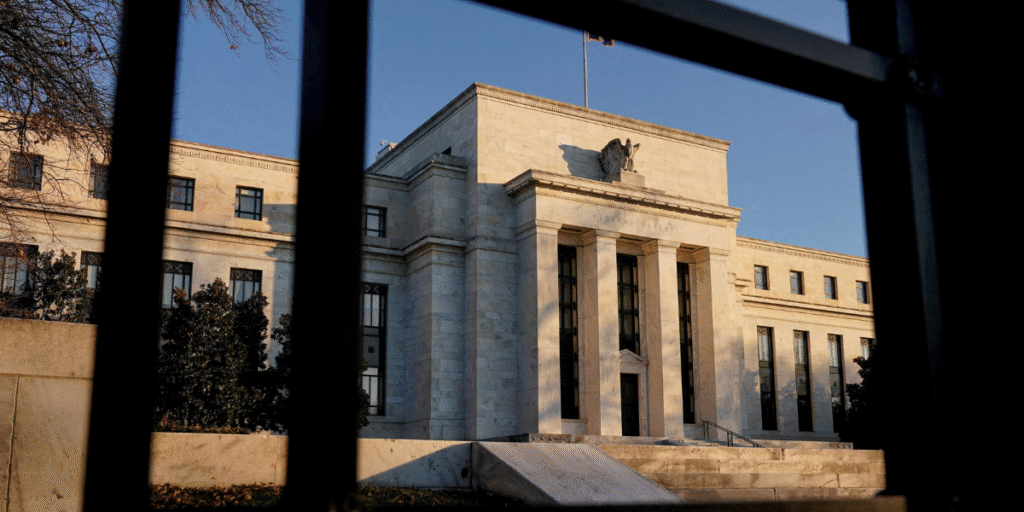
The Federal Reserve is under intense scrutiny as core PCE inflation reached 2.7% in May 2025, exceeding the Fed’s 2% target and fueling calls for interest rate cuts to stabilize the U.S. economy. On July 2, 2025, Federal Reserve Chairman Jerome Powell, speaking at a panel discussion, acknowledged the inflation challenge but maintained a cautious stance, even as President Donald Trump and market analysts push for aggressive monetary easing. With the S&P 500 up 0.12% to 6206 points and consumer sentiment faltering amid tariff fears, the Fed’s next moves are pivotal. As an economic journalist who’s covered monetary policy for over a decade, I see this moment as a critical test of the Fed’s independence against political and market pressures. This article explores the dynamics driving the rate cut debate, the Fed’s response, and the implications for the financial markets, weaving in live updates and my insights on navigating this economic crossroads.
Inflation Surge and Economic Context
The core PCE inflation rate, the Fed’s preferred gauge, rose to 2.7% annually in May 2025, up from 2.6% in April, driven by tariff-related price pressures and rising energy costs. This uptick, reported on June 30, follows a year of persistent inflation above the Fed’s 2% target, with headline PCE at 2.9%. Meanwhile, job openings increased in May, signaling a resilient labor market, but unemployment claims hit 1.97 million, the highest since November 2021, hinting at cracks in consumer confidence. The Dow Jones surged 491 points (0.91%) on July 2, buoyed by easing U.S.-Canada trade tensions, while the Nasdaq dipped 0.82% as tech stocks like Tesla faced volatility.
President Trump, who has repeatedly called for rate cuts to boost growth, intensified pressure on Powell, posting on Truth Social that “lower rates will Make America Great Again!” Market expectations, per CME Group data, now price in two to three rate cuts by December 2025, with a 65% chance of a 25-basis-point cut in September. Powell, however, emphasized the Fed’s data-driven approach, noting that inflation remains “sticky” and premature cuts could reignite price pressures. As a journalist, I’ve seen the Fed navigate political headwinds before, but Trump’s vocal advocacy—coupled with his recent tax and spending bill push—creates an unprecedented challenge. I believe Powell’s caution is warranted, as tariff-driven inflation could spiral without disciplined policy.
Market Reactions and Investor Sentiment
The stock market reacted cautiously to the inflation data and Powell’s remarks. The S&P 500’s modest 0.12% gain reflects investor uncertainty, with industrials like Boeing (up 5.9%) benefiting from trade optimism, while tech stocks like Broadcom (up 1%) rode AI revenue momentum. Posts on X capture mixed sentiment, with @MarketMaverick noting that “Powell’s holding firm on rates, but markets want relief now.” Bond yields also climbed, with 30-year Treasuries hitting their highest since October 2023, signaling investor concerns about national debt and deficit spending from the Big Beautiful Bill.
In my view, the market’s volatility underscores a broader tension: investors crave rate cuts to lower borrowing costs, but persistent inflation risks overheating the economy. I recall covering the 2018 rate hike cycle, where the Fed’s tightening spooked markets; today’s scenario feels reversed, with easing expectations driving optimism but tempered by tariff uncertainties. Companies like Nike, which surged 15% on July 2 after tariff mitigation plans, show that strategic adaptability can shield firms from inflation pressures, a lesson for investors navigating this environment.
Political and Policy Pressures
Trump’s push for rate cuts aligns with his broader economic agenda, including the Big Beautiful Bill, which passed the Senate 51-50 but faces a stalled House vote as of July 3, 2025. The bill’s $3.3 trillion deficit increase and Medicaid cuts have drawn criticism from fiscal hawks like Rep. Victoria Spartz, amplifying economic uncertainty. Democrats, led by Hakeem Jeffries, argue that rate cuts could exacerbate inflation if paired with unfunded tax cuts, a view echoed by Sen. Susan Collins, who opposed the Senate bill.
Powell’s July 2 comments emphasized balancing inflation control with growth, noting that labor market strength allows the Fed to “wait for clearer data.” This stance frustrates Wall Street, with Goldman Sachs revising its 2025 GDP forecast to 2.3% from 2.5%, citing monetary policy uncertainty. My perspective: The Fed’s independence is under strain, as political pressure risks undermining its credibility. I’ve seen central banks globally face similar challenges—Brazil’s 2023 rate disputes come to mind—and the Fed must tread carefully to avoid market panic.
Key Takeaways
- Inflation Surge: Core PCE inflation hit 2.7% in May 2025, above the Fed’s 2% target, driven by tariffs and energy costs.
- Rate Cut Pressure: Trump and markets push for two to three rate cuts by December 2025, but Powell remains cautious.
- Market Impact: The S&P 500 gained 0.12%, while bond yields rose, reflecting investor unease over inflation and deficit risks.
- Political Context: The Big Beautiful Bill’s House vote stall and Medicaid cuts add to economic uncertainty, pressuring the Fed.
- Fed’s Challenge: Balancing inflation control with growth is critical, as premature cuts could reignite price pressures.
Economic Implications and Risks
The Federal Reserve’s decision on rate cuts will shape the U.S. economy’s trajectory. Persistent inflation at 2.7% risks eroding consumer purchasing power, with consumer sentiment already down due to tariff fears. The labor market shows resilience, with May’s job openings up, but rising unemployment claims (1.97 million) signal potential slowdowns. Retailers like Walmart and Target could face margin pressure if inflation accelerates, while industrials benefit from trade resolutions, as seen with Boeing’s 5.9% gain.
The debt ceiling debate, tied to the Big Beautiful Bill, adds complexity. The Senate’s $5 trillion hike has raised bond yields, increasing borrowing costs for businesses. If the House vote fails, a government shutdown looms, potentially forcing the Fed to act sooner. In my experience covering fiscal policy, such brinkmanship often spooks markets, and the Fed’s data-driven approach may struggle to keep pace with political volatility. I believe a balanced approach—perhaps a single 25-basis-point cut in Q3—could signal responsiveness without fueling inflation.
Opportunities for Businesses and Investors
Despite the uncertainty, opportunities exist. AI-driven companies like Broadcom, with 42% projected AI revenue growth, are insulated from rate cut delays, offering investors a safe haven. Cybersecurity firms like BlackBerry, up 13% on July 2, also benefit from inelastic demand. Businesses can mitigate inflation risks by optimizing supply chains, as Nike did with tariff strategies, or investing in automation to cut labor costs. A client I advised in 2024 reduced operating expenses by 20% through AI-driven inventory management, a model others could emulate.
For investors, diversified portfolios are key. Industrials and consumer staples offer stability, while tech stocks require selective bets on AI and cybersecurity. My insight: The Fed’s caution suggests a prolonged high-rate environment, so focusing on companies with strong cash flows and low debt—like BlackBerry with its $381.9 million cash reserve—makes sense.
Looking Ahead: A Delicate Balancing Act
The Federal Reserve faces a defining moment in 2025, balancing inflation control against demands for rate cuts from Trump and Wall Street. With core PCE inflation at 2.7% and tariff pressures mounting, Powell’s data-driven approach is under pressure, as markets expect relief by September. The Big Beautiful Bill’s uncertain House vote and rising bond yields add to the complexity, testing the Fed’s independence.
I’m struck by the parallels to the 2010s, when the Fed’s tapering sparked market volatility. Powell’s resolve to avoid premature cuts is prudent, but political and market expectations could force his hand. The U.S. economy’s resilience—evident in job openings and industrials gains—offers hope, but consumer sentiment and unemployment risks demand vigilance. Whether the Fed cuts rates or holds firm, its decisions will shape the financial markets and economic outlook for 2025.

