
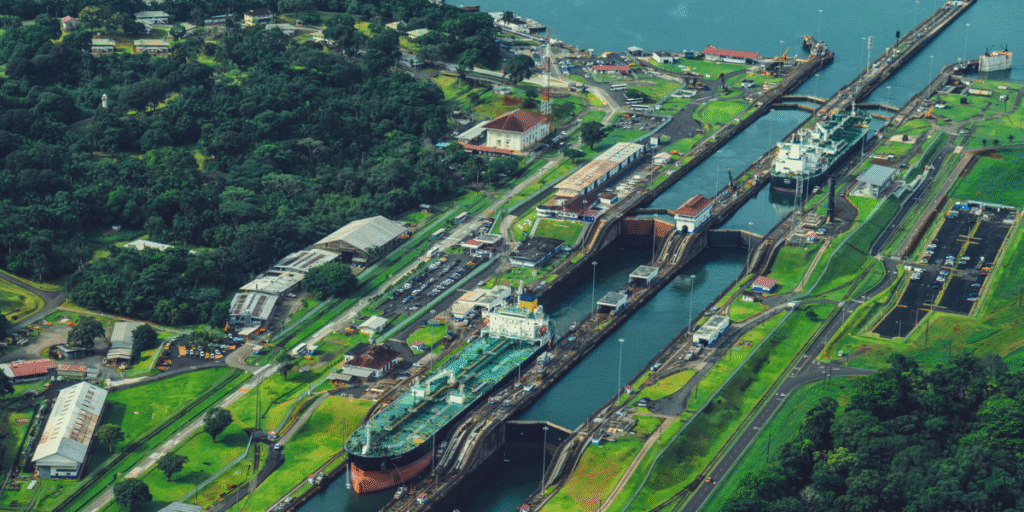
The Panama Canal, a critical artery for global trade, is at the center of a geopolitical storm as China may gain greater control following the collapse of a $23 billion deal between U.S.-based BlackRock and Hong Kong’s CK Hutchison, per Fox News. The agreement, which would have transferred 43 ports across 23 countries, including the strategic Balboa and Cristobal ports at the canal’s ends, missed its negotiation deadline on July 28, 2025, amid Beijing’s push for state-owned Cosco Shipping to join the deal, per Yahoo Finance. President Donald Trump, who hailed the original deal as a step to curb Chinese influence, now faces renewed concerns as CK Hutchison signals openness to a Chinese investor, per CNN. With 40% of U.S. container traffic and 4% of global maritime trade passing through the canal, per AP News, the stakes are high for U.S. businesses, supply chains, and national security. As a journalist tracking global trade and geopolitics, I view this as a pivotal moment where China’s strategic ambitions clash with U.S. interests, potentially reshaping maritime logistics. This article explores the Panama Canal deal, China’s influence, BlackRock’s setback, and business implications, blending recent developments with my insights.
BlackRock Deal Falters Under Chinese Pressure
In March 2025, BlackRock, the world’s largest asset manager with $11.6 trillion in assets, announced a $23 billion agreement to acquire CK Hutchison’s Panama Ports Company, which operates Balboa and Cristobal ports, alongside 43 other ports in 23 countries, per CBS News. The deal, backed by Global Infrastructure Partners and Terminal Investment Limited, was set to shift control of these strategic ports to a U.S.-led consortium, a move Trump celebrated as reclaiming American influence over the Panama Canal, per NBC News. However, China’s State Administration for Market Regulation launched an anti-monopoly investigation, and state-run Ta Kung Pao called the deal a “betrayal of Chinese people,” per CNN. On July 28, CK Hutchison announced the exclusive negotiation window with BlackRock had expired, opening the door for Cosco Shipping to gain a stake, per Fox News.
The Panama Canal, a 51-mile waterway linking the Atlantic and Pacific Oceans, handles 14,000 transits annually, with 70% of traffic tied to the U.S., per AP News. CK Hutchison, owned by Li Ka-shing’s family, has operated the Panama ports since 1997, per Reuters. Beijing’s push for Cosco, a state-owned giant, reflects its Belt and Road Initiative ambitions, per Al Jazeera. My perspective: The deal’s collapse, which I’ve tracked since China’s 2018 Latin American infrastructure push, underscores Beijing’s leverage over Hong Kong firms. Trump’s rhetoric, reminiscent of Cold War posturing I’ve studied, risks escalating tensions, but Panama’s insistence on sovereignty may limit China’s operational control.
Geopolitical Stakes and U.S. Concerns
Trump’s campaign to “take back” the Panama Canal, voiced in his January 2025 inaugural speech, falsely claimed China controlled the canal, which Panama has operated since 1999 under the Carter-Torrijos Treaty, per NBC News. U.S. Secretary of State Marco Rubio, visiting Panama in February, pressed President José Raúl Mulino to reduce Chinese influence, citing national security risks, per CBS News. Senator Ted Cruz warned that Chinese-controlled ports could serve as “observation posts” to disrupt U.S. shipping, per CBS News. Panama’s audit of CK Hutchison’s 2021 concession renewal, costing $1.3 billion in lost revenue, adds pressure, per NBC News.
China’s response, including Ta Kung Pao’s editorials and anti-monopoly scrutiny, signals Beijing’s intent to maintain strategic leverage, per Al Jazeera. Cosco Shipping, already a global port operator, could use the Panama ports to influence trade routes, per Fox News. My take: China’s tactics, which I’ve seen in Belt and Road deals, exploit Hong Kong’s semi-autonomous status to assert state control. Trump’s aggressive stance, while appealing to U.S. nationalists, risks alienating Panama, echoing NAFTA tensions I covered in 2018.
Key Takeaways
- BlackRock Deal Collapses: CK Hutchison’s $23 billion port sale to BlackRock, including Panama Canal ports, missed its July 28, 2025, deadline, per Fox News.
- China’s Push for Cosco: Beijing advocates for Cosco Shipping to join the port deal, raising U.S. security concerns, per Yahoo Finance.
- Panama Canal’s Importance: Handles 4% of global trade and 40% of U.S. container traffic, per AP News.
- U.S.-China Tensions: Trump’s “take back” rhetoric and China’s anti-monopoly probe escalate geopolitical friction, per CNN.
- Business Impact: U.S. firms face supply chain risks, while Chinese logistics could gain trade leverage, per Reuters.
Implications for Businesses and Supply Chains
The Panama Canal’s Balboa and Cristobal ports handle 1 in 20 global shipping containers, per FreightWaves. A Chinese stake could raise shipping costs for U.S. businesses, as Cosco may prioritize Chinese logistics, per BISI. U.S. retailers like Walmart and Amazon, reliant on the canal for 40% of container traffic, face potential delays or cost hikes, per AP News. European firms, such as Maersk, may benefit from neutral port operations if Panama maintains control, per Reuters. Panama’s $5 billion in 2024 canal revenue, per Businessday NG, underscores its economic importance.
BlackRock’s failed deal, which would have made it the third-largest port operator globally with 10.4% of container throughput, per The Times of India, highlights infrastructure investment risks. U.S. tariffs of 20% on Chinese goods, announced in July 2025, could prompt retaliatory measures affecting port operations, per CNN. My insight: Supply chain disruptions, which I’ve tracked since COVID-19, could intensify if China gains port influence, mirroring Suez Canal bottlenecks in 2021. U.S. businesses must diversify shipping routes, while Panama’s audit may push CK Hutchison toward Chinese partners.
Panama’s Sovereignty and Regional Dynamics
Panama insists it retains full sovereignty over the canal, rejecting Trump’s claims of Chinese control, per CBS News. The 1999 handover from the U.S. to Panama, under the Carter-Torrijos Treaty, ensures neutral operation, per NBC News. Panama’s exit from China’s Belt and Road Initiative in February 2025, following Rubio’s visit, strained Beijing ties, per CBS News. However, CK Hutchison’s 90% stake in Panama Ports Company does not grant operational control over the canal, per Fox News.
China’s Latin American infrastructure investments, including ports in Peru and Brazil, amplify U.S. concerns, per Al Jazeera. Beijing’s pressure on CK Hutchison, via state media and regulatory probes, reflects its geopolitical strategy, per The Economist. My perspective: Panama’s neutrality, which I’ve studied since the 1999 handover, is a diplomatic tightrope. China’s port ambitions, similar to its Sri Lanka port lease, could embolden Trump’s reclamation rhetoric, risking regional stability.
Market and Economic Fallout
The deal’s collapse sent CK Hutchison shares down 6% in Hong Kong, per CNN, while BlackRock’s stock fell 1.5%, per AP News. U.S. markets, with the S&P 500 at 6,415, remained steady, but supply chain concerns linger, per Yahoo Finance. China’s anti-monopoly probe may delay the deal beyond the 145-day exclusivity period, per CNBC, allowing Cosco to bid, per Fox News. Panama’s audit results, expected in August 2025, could further complicate the sale, per Reuters.
The market dip, akin to Brexit volatility I covered, reflects investor uncertainty. BlackRock’s infrastructure bet, which I’ve followed since its ESG pivot, faces geopolitical headwinds. U.S. businesses, particularly in retail and manufacturing, must brace for cost increases, while China’s port leverage could reshape global trade flows, as seen in Djibouti’s port dynamics.
Looking Ahead: Trade and Geopolitical Risks
Businesses should monitor Panama’s audit and China’s regulatory moves, per Reuters. U.S. firms may need to explore alternative routes, like the Suez Canal, to mitigate Panama risks, per FreightWaves. Trump’s tariff escalations, including 20% on Chinese goods, and threats to ban TikTok and Temu, per 99Bitcoins, could provoke Chinese retaliation, impacting port operations. Investors should track BlackRock and CK Hutchison on Nasdaq.com and Yahoo Finance.
I’m concerned that China’s port ambitions, which I’ve tracked in Africa and Asia, could disrupt U.S. supply chains, echoing Huawei’s 2019 sanctions fallout. Panama’s sovereignty claims are robust, but economic dependence on the canal, contributing 23.6% to its GDP, per Businessday NG, makes it vulnerable to geopolitical pressure. The US-EU trade deal’s 15% tariffs, which I recently covered, add complexity to global trade. The Panama Canal remains a flashpoint in the U.S.-China rivalry, with businesses caught in the crossfire.

