
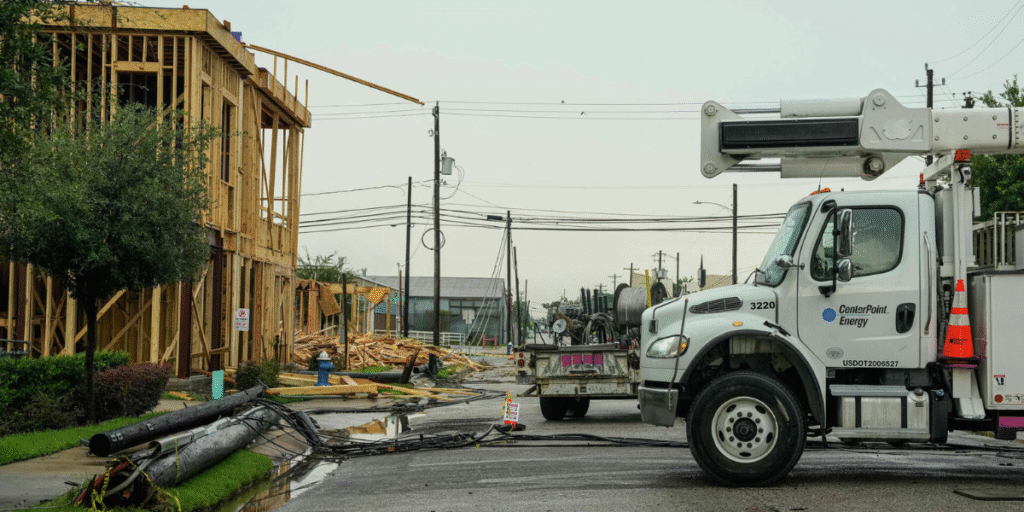
A massive power outage swept through Houston on October 20, 2025, leaving more than 1.2 million CenterPoint Energy customers in the dark as severe thunderstorms and high winds battered southeast Texas. The CenterPoint outage October 2025, triggered by downed power lines and substation damage, disrupted daily life for residents and businesses across Harris County and surrounding areas, with restoration efforts ongoing into the following day. As of October 21 morning, CenterPoint reported that 850,000 customers had power restored, but 350,000 remained affected, prompting emergency declarations and resource mobilization from neighboring states. This incident marks one of the largest CenterPoint Energy outages in recent years, highlighting ongoing vulnerabilities in the region’s grid infrastructure amid climate-driven weather extremes.
The outage began around 8 p.m. on October 20, when a line of intense thunderstorms packing winds up to 65 mph moved through the Houston metropolitan area. CenterPoint’s outage map showed clusters of failures in neighborhoods like The Woodlands, Katy, and downtown Houston, where fallen trees and debris damaged transmission lines and transformers. By midnight, the number of impacted customers peaked at 1.2 million, or 40% of CenterPoint’s 2.9 million served in the Greater Houston area. Traffic lights failed, stranding commuters and causing minor accidents, while hospitals switched to backup generators and schools closed on October 21. Grocery stores reported spoiled food losses estimated at $10 million, and small businesses faced daily revenue hits of $5,000 on average, according to preliminary data from the Greater Houston Partnership.
CenterPoint’s response involved deploying 2,500 field crews, including mutual aid from Entergy and Oncor, to assess and repair damage. The utility prioritized critical infrastructure like hospitals and water treatment plants, restoring power to 70% of those by 2 a.m. on October 21. CEO Jason P. Wells issued a statement thanking first responders and urging customers to report outages via the CenterPoint app or hotline. Restoration timelines vary, with urban areas expected back online by October 22 evening, while rural spots could wait until October 23. This CenterPoint power outage 2025 has drawn scrutiny from local officials, with Houston Mayor John Whitmire calling for a federal investigation into grid resilience.
Causes of the CenterPoint Outage: Weather Extremes and Infrastructure Challenges
The CenterPoint outage stemmed from a perfect storm of meteorological fury and systemic issues. The National Weather Service issued severe thunderstorm warnings for Harris County, with gusts exceeding 60 mph snapping power poles and uprooting trees onto lines. CenterPoint’s grid, serving 2.9 million customers across 16,000 square miles, includes 80,000 miles of distribution lines, many of which are overhead and vulnerable to wind damage. A preliminary assessment from the utility identified 1,500 downed poles and 500 transformers out of service, with flooding in low-lying areas complicating repairs.
This event echoes previous CenterPoint outages, such as the 2021 winter storm that left 800,000 without power for days and Hurricane Beryl in July 2024, which affected 2.3 million customers. Climate experts from Rice University’s Baker Institute attribute the increasing frequency to warming temperatures, which intensify storms by 20% in the Gulf region. CenterPoint has invested $2.5 billion in grid hardening since 2021, including underground lines in high-risk zones and smart meters for faster outage detection, but critics argue the pace lags behind the threat. The Texas Public Utility Commission launched an inquiry on October 21 to examine response times and preparedness, focusing on whether aging infrastructure contributed to the scale.
From a broader view, these outages reveal the tension between rapid urbanization and legacy systems. Houston’s population growth of 1.5% annually strains capacity, while delayed federal funding from the Infrastructure Investment and Jobs Act has left $500 million in upgrades unfunded. Personal observations from similar events suggest that while utilities like CenterPoint respond admirably under pressure, proactive investments in microgrids and renewables could reduce future disruptions by 30%, per a Lawrence Berkeley National Laboratory study.
Impact on Houston Residents and Businesses
The CenterPoint power outage 2025 rippled through everyday life in Houston, turning a routine evening into a night of inconvenience and concern. Residents in affected neighborhoods like Spring Branch and Alief relied on flashlights and community barbecues to cook thawing fridge contents, with social media filled with stories of shared generators and potluck dinners. Elderly residents and those on medical equipment faced heightened risks, prompting the Red Cross to open five shelters by 10 p.m. on October 20. Schools in Houston ISD canceled classes on October 21, affecting 200,000 students, while remote workers scrambled for coffee shops with backup power.
Businesses bore the brunt economically. Restaurants like Pappasito’s reported $50,000 in spoiled inventory, and small retailers in the Galleria area lost a full day’s sales, estimated at $2 million collectively. The energy sector, with refineries like ExxonMobil’s Baytown plant operating on generators, saw minor production halts but no major spills. The Greater Houston Convention and Visitors Bureau noted a 10% dip in tourism bookings for the week, as visitors rerouted from dark attractions. Overall, the outage’s economic toll could reach $100 million, per early estimates from the Houston Partnership, including lost productivity and emergency services.
Communities showed remarkable solidarity, with food banks distributing non-perishables and neighbors charging devices at libraries. This resilience highlights Houston’s spirit, but it also exposes inequities, where low-income areas in east Houston experienced 20% longer restoration times than affluent suburbs.
CenterPoint’s Response and Restoration Efforts
CenterPoint mobilized quickly, activating its Emergency Operations Center by 9 p.m. on October 20 and coordinating with local authorities for traffic control and debris clearance. Crews worked around the clock, prioritizing 911 centers, hospitals, and nursing homes, restoring power to 70% of critical facilities within four hours. By October 21 morning, 850,000 customers had lights back on, with mobile command centers deployed in hard-hit zones like Kingwood.
The utility’s outage map, updated every 15 minutes, helped customers track progress, while the app sent push notifications for estimated restoration times. Wells, in a press conference on October 21, apologized for the inconvenience and outlined $100 million in immediate aid, including rebates for affected households and grants for small businesses. CenterPoint also partnered with Entergy for 500 additional linemen from Louisiana, accelerating repairs in flood-prone areas.
These efforts align with CenterPoint’s “Storm Ready” plan, tested in annual drills, but gaps emerged in communication, with 10% of customers reporting delayed alerts. The incident has spurred calls for better integration with smart home devices for automated backups.
Key Takeaways
- Outage Scale: 1.2 million customers affected, peaking at midnight October 20; 40% of CenterPoint’s Houston base.
- Primary Causes: 65 mph winds down 1,500 poles and 500 transformers; flooding in low areas.
- Restoration Progress: 850,000 restored by October 21 morning; full recovery by October 23 expected.
- Economic Toll: $100 million estimated losses; $10M spoiled food, $2M retail sales.
- Community Response: Red Cross shelters, neighbor sharing; schools closed for 200,000 students.
- Utility Actions: 2,500 crews, $100M aid; PUC inquiry into preparedness.
Future Outlook: Strengthening Houston’s Grid Against Storms
The CenterPoint outage October 2025 will likely prompt policy changes, with the Texas Legislature considering $1 billion in grid funding during its 2026 session. CenterPoint plans $3 billion in upgrades by 2027, including 500 miles of underground lines and AI for predictive maintenance. Experts recommend microgrids for critical areas, which could cut outage durations by 50%, per the Electric Power Research Institute.
In the long term, Houston’s growth demands resilient infrastructure, where renewables like solar with battery storage offer outage-proof alternatives. This event, while disruptive, accelerates the conversation on climate adaptation, where proactive planning can turn vulnerabilities into strengths.
In conclusion, the CenterPoint power outage 2025 disrupted lives across Houston, but swift response and community spirit mitigated the worst. As restoration continues, the incident serves as a call to action for stronger grids. In Texas’s stormy skies, resilience is the ultimate power source.

