
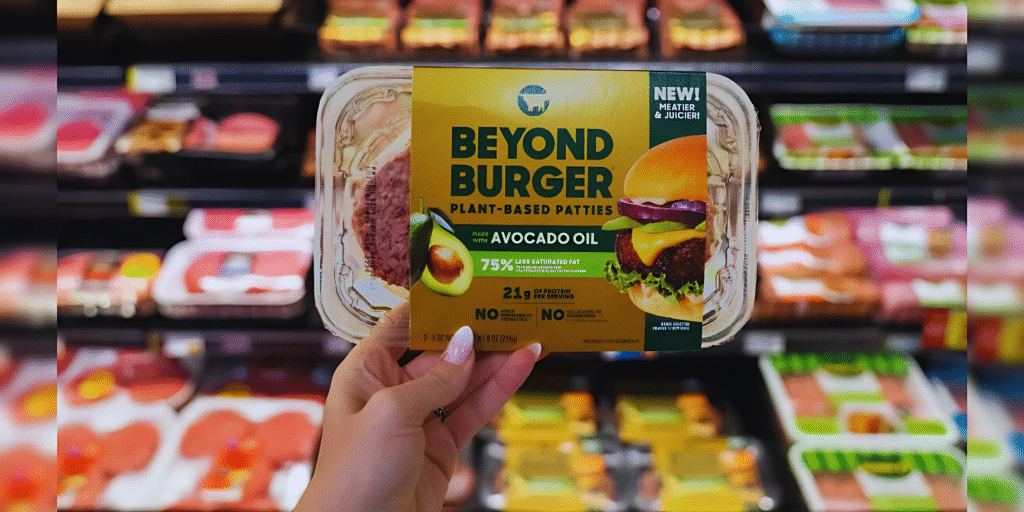
Beyond Meat Inc. (NASDAQ: BYND) shares have plummeted to their lowest levels in history, trading below $1 for the first time on October 14, 2025, following a debt restructuring deal that significantly diluted existing shareholders. The El Segundo, California-based plant-based meat pioneer announced the early settlement of its convertible notes exchange offer on October 13, leading to the issuance of 316.15 million new shares, a move that has sparked widespread concern among investors. This Beyond Meat stock 2025 collapse saw shares dive 46% in the past year alone, erasing gains from its 2019 IPO peak of nearly $235 and leaving the company with a market cap under $60 million. As the stock hit an intraday low of 85 cents on October 14, trading volume exploded to 150 million shares, triple the average, reflecting panic selling amid fears of further financial strain in the struggling alternative protein sector.
The Beyond Meat debt swap deal, detailed in a GlobeNewswire filing on October 16, involved exchanging $1.1 billion in outstanding convertible notes due in 2027 for new shares and cash. The transaction, which closed early to avoid a potential default, reduced the company’s debt burden by $800 million but flooded the market with fresh equity, increasing shares outstanding by 35% to over 650 million. This dilution has crushed shareholder value, with the stock closing at $0.95 on October 16, down 5.9% from the prior day. Beyond Meat’s management framed the move as a “proactive step to strengthen the balance sheet,” but critics argue it prioritizes creditor appeasement over equity holders in a company already grappling with declining sales and persistent losses.
Q3 2025 Earnings Miss Adds Pressure to Beyond Meat’s Financial Woes
The debt deal comes on the heels of Beyond Meat’s Q3 2025 earnings report, released on October 9, which missed Wall Street expectations and deepened concerns about the company’s path to profitability. Revenue fell 15% year-over-year to $75.6 million, below the $82 million forecast, as US retail sales dropped 20% amid consumer pullback from plant-based products. Net loss widened to $350 million, or $0.53 per share, compared to $63.3 million last year, driven by $200 million in impairment charges on manufacturing assets and higher marketing spends to regain shelf space. International sales, which account for 55% of total revenue, provided some relief with a 5% gain in Europe, but overall gross margins contracted to 10% from 15%, squeezed by commodity costs and promotional pricing.
Beyond Meat’s leadership attributed the miss to “macroeconomic pressures and shifting consumer preferences,” pointing to a 10% decline in household penetration for plant-based meats in the US, per Nielsen data. The company launched new products like Beyond Chicken Pieces in October, aiming to recapture the $1.4 billion US market, but early sales figures suggest limited traction. With cash reserves at $150 million and $1.1 billion in debt, the restructuring provides breathing room but underscores the urgency of cost-cutting measures, including a 10% workforce reduction announced in September that affected 60 employees.
Stock Performance and Analyst Reactions to Beyond Meat Debt Deal
BYND stock has been on a downward spiral since its 2019 debut, with the October 2025 debt swap accelerating the freefall. Shares, which peaked at $239.71 in the IPO aftermarket, have shed 99.6% of that value, hitting a record low of 85 cents on October 14. The dilution from 316 million new shares has sparked outrage among retail investors, with short interest surging to 35% of the float, up from 25% in September. Trading volume on October 14 reached 200 million shares, the highest in five years, as hedge funds covered positions and speculators piled in on the downside.
Analyst sentiment has turned decidedly bearish. Barclays reiterated a Sell rating on October 15, slashing its price target to $0.50 from $2.00, citing “insurmountable dilution and eroding market share.” Morningstar downgraded the stock to Sell from Hold, with a fair value of $1.20, warning that the debt deal, while staving off bankruptcy, leaves little room for error in a sector where Impossible Foods has gained 15% market share. Consensus estimates now peg 2025 revenue at $350 million, down 10% from prior forecasts, with EPS at -$1.80. Options activity shows heavy put volume in December $1 strikes, with implied volatility at 120%, signaling expectations of further declines. The stock’s 1x price-to-sales ratio, versus the consumer staples sector’s 2.5x, reflects deep pessimism, but some contrarians see value in the $150 million cash pile if management executes a turnaround.
Beyond Meat’s Strategic Pivot Amid Plant-Based Market Shifts
Beyond Meat’s financial turbulence occurs against a backdrop of shifting dynamics in the plant-based meat sector, where growth has slowed from 40% in 2021 to 5% in 2025, per Plant Based Foods Association data. The company, once a Wall Street darling with partnerships like McDonald’s McPlant, now faces intensifying competition from Impossible Foods and established players like Tyson Foods entering the space with hybrid products. Beyond Meat’s Q3 launch of juicy, tender Beyond Chicken Pieces, offering 21 grams of plant protein per serving, aims to recapture the $7 billion chicken alternative market, but initial retail tests show only 3% category penetration. International expansion remains a bright spot, with Europe sales up 5% to $40 million, prompting a $50 million investment in a new Dutch facility for 2026 production.
Management’s strategy focuses on premiumization and cost reduction, including a 20% cut in R&D spending to prioritize high-margin items like jerky and sausages. The debt swap, while dilutive, extends maturities to 2029, giving breathing room to achieve breakeven by 2027, a goal CEO Ethan Brown reiterated in the Q3 call. Partnerships with PepsiCo for Beyond Beef jerky distribution in 5,000 stores could add $100 million in revenue if successful. Challenges persist: Consumer surveys from Mintel show 60% of Americans tried plant-based once but didn’t repeat, citing taste and price as barriers. Beyond Meat’s average product at $6.99 per pound, 50% higher than conventional meat, exacerbates this in an inflationary environment.
Reflecting on the sector’s evolution, Beyond Meat’s struggles highlight the difficulty of scaling disruptive food tech in a market favoring familiarity. The initial hype around meat alternatives as climate saviors has tempered, with emissions reductions from plant-based diets at just 20% versus beef, per Oxford studies. Yet, opportunities in emerging markets like Asia, where Beyond Meat entered Indonesia in September, could drive 15% growth if cultural adaptation succeeds. The company’s $150 million cash position, post-debt swap, affords flexibility, but execution on new products and cost controls will determine if it rebounds from the abyss.
Key Takeaways
- Debt Swap Details: $1.1B convertible notes exchanged for 316M new shares and cash, reducing debt by $800M but diluting equity 35%.
- Q3 Earnings Miss: Revenue $75.6M (-15% YoY), net loss $350M; gross margins 10% from 15%.
- Stock Collapse: BYND below $1, down 99.6% from 2019 IPO peak; short interest 35%.
- Analyst Outlook: Barclays Sell at $0.50; Morningstar Sell at $1.20; 2025 revenue $350M (-10% from prior est.).
- Strategic Moves: Beyond Chicken Pieces launch; PepsiCo jerky partnership; Dutch facility for 2026.
- Market Context: Plant-based growth slows to 5% in 2025; Impossible gains 15% share.
Future Outlook: Can Beyond Meat Rebound from Rock Bottom?
Beyond Meat’s path forward in 2025 hinges on product innovation and market repositioning. The October 16 lock-up release on the 316 million new shares, effective at 5 p.m. ET, could prompt further selling pressure, potentially pushing the stock toward $0.50 if volume sustains. Q4 earnings on November 7 will be crucial, with consensus expecting $70 million in revenue and a $0.45 loss per share. Success in new launches, like the chicken pieces, could stem losses if they capture 5% of the $7 billion category. International growth, with Europe at 55% of sales, offers hope, but US retail recovery remains elusive amid 10% household penetration decline.
The plant-based sector’s maturation, with hybrid meats from Tyson and Perdue gaining traction, challenges Beyond Meat’s pure-play model. Cost reductions, targeting 20% lower COGS through supply chain tweaks, could improve margins to 15% by 2026. With $150 million in cash and no immediate debt maturities, bankruptcy risks are low, but shareholder dilution has eroded trust. Potential catalysts include McDonald’s McPlant relaunch in 2026 or regulatory tailwinds from EU green labeling. Risks abound: If sales stay flat, further capital raises could worsen dilution, capping upside at $2 per share.
In summary, Beyond Meat’s October 2025 debt swap and stock plunge to below $1 encapsulate a company at a crossroads, where financial engineering meets market realities. As new products test consumer appetites, the road to recovery demands innovation and discipline. In the plant-based saga, Beyond Meat’s next chapter will test if resilience can rewrite its narrative.

