
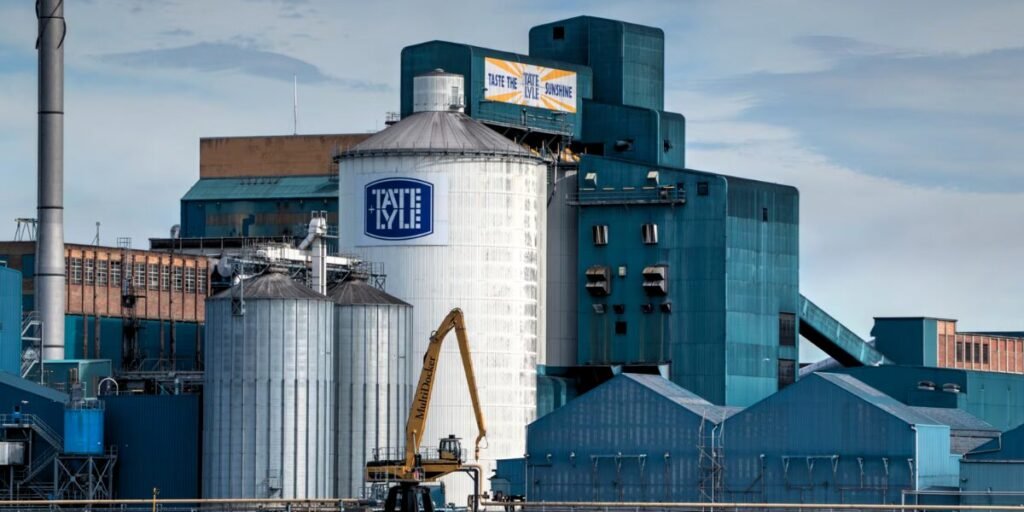
US ingredients group Ingredion has agreed to acquire UK-listed Tate & Lyle for approximately $3.6 billion, creating one of the largest pure-play specialty-ingredients businesses in the world and pulling a meaningful UK-listed name into a consolidating global sector.
The transaction, confirmed earlier this week and now moving into regulatory review, brings together Ingredion’s starches, sweeteners and specialty-ingredients book with Tate & Lyle’s food-and-beverage solutions franchise, which has been Tate’s strategic core since the divestment of its primary products business in 2022. The combined group will sit close to the front of the global league table by revenue, behind only the agribusiness majors and a small number of European chemicals-adjacent players.
Deal mechanics
The transaction is structured as a recommended cash-and-stock offer at a premium of roughly 28 percent to Tate & Lyle’s undisturbed share price, with the cash portion financed through a committed bridge facility led by a syndicate of US and UK relationship banks. The implied enterprise value sits north of $4 billion once Tate’s net debt is included. Synergy guidance pencils in roughly $200 million of run-rate cost savings inside three years, with the heaviest concentration in procurement, shared services and overlapping R&D footprint in Europe.
The Tate board has recommended the offer and irrevocables have been received from a meaningful slice of the top twenty institutional shareholders. The deal still requires a court-sanctioned scheme of arrangement in the UK and the usual antitrust clearances in the US, EU, UK and a handful of secondary jurisdictions.
The strategic logic
Three things sit behind the move. Customer demand has been shifting toward fewer, larger ingredients partners with global formulation capability — a procurement preference that has accelerated since the post-pandemic supply-chain reset. Both companies are exposed to the same handful of multinational food and beverage customers, and a combined platform can defend pricing into that consolidated buyer base more credibly than either could alone. And the GLP-1 reformulation wave — every major CPG company is now actively reformulating SKUs for changed appetite and macro mixes — needs ingredients science at scale to execute against.
“A recommended cash-and-stock offer at a premium of roughly 28 percent to the undisturbed price.”
— Deal terms summary, transaction documents reviewed by TSD
The London-listings drain
Tate is the most prominent UK take-private of the quarter and the largest single removal from the FTSE 100 ingredient sector in more than a decade. It lands amid an active policy debate in London about the steady migration of mid-cap names off the LSE — a story that has been picking up volume with each successive deal. The Treasury is understood to have made no representations on the Ingredion transaction, but the optics around domicile will not be lost on the next round of UK-listed companies fielding inbound approaches.
Regulatory timeline
Antitrust review is the most material gating item. Ingredion and Tate overlap meaningfully in citric acid derivatives, certain texturisers and specific sweetener categories, and a divestment package will almost certainly be required to satisfy at least one of the EU and UK regulators. The working assumption inside both companies is closure in the first half of 2027.
For the broader deals market, this is the second transatlantic specialty-ingredients combination announced this quarter and the clearest signal yet that the food and beverage ingredients consolidation cycle has another two to three years to run. The next companies to watch are the mid-cap European specialty flavourings names — three of which are now almost certainly on a banker’s slide somewhere in midtown Manhattan.

