
By Sarah Chen · Senior Markets Correspondent · Mon, May 4, 2026 · 7:35 AM EST
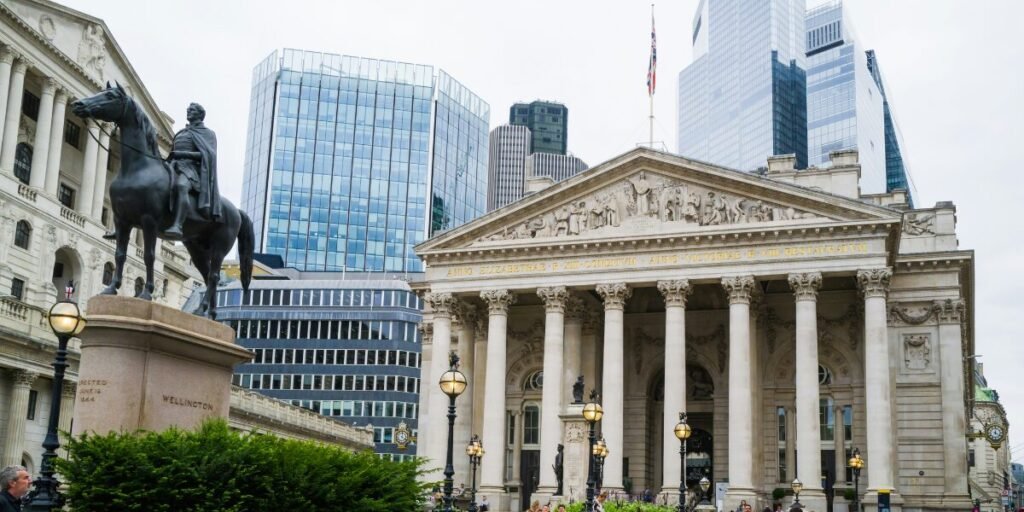
The Bank of England has kept its base rate steady at 3.75% as UK inflation climbs back to 3.3%, leaving markets pricing in the possibility of further tightening even as growth forecasts are revised lower.
Sterling traded around $1.36 against the dollar and €1.16 against the euro as London opened the new week, with rate-sensitive corners of the FTSE 250 doing most of the moving. The Monetary Policy Committee’s accompanying statement flagged that the outlook for energy prices remains highly uncertain — central-bank language that, in plainer English, means more rate cuts are not happening any time soon.
Three things are colliding for UK markets at once: imported energy inflation, a tighter security backdrop, and a fiscal debate over how much further wealth-related taxes can climb without choking investment.
Energy and security feed inflation
Brent’s stubborn perch above $111 a barrel feeds straight into UK consumer prices through fuel, transport and utility costs. Net mortgage approvals for house purchases held up at 63,531 in March — the highest reading since November — but the effective rate on newly drawn mortgages stayed above 4 percent, which keeps household balance sheets stretched.
The terror threat level being raised to severe over the weekend adds another layer. It does not change rates, but it does change the operating environment for retailers, transport operators and the insurance industry, all of which have to budget for tighter security and the consumer-confidence drag that tends to follow.
| “Higher rates increase borrowing costs and slow payments as customers prioritise cash preservation.”— CPA UK Business Briefing, May 2026 |
Whisky tariffs offer a rare bright spot
On the trade side, Washington’s plan to remove tariffs on Scotch whisky is one of the few unambiguously positive lines for UK exporters this quarter. The category has been pinched for nearly seven years across two tariff cycles, and the lift removes a roughly 25 percent cost wedge for distillers shipping into a US market that buys around £1 billion of Scotch a year.
HMRC’s separate proposal to mandate reporting of close-company transactions has, however, drawn loud pushback from small-business groups. Critics argue the 12-week consultation hands extra compliance load to firms with fewer than five shareholders without doing much to close the tax gap. This regulatory friction arrives at a challenging moment as businesses already grapple with a 3.75% base rate and rising energy-led inflation.
While the whisky sector celebrates newfound American demand, smaller firms fear these reporting mandates will stifle their agility, further complicating the fiscal landscape for domestic investors already navigating a severe terror threat and high borrowing cost
The week ahead for UK markets
Earnings from HSBC and Shell will dominate the FTSE 100 calendar this week and will set the tone for whether London’s banks and oil majors can keep narrowing the valuation gap with their US peers. UK 10-year gilts will trade off any hawkish surprise in the Fed minutes due Wednesday in the United States. For UK investors, the working assumption for May is straightforward: rates stay where they are, the pound stays choppy, and energy keeps doing the talking.
Tags: Markets & Economy, Bank of England, UK Inflation, Sterling, Scotch Whisky
Promotion — LinkedIn
| LinkedIn PostInflation back to 3.3%. Rates frozen at 3.75%. A severe terror threat. And a rare US tariff win for Scotch whisky. The Bank of England is signalling patience — but the energy-led inflation print and a tighter security backdrop are reshaping how UK markets open May. What it means for sterling, mortgages and FTSE earnings — read on TSD →#UKEconomy #BankOfEngland #Inflation #FTSE #TheSuccessDigest |

