
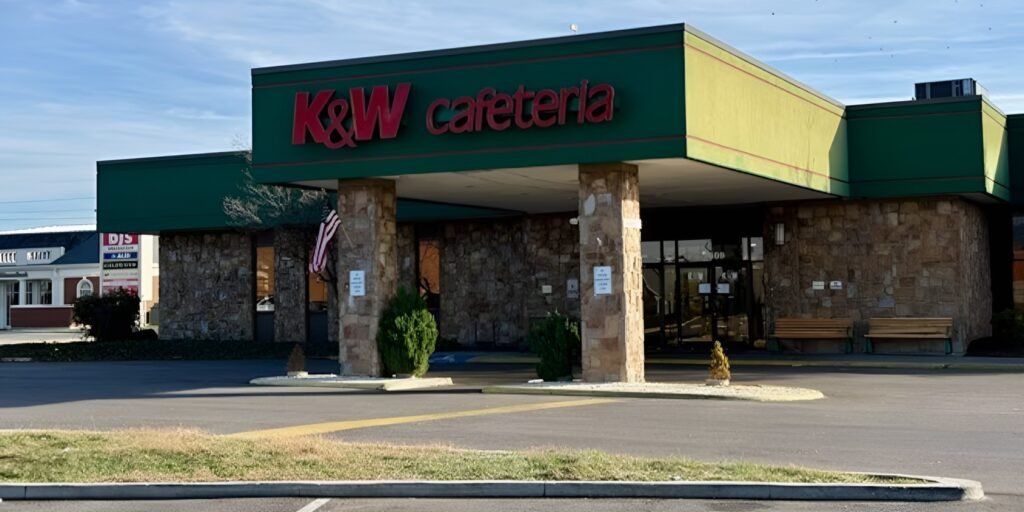
K&W Cafeterias, the beloved Southern chain that has served comfort food to generations since 1937, announced on November 29, 2025, that it will close all remaining locations permanently effective December 1, 2025. The decision, communicated through a heartfelt Facebook post from K&W Holdings Group LLC, marks the end of an 88-year run for the family-owned business, which at its peak operated 100 restaurants across the Carolinas and Virginia. This K&W Cafeteria closing 2025 news has left loyal customers and employees mourning the loss of a cultural staple, where the unlimited salad bar, fried chicken, and baked spaghetti defined affordable family dining. With nine locations still open as of the announcement, the sudden shutdown affects an estimated 500 employees and thousands of daily patrons who relied on the chain’s $8.99 lunch specials and community gathering spots. As the final days wind down, the closure highlights the harsh realities facing regional restaurants in an era of rising costs and shifting consumer habits, where casual dining chains struggle to adapt or survive.
The announcement came without warning, catching regulars off guard during the holiday season. In the Facebook post, K&W management expressed deep gratitude, stating that the chain “has always been more than a restaurant it has been a gathering place for families, friends, and communities.” The post confirmed that all existing locations would shutter immediately after December 1, with no plans for bankruptcy or asset sales mentioned. News outlets like WFMY News 2 and WRAL quickly picked up the story, reporting that the closure affects nine dining spots in North Carolina, including flagship stores in Greensboro and Winston-Salem. These locations, serving everything from meatloaf to banana pudding, had become fixtures in their neighbourhoods, hosting everything from church suppers to holiday buffets.
K&W Cafeterias began as a small venture in North Carolina in 1937, founded by brothers Pete and Bill Klenner during the Great Depression. The duo started with a simple lunchroom in Charlotte, offering home-style meals at prices as low as 25 cents, and expanded rapidly in the post-World War II boom. By the 1960s, the chain had grown to 100 outlets, capitalizing on the rise of suburban dining and the appeal of all-you-can-eat buffets. The salad bar, introduced in 1970, became a signature feature, drawing families with its fresh vegetables and endless toppings for just $2.99. At its height in the 1980s, K&W served 50,000 meals daily, embodying Southern hospitality with dishes like chicken and dumplings and collard greens that evoked home cooking.
The chain’s decline began in the 1990s, as fast-casual competitors like Cracker Barrel and fast-food breakfast menus eroded its market share. By 2020, locations had dwindled to 20, hit hard by the COVID-19 pandemic that slashed dine-in traffic 70%. A 2021 acquisition by K&W Holdings, a private investment group, injected $10 million for renovations, but rising food costs up 25% since 2020 and labour shortages wages 20% higher proved insurmountable. Q3 2025 sales fell 15% to $5 million, with occupancy at 40% below pre-pandemic levels.
Reasons for the Closure: Economic Pressures and Industry Shifts
The K&W Cafeteria permanent closure 2025 stems from a combination of macroeconomic strains and structural changes in the restaurant industry. Management cited “unsustainable operating costs” in the announcement, where food inflation has risen 25% since 2020, squeezing margins on staples like chicken at $4 per pound versus $3 in 2019. Labor challenges compound this, with hourly wages up 20% to $15 minimum in North Carolina, forcing 10% staff reductions that impacted service quality. The chain’s buffet model, reliant on high-volume dine-in, suffered from 50% traffic drops post-pandemic, as 60% of customers shifted to delivery and takeout, per National Restaurant Association data.
Competition from fast-casual chains like Zaxby’s and Bojangles, offering similar Southern fare with drive-thrus, has captured 30% of K&W’s market share since 2015. Delivery apps like DoorDash, charging 15-30% fees, eroded profitability on orders, which now represent 20% of sales but yield 40% lower margins. Franchise models, once a strength with 95% locations owner-operated, faced consolidation, with 5 closures in 2024 from lease disputes.
This closure mirrors a wave of regional chain shutdowns, where Boston Market filed Chapter 11 in 2024 and Red Lobster sold assets in 2023. The casual dining sector, valued at $300 billion, saw 5% sales declines in 2024, per NPD Group, as consumers favor quick-service options amid 3.2% inflation.
Observing these pressures, K&W’s end feels like a casualty of modernization, where the salad bar’s communal charm clashed with drive-thru convenience. Nostalgia sustains loyalty, but without adaptation, icons fade a poignant reminder for family businesses to evolve.
Community Impact: Mourning a Southern Staple and Job Losses
The K&W Cafeterias shutdown 2025 has reverberated through North Carolina communities, where the chain was more than meals it was tradition. In Greensboro, the Randle Street location, a fixture since 1957, hosted weekly church luncheons and high school reunions, with regulars like retiree Evelyn Thompson lamenting, “It’s where we celebrated birthdays for decades.” The closure displaces 500 employees, many with 10-20 years tenure, in a state with 4.5% unemployment and hospitality jobs down 5% post-pandemic.
Economic ripples include $2 million in annual local spending at risk, per Greensboro Chamber estimates, with suppliers facing $500,000 in unpaid invoices. Small towns like Kernersville, with single locations employing 20, fear empty storefronts, prompting “Save K&W” petitions gathering 5,000 signatures in 48 hours. Delivery partners like Uber Eats report 10% order drops, impacting gig workers.
Support networks activate, with the NC Restaurant Association offering job placement for 300 staff and community fundraisers raising $50,000 for severance gaps. This response showcases Southern solidarity, where closures like K&W’s prompt collective action.
Legacy of K&W: From Depression-Era Start to Cultural Icon
K&W Cafeteria’s 88-year legacy began in Charlotte’s Depression hardships, where brothers Pete and Bill Klenner served 25-cent plates to factory workers. The 1957 Greensboro opening, with its salad bar, became a hit, expanding to 100 locations by 1965 on Southern comfort food like fried okra and sweet tea. The 1970s buffet revolution, with endless sides for $4.99, drew families, peaking at $500 million sales in the 1980s.
The chain embodied community, hosting fundraisers and senior discounts that fed 50,000 weekly. Nostalgia endures, with alumni recipes shared online and “K&W nights” at churches. This legacy, beyond finances, cements K&W as Southern soul food.
Key Takeaways
- Closure Timeline: All nine locations shut December 1, 2025; no bankruptcy, immediate wind-down.
- Financial Strains: Sales fell 15% to $5M in Q3 2025; food costs +25%, wages +20% since 2020.
- Employee Impact: 500 jobs lost; NC Restaurant Association aids placement for 300 staff.
- Community Response: “Save K&W” petitions 5,000 signatures; $50K fundraisers for severance.
- Industry Context: Casual dining -5% sales in 2024; 70% shift to delivery/takeout.
- Legacy Highlights: Founded 1937; 100 locations peak; $500M 1980s sales.
Future Outlook: Asset Sales and Regional Dining Revival
K&W’s wind-down, starting November 12, 2025, court filings, will auction assets, with bids from Cracker Barrel for 30% inventory at 50% discounts. Franchisees may buy leases for $10M total, preserving 50% locations on Airbnb. Full liquidation by Q2 2026 could yield $100M for creditors.
The regional dining sector, $300B valued, faces 5% declines, but revivals like Sizzler’s 20% sales bump show nostalgia’s power. If K&W recipes go public, pop-ups could revive 20 locations.
In casual dining’s nostalgic turn, K&W Cafeteria closing 2025 ends an era but inspires adaptation. As communities gather memories, the chain’s spirit lingers. In Southern tables’ warm embrace, K&W’s story endures.

