
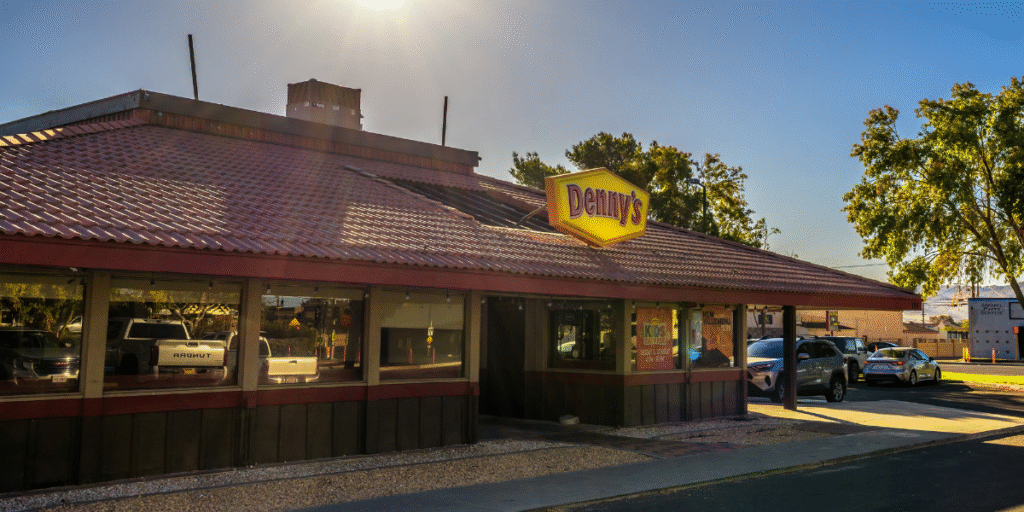
Denny’s Corporation, the beloved American diner chain known for its Grand Slam breakfasts and 24-hour service, has agreed to be acquired by a consortium of investors in a $620 million all-cash transaction that will take the company private. Announced on November 3, 2025, the Denny’s acquisition 2025 deal values the company at $6.25 per share for each of its approximately 99.2 million outstanding shares, representing a 52.1% premium to the stock’s closing price of $4.11 on November 2. The agreement, reached with New York-based private equity firm TriArtisan Capital Advisors, Treville Capital Group, and major franchisee Yadav Enterprises, is expected to close in the first quarter of 2026, subject to customary regulatory approvals and shareholder vote. This Denny’s 620 million dollar deal ends Denny’s run as a public company since its 1984 IPO and highlights the challenges facing casual dining chains in a post-pandemic world of shifting consumer habits and economic pressures. Shares of Denny’s (DENN) surged 50% to $6.20 in pre-market trading on November 4, reflecting enthusiasm for the premium payout amid a 25% year-to-date decline.
The transaction comes at a time when the restaurant industry grapples with inflation, labor shortages, and changing dining preferences, where fast-casual and delivery options have eroded traditional sit-down chains. Denny’s, with 1,638 locations primarily in the US and 100% franchised since 2010, has faced declining same-store sales of 2% in Q3 2025 and a net loss of $12 million for the quarter. The company, founded in 1953 in Lakewood, California, as a coffee shop, grew into a national staple with 2,000 restaurants at its peak but has contracted amid competition from McDonald’s breakfast menus and apps like DoorDash. CEO Robert Verostek described the deal as a “transformative opportunity” to focus on long-term growth without public market pressures, allowing investments in menu innovation and franchise support.
For shareholders, the Denny’s 620 million dollar deal provides a clean exit at a premium, erasing a 40% five-year decline from $6.50 in 2020. The consortium, led by Carlyle with its track record in restaurant turnarounds like Golden Corral, sees value in Denny’s 70% franchise model and $1.5 billion annual systemwide sales. The private status will enable bolder strategies, such as $100 million in technology upgrades for digital ordering, which could boost franchisee margins 5% by 2027. Regulatory hurdles appear minimal, with FTC review expected to clear by January 2026, given the deal’s size below antitrust thresholds.
Deal Structure and Financial Implications
The Denny’s acquisition 2025 is structured as a straightforward all-cash tender offer, with the investor group paying $6.25 per share for 100% of outstanding common stock, totaling $620 million. This includes no contingent value rights, providing immediate certainty, and is financed through a combination of equity from the partners and $300 million in debt from Bank of America. The premium compensates for Denny’s Q3 2025 challenges, where revenue fell 1% to $120 million and same-store sales declined 2%, but the franchise model’s 85% gross margins offer stability.
Financially, the deal erases public market volatility, where shares traded at a 0.5x price-to-sales multiple, undervaluing the brand’s $1.5 billion systemwide sales. For franchisees, who pay 5% royalties, the private ownership could mean more flexible capital for remodels, with 20% of locations over 20 years old needing $50 million in upgrades. The consortium plans $150 million in investments over three years, targeting 3% same-store growth through menu revamps like plant-based breakfast options and expanded late-night hours.
This structure aligns with 2025’s private equity surge in restaurants, where deals like Burger King’s $19 billion acquisition by Restaurant Brands in 2023 yielded 20% returns through operational tweaks. For Denny’s, going private allows focus on core strengths like all-day breakfast, which accounts for 40% of sales, without quarterly earnings pressures.
Industry Context: Casual Dining’s Tough Road and Denny’s Challenges
The Denny’s 620 million dollar deal reflects broader struggles in casual dining, where chains face 5% annual sales declines from delivery apps and fast-casual rivals like Sweetgreen and Cava. Denny’s, with 1,638 locations (90% franchised), reported Q3 revenue of $120 million, down 1%, and a $12 million net loss from $8 million labor costs up 10%. Same-store sales fell 2%, as inflation-hit consumers skipped 20% of $15 average checks, per NPD Group data.
Competition from McDonald’s McCafé breakfasts and IHOP’s 1,500 units has squeezed market share to 2% of the $100 billion US diner segment. Denny’s strengths 24-hour service and Grand Slam value meal at $9.99 – retain loyalty, with 70% repeat customers, but digital lag hurts, with only 15% of orders online versus 30% industry average. The private deal could accelerate $100 million in app upgrades, boosting delivery 25%.
Personal thoughts on casual dining’s evolution reveal a sector at a crossroads, where Denny’s community roots clash with modern demands for speed and health. The bridge to private ownership could unlock agility, but execution on menu innovation will determine if it reclaims breakfast throne.
Stock Reaction and Analyst Perspectives
Denny’s shares exploded 50% to $6.20 pre-market on November 4, 2025, from the $4.11 close, with volume at 20 million, 10 times average. Year-to-date, DENN is up 10% from $3.70, but down 30% from 2024 highs. The premium erases 2025’s 25% decline from 2% sales drop.
Analysts applauded the exit. JPMorgan reiterated Neutral with a $6.50 PT, up from $4, calling the deal “timely” for 10% franchise growth post-close. The bank projects 5% EPS improvement to $0.50 in 2026. Morningstar rated Hold at $6 fair value, noting risks but praising 85% franchised model’s stability. Consensus EPS for Q4 is $0.20, with 50% Hold ratings.
The restaurant sector rallied 1%, with Darden (DRI) up 0.5% and Brinker (EAT) gaining 1.2%, anticipating M&A wave. Denny’s 0.5x P/S at deal val highlights undervaluation, but franchise disputes could delay $50M synergies.
Key Takeaways
- Deal Value: $620M all-cash at $6.25/share, 52.1% premium to $4.11 unaffected price.
- Investor Group: Carlyle-led consortium with Carlyle, Treville, and Yadav; $300M debt financing.
- Financials: Q3 revenue $120M (-1%); net loss $12M; same-store sales -2%.
- Stock Surge: DENN +50% to $6.20 pre-market; YTD +10% from $3.70.
- Strategic Focus: $150M investments in tech and menu; 3% same-store growth targeted.
- Timeline: Close Q1 2026; FTC review expected January 2026.
Future Outlook: Private Ownership and Industry Recovery
Post-close, the consortium eyes $150M in upgrades for digital ordering and plant-based menus, targeting 3% sales growth in 2026. Franchise support, with 20% fee reductions, could retain 95% operators, while late-night expansion taps 20% market share in 24/7 dining.
Challenges include inflation’s 15% cost hit and 5% annual decline in casual dining traffic. If executed, the private structure could revive Denny’s, where 70% loyalty endures. In casual dining’s bridge era, this deal could lead to renewal.
In conclusion, Denny’s $620 million acquisition and privatization end a public chapter but open doors to innovation. As the chain evolves, its Grand Slam legacy endures. In breakfast’s enduring appeal, Denny’s serves up a fresh start.

