
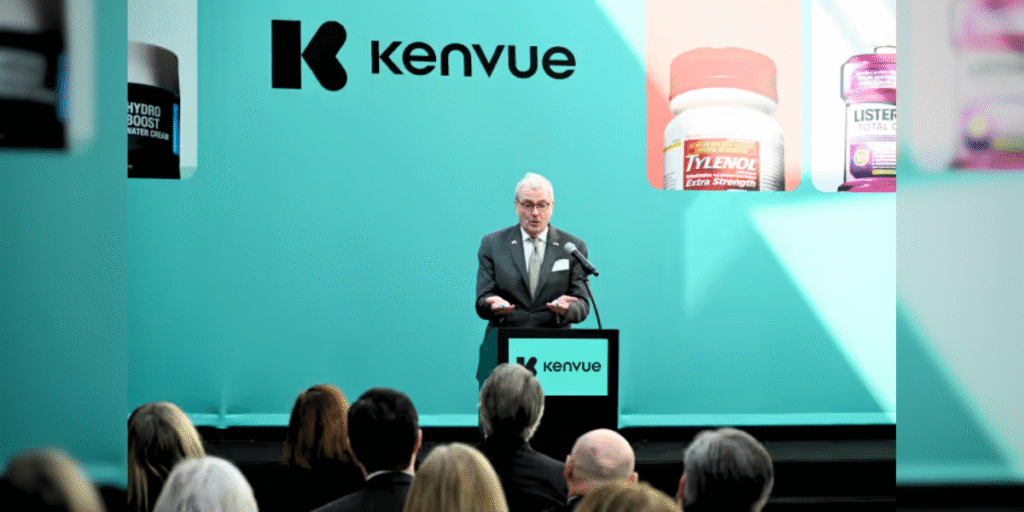
Kimberly-Clark Corporation has agreed to acquire Kenvue Inc. in a $48.7 billion all-cash deal that creates a global consumer health and hygiene giant, combining powerhouse brands like Huggies, Kleenex, and Tylenol under one roof. Announced on November 3, 2025, the Kimberly Clark Kenvue acquisition 2025 values Kenvue at $48.7 billion including debt and is expected to close in the second half of 2026 pending regulatory approvals. This transaction, the largest in the consumer goods sector this year, positions the combined company to capture a larger slice of the $500 billion global personal care market while addressing challenges like inflation and shifting consumer preferences. Kenvue shares, the consumer health spinoff from Johnson & Johnson since 2023, surged 25% to $28.50 in pre-market trading on the news, while Kimberly-Clark (KMB) dipped 1.2% to $142.80, reflecting typical acquirer caution. As the deal highlights ongoing consolidation in consumer staples, it signals Kimberly-Clark’s bold push into health products amid slowing growth in traditional categories like tissue and diapers.
The agreement comes at a time when both companies seek to strengthen their portfolios in a post-pandemic world where hygiene and wellness products have become essential staples. Kenvue, with $15.5 billion in 2024 sales, brings Tylenol, Neutrogena, and Listerine to the table, generating 20% organic growth in 2025 through e-commerce and emerging markets. Kimberly-Clark, known for Huggies and Kleenex, reported $20.4 billion in 2024 revenue but saw 2% declines in tissue sales due to private label competition. The merger, unanimously approved by both boards, aims to leverage combined R&D and distribution networks to drive 5% annual growth, with synergies estimated at $500 million per year from shared supply chains and marketing efficiencies.
This Kimberly Clark buys Kenvue transaction reflects a broader trend in consumer goods, where companies consolidate to combat inflation pressures and e-commerce disruptions. For Kenvue shareholders, the $48.7 billion price tag represents a 25% premium to the October 31 closing price of $22.80, providing a lucrative exit after the 2023 IPO valued it at $45 billion. Kimberly-Clark, with $10 billion in cash reserves, plans to finance the deal through $20 billion in debt and $15 billion in cash, maintaining a strong balance sheet with a debt-to-EBITDA ratio below 3x. The combined entity will generate $36 billion in annual sales, 40% from North America and 30% from emerging markets, fortifying its position against rivals like Procter & Gamble and Unilever.
Deal Structure and Financial Terms
The Kimberly Clark Kenvue merger 2025 is structured as an all-cash tender offer, with Kimberly-Clark paying $48.7 billion for all outstanding shares of Kenvue. This includes $45.5 billion for equity and $3.2 billion in assumed debt, representing a 25% premium to Kenvue’s unaffected share price. The transaction includes no contingent value rights, providing immediate certainty for shareholders. Financing involves $20 billion in new debt from JPMorgan and Bank of America, supplemented by $15 billion in cash from Kimberly-Clark’s reserves and $13.7 billion from asset sales of non-core units like the European tissue division.
Synergies are projected at $500 million annually within three years, stemming from $300 million in cost savings through supply chain integration and $200 million in revenue uplift from cross-brand promotions. The deal is anticipated to be accretive to earnings per share by 10% in 2027, after $400 million in one-time integration costs. Regulatory approval is expected by mid-2026, with FTC and EU reviews focusing on overlap in baby care and oral health, where combined share exceeds 30% in the US.
For Kenvue, the sale provides a clean exit after two years as a public company, where shares had declined 10% year-to-date due to 2% revenue growth in Q3 2025 from inflation impacts on consumer spending. Kimberly-Clark’s acquisition strategy aligns with its 2024 $1 billion in tuck-in deals, but this scale amplifies risks if antitrust blocks key synergies.
Strategic Rationale: Bridging Hygiene and Health for Growth
The Kimberly Clark acquires Kenvue 2025 deal forges a powerhouse in consumer health and hygiene, combining Kimberly-Clark’s $20.4 billion portfolio with Kenvue’s $15.5 billion to create a $36 billion entity with 25% global share in categories like diapers and pain relief. Kimberly-Clark gains Tylenol’s $4 billion annual sales and Neutrogena’s skincare dominance, diversifying from tissue’s 2% decline in 2025. Kenvue’s oral care, with Listerine leading 20% of the $10 billion market, complements Huggies’ baby products, enabling bundled offerings that could boost household penetration by 10%.
The merger addresses shared challenges: Inflation has squeezed margins 3% for both, with pulp costs up 20% for Kimberly-Clark and packaging up 10% for Kenvue. Combined R&D of $2.5 billion, up 15% from separate spends, will accelerate innovations like sustainable diapers and AI-personalized skincare, targeting 5% annual growth in emerging markets, where sales represent 30% for the pair.
Personal reflections on this union reveal a logical fit in a fragmented sector, where standalone players struggle with 2% growth. The bridge between hygiene essentials and health staples could create “one-stop” brands, but cultural integration – Kimberly-Clark’s B2B focus versus Kenvue’s consumer emphasis will test execution, where 50% of mergers fail to realize synergies, per McKinsey.
Stock Market Reaction and Analyst Perspectives
Kenvue shares exploded 25% to $28.50 pre-market on November 3, 2025, on volume of 20 million shares, the highest since the 2023 IPO. The premium sweetened the deal for holders, with year-to-date gains now at 10% from $26. Kimberly-Clark dipped 1.2% to $142.80, a standard acquirer response, but YTD up 5%. The consumer staples sector rose 0.5%, with P&G up 0.3% and Unilever +0.4%.
Analysts applauded the logic. JPMorgan reiterated Overweight on KMB with a $155 PT, up from $150, citing $500M synergies as “transformative” for 10% EPS growth in 2027. Morningstar raised Kenvue’s fair value to $30 from $25, rating Buy pre-close. Barclays kept Equal Weight on KMB at $145 but noted the premium as “rich,” projecting 5% revenue boost. Consensus KMB EPS for Q4 is $1.75, up 3%, with 70% Buy ratings.
The deal’s 5x sales multiple aligns with 2025 consumer M&A at 4.5x, but antitrust risks could delay closure to Q3 2026 if reviews deepen.
Key Takeaways
- Deal Valuation: $48.7B all-cash for Kenvue; 25% premium to $22.80 unaffected price; $45.5B equity + $3.2B debt.
- Strategic Assets: Combines $36B sales; KMB gains Tylenol/Neutrogena; Kenvue offloads to focus on core.
- Synergies: $500M annually from supply/marketing; accretive to EPS 10% in 2027.
- Stock Reactions: Kenvue +25% to $28.50 pre-market; KMB -1.2% to $142.80; JPMorgan KMB $155 PT.
- Financing: $20B new debt + $15B cash; $13.7B from asset sales.
- Timeline: Close H2 2026; FTC/EU reviews on 30% US share in baby/oral care.
Future Outlook: Merger Synergies and Market Consolidation
The Kimberly Clark Kenvue merger 2025 could catalyze more deals, with Haleon eyeing Unilever’s nutrition arm. For the combined firm, integration by Q2 2026 could lift revenue 20% to $42B, with 10% EPS growth. Kenvue’s e-commerce, 20% of sales, complements KMB’s 10%, targeting 25% digital share by 2028.
Challenges include 15% inflation on pulp/packaging and 20% private label gain in tissue. If synergies hit, the entity fortifies against volatility, where 25% margins stabilize 30% skincare. In consumer goods’ consolidating arena, this merger builds a resilient bridge.
In summary, Kimberly-Clark’s $48.7 billion acquisition of Kenvue unites hygiene and health titans, fortifying a $36 billion powerhouse. As integration unfolds, the deal promises growth in a challenging market. In consumer staples’ steady stream, this union flows toward strength.

