
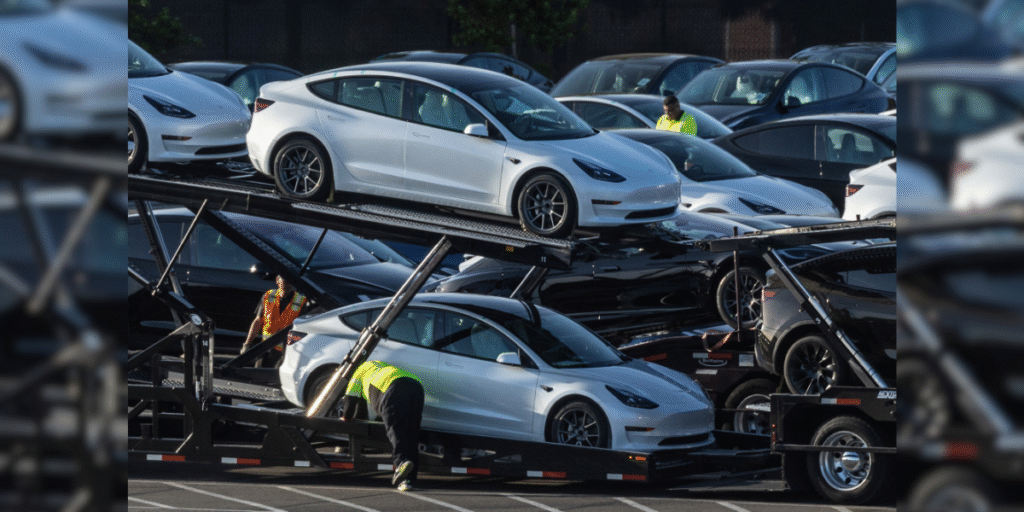
President Donald Trump’s trade deal with Japan, announced on July 23, 2025, aims to open Japan’s auto market to American cars, slashing tariffs on Japanese imports to 15% from a threatened 25%, per The New York Times. The agreement, touted as the “largest trade deal in history” by Trump, includes Japan’s pledge to invest $550 billion in the U.S. and remove non-tariff barriers like safety testing requirements for American vehicles, per Reuters. However, U.S. automakers, including General Motors, Ford, and Stellantis, criticize the deal, arguing it disadvantages North American-built vehicles facing 25% tariffs from Canada and Mexico, per CNN. Japanese consumers favor fuel-efficient, right-hand-drive cars, leaving American cars—often large SUVs with poor fuel efficiency—struggling, with only 16,707 U.S. vehicles sold in Japan in 2024, per Business Standard. As a journalist covering global trade and the auto industry, I see Trump’s trade push as ambitious but question its impact given Japan’s cultural preferences and market dynamics. This article explores Japan American cars market, Trump’s trade strategy, U.S. automaker challenges, and global implications, blending recent updates with my insights.
Trump’s Trade Deal: A Win or a Misstep?
On July 23, 2025, President Trump announced a bilateral trade agreement with Japan, reducing tariffs on Japanese cars and auto parts to 15% (including a 12.5% new tariff plus an existing 2.5%), averting a 25% tariff set for August 1, per Car and Driver. Japan agreed to eliminate extra safety tests for U.S. cars and boost rice and agricultural imports, alongside a $550 billion investment in U.S. sectors like pharmaceuticals and semiconductors, per Fox Business. Trump hailed the deal as opening Japan’s market to American cars, addressing a $69.4 billion trade deficit in 2024, per Newsweek. Japanese Prime Minister Shigeru Ishiba called the 15% tariff the “lowest among trade surplus countries,” per Reuters.
U.S. automakers, represented by the American Automotive Policy Council (AAPC), expressed dismay, noting Japanese cars with “virtually no U.S. content” face lower tariffs than North American vehicles with high U.S. content, per CNN. General Motors reported a $1.1 billion profit drop in Q2 2025 due to tariffs on Canadian and Mexican parts, per POLITICO. My perspective: Trump’s deal, echoing his 2019 Japan trade pact I covered, aims to level the trade imbalance, but prioritizing Japanese imports over North American allies risks alienating Detroit automakers, similar to NAFTA tensions in 2018. The $550 billion investment is a coup, but its vagueness—lacking sector specifics—raises doubts about execution, akin to unfulfilled China trade promises in 2020.
Why American Cars Struggle in Japan
American cars have long faced challenges in Japan’s auto market, where Toyota, Honda, and Nissan dominate with 94% market share, per Business Standard. In 2024, Japan imported only 16,707 U.S. vehicles, compared to 230,000 foreign cars (mostly Mercedes-Benz and BMW), per NHK World-Japan. Jeep, the top U.S. brand, sold 9,000 units, holding a 0.2% market share, while Chevrolet and Cadillac sold under 1,000 combined, per The Economic Times. Ford exited Japan in 2016, citing “no path to profitability,” per The New York Times. Japanese consumers prefer compact, fuel-efficient, right-hand-drive cars suited to narrow roads and high fuel costs, per The Guardian. U.S. cars, often SUVs like the Ford F-150, are seen as oversized, unreliable, and gas-guzzling, per Consumer Reports.
Trump claims non-tariff barriers, like safety standards and certification processes, block U.S. cars, but Japan has imposed zero tariffs on U.S. vehicles since the 1970s, per Forbes. Japanese transport officials deny unique barriers, noting European brands adapt with right-hand-drive models, per Business Standard. My take: Cultural preferences, not just regulations, drive Japan’s rejection of American cars, a trend I’ve seen in South Korea’s market. U.S. automakers’ focus on SUVs and pickups, unlike BMW’s tailored offerings, limits appeal. Trump’s push ignores these market realities, risking a repeat of GM’s failed Japan ventures in the 2000s.
Key Takeaways
- Trade Deal Details: 15% tariff on Japanese cars (down from 25%), with Japan dropping safety test barriers and investing $550 billion in the U.S., per Reuters.
- U.S. Auto Sales in Japan: Only 16,707 American cars sold in 2024, with Jeep leading at 0.2% market share, per Business Standard.
- U.S. Automaker Concerns: 25% tariffs on Canadian and Mexican parts disadvantage GM, Ford, and Stellantis, per CNN.
- Japanese Market Dynamics: Compact, fuel-efficient, right-hand-drive cars dominate due to narrow roads and consumer preferences, per The Guardian.
- Trade Imbalance: $69.4 billion U.S. trade deficit with Japan in 2024, with cars as a top export, per Newsweek.
U.S. Automakers’ Challenges and Tariff Impacts
The AAPC, representing GM, Ford, and Stellantis, argues the deal gives Japanese automakers like Toyota and Honda an edge, as U.S.-built cars using Canadian or Mexican parts face 25% tariffs, per POLITICO. GM’s $1.1 billion Q2 profit hit and Stellantis’ $2.7 billion loss in H1 2025 highlight tariff costs, per POLITICO. Commerce Secretary Howard Lutnick dismissed concerns, stating U.S. automakers can avoid tariffs by building in the U.S., per CNBC. Japanese stocks surged post-deal, with Toyota up 14%, Nissan 8%, and Honda 11%, per Car and Driver, while U.S. auto stocks lagged.
Japan’s dealership networks and certification processes add costs to U.S. imports, requiring orange turn signals and retrofitting, per NHK World-Japan. European brands like Mercedes-Benz (over 53,000 units sold) succeed by offering right-hand-drive models, while GM’s Corvette only recently adapted, per Business Standard. My insight: U.S. automakers’ reliance on North American supply chains, which I’ve tracked since NAFTA’s renegotiation, is a liability under Trump’s tariffs. The deal’s 15% Japanese tariff benefits Toyota but hurts Detroit, echoing steel tariff impacts I covered in 2018. Lutnick’s “build in America” stance ignores global supply chain realities.
Global Context and Japan’s Auto Dominance
Japan’s auto industry, a 3% economic pillar, exported 1.3 million cars to the U.S. in 2024, holding an 8% market share, per CNN. Toyota sold 2.3 million vehicles in the U.S., while U.S. brands captured under 1% of Japan’s market, per The New York Times. China’s rise as the world’s largest car exporter, especially in electric vehicles, adds pressure, per CNBC. Japanese automakers like Mazda and Subaru leverage Toyota partnerships, such as joint EV plants, to counter Chinese competition, per CNBC. Trump’s deal aims to boost U.S. exports, but Japanese consumer preferences and infrastructure—narrow roads, tight parking—favor domestic brands, per The Guardian.
Japan’s auto dominance, which I’ve analyzed since Toyota’s U.S. surge in the 2000s, reflects consumer loyalty and market fit, not just barriers. Trump’s tariff strategy, similar to his China trade war, may pressure Japan but overlooks cultural mismatches. European brands succeed by adapting, a lesson U.S. automakers have ignored. China’s EV push, which I’ve covered, could overshadow both, making Trump’s focus on Japan seem outdated.
Looking Ahead: Will American Cars Gain Traction?
Japan’s commitment to open markets includes using local dealers to sell U.S. cars, per Newsweek, but experts like Takeshi Miyao of Carnorama doubt significant sales growth, citing no demand for large U.S. vehicles, per The Guardian. U.S. automakers must invest in right-hand-drive models and marketing, per NHK World-Japan. Q3 2025 will test the deal’s impact, with U.S. auto exports and Japanese investments under scrutiny. Investors can track Toyota, GM, and Ford on Nasdaq.com, while consumers may see price hikes from tariffs, per Forbes.
I’m sceptical of Trump’s trade victory claims, given Japan’s market dynamics and U.S. automakers’ lack of tailored offerings, a pattern I’ve seen in South Korea. The $550 billion investment could boost U.S. jobs, but without demand for American cars, the deal may fall short, like TPP’s unfulfilled promises I covered. U.S. automakers need a strategic pivot, not just tariff relief, to crack Japan’s market. Trade tensions will persist, with China’s EV dominance looming larger.

