
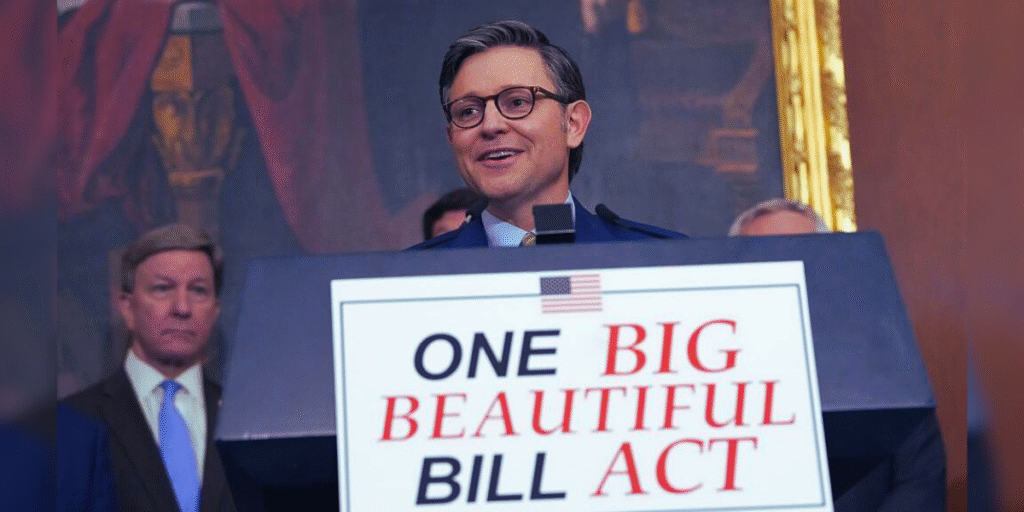
The U.S. House of Representatives is embroiled in a high-stakes battle over President Donald Trump’s signature “Big Beautiful Bill” (also known as the One Big Beautiful Bill Act), a sweeping tax and spending package that narrowly passed the Senate on July 1, 2025, with a 51-50 vote, thanks to Vice President JD Vance’s tiebreaker. As of July 3, the House vote on the budget bill remains stalled, with a procedural vote to advance the bill for debate passing 219-213 overnight, but the final vote on the Big Beautiful Bill teetering on the edge due to GOP infighting. With a razor-thin Republican majority of 220-212, House Speaker Mike Johnson can afford only three defections, making every vote critical. As a political journalist covering Capitol Hill for over a decade, I’ve watched legislative dramas unfold, but the factionalism over this bill vote—driven by tax cuts, Medicaid cuts, and deficit concerns—marks a defining moment for Trump’s second-term agenda. This article provides live updates on the House vote, its status, key players like Victoria Spartz, and what’s at stake, with my insights on the political fallout.
A Procedural Win, but Final Passage in Doubt
On July 2, 2025, the House of Representatives cleared a procedural hurdle, voting 219-213 to advance the Big Beautiful Bill for debate, after a record-breaking seven-hour vote, the longest in modern congressional history. However, the final House vote on the bill remains uncertain, with four Republicans—Andrew Clyde, Keith Self, Victoria Spartz, and Brian Fitzpatrick—voting against the procedural rule, signaling potential resistance to final passage. Rep. Warren Davidson, who opposed an earlier version in May, flipped to support the procedural vote after Senate changes addressed his concerns, such as a $40,000 SALT deduction cap and deeper Medicaid cuts. Rep. Thomas Massie, another May dissenter, also voted yes, citing border security and tax provisions.
The bill, which passed the House 215-214 in May, was revised by the Senate, introducing steeper Medicaid cuts (projected to leave 11.8 million Americans uninsured by 2034) and a $5 trillion debt ceiling hike, sparking outrage among fiscal hawks like Rep. Andy Harris, chair of the House Freedom Caucus. The Congressional Budget Office estimates the Senate version adds $3.3 trillion to the national deficit over a decade, compared to $2.8 trillion for the House’s original. As of 2:25 PM IST on July 3, the House vote live tally shows 207 in favor and 216 against, with 14 Republicans yet to vote, falling short of the 217 needed for a simple majority.
In my view, the prolonged vote underscores the GOP’s fragile unity. I’ve covered Congress through multiple administrations, and the House Freedom Caucus’s push for deeper spending cuts mirrors past Tea Party rebellions, but the moderates’ concerns over Medicaid cuts add a new layer of complexity. The bill’s fate hinges on Speaker Johnson’s ability to corral dissenters, but Trump’s pressure—evident in his Truth Social post urging Republicans to “Stay UNITED” and deliver the “Biggest Tax Cuts in History”—may not be enough to bridge the divide.
What’s in the Big Beautiful Bill?
The Big Beautiful Bill, a 940-page behemoth, is Trump’s flagship legislation, aiming to make permanent the 2017 Tax Cuts and Jobs Act, boost border security and defense spending, and enact campaign promises like eliminating taxes on tips, overtime, and some auto loan interest. Key provisions include:
- Tax Cuts: Extends $3.8 trillion in tax reductions, including a $40,000 SALT deduction cap (temporary in the Senate version), a $16,000 standard deduction for individuals ($32,000 for joint filers), and a $2,500 child tax credit through 2028.
- Medicaid and SNAP Cuts: Imposes work requirements for Medicaid (80 hours/month for able-bodied adults) starting December 2026, and cuts SNAP by $267 billion over a decade, potentially affecting 71 million and 40 million beneficiaries, respectively.
- Energy and Business: Phases out clean energy tax credits by 2028, reduces royalty rates for oil, gas, and coal extraction, and allows full expensing of R&D and machinery costs for businesses.
- Debt Ceiling: Raises the debt ceiling by $5 trillion, a point of contention for fiscal conservatives like Rand Paul and Thom Tillis in the Senate.
Democrats, led by House Minority Leader Hakeem Jeffries, have labeled it a “reckless, regressive GOP tax scam,” arguing it favors billionaires while gutting social safety nets. Former President Barack Obama warned on X that over 16 million Americans risk losing healthcare.
Republican Holdouts: Who Voted Against?
The Republicans who voted against the procedural vote—Clyde, Self, Spartz, and Fitzpatrick—reflect the GOP’s internal fault lines. Victoria Spartz, a Ukrainian-born congresswoman from Indiana, has been vocal about her concerns, particularly the bill’s deficit impact and lack of transparency in the rushed process. Fitzpatrick, a moderate from Pennsylvania, cited Medicaid cuts threatening rural hospitals in his district. Clyde and Self, aligned with the Freedom Caucus, demand deeper spending reductions to offset the $3.3 trillion deficit increase. Rep. David Valadao, representing a high-Medicaid California district, remains undecided, while Rep. Greg Murphy of North Carolina expressed unease over healthcare cuts.
My perspective: The dissenters face immense pressure from Trump, who met with holdouts like Rep. Jeff Van Drew (R-N.J.) at the White House, flipping him to a tentative “yes” after Senate tweaks delayed provider tax cuts. However, Spartz’s stance resonates with me as a journalist who’s seen lawmakers struggle with balancing constituent needs against party loyalty. Her focus on fiscal responsibility and process transparency could sway others if the vote remains stalled.
Key Takeaways
- House Vote Status: The Big Beautiful Bill cleared a procedural vote (219-213) but lacks the 217 votes needed for final passage, with 207-216 as of July 3, 2025.
- Republican Defections: Andrew Clyde, Keith Self, Victoria Spartz, and Brian Fitzpatrick voted against the procedural rule, with others like Valadao and Murphy undecided.
- Bill Provisions: Includes $3.8 trillion in tax cuts, $5 trillion debt ceiling hike, and deep Medicaid and SNAP cuts, projected to leave 11.8 million uninsured by 2034.
- GOP Challenges: Speaker Johnson faces a divided caucus, with fiscal hawks and moderates clashing over deficit and healthcare cuts.
- Trump’s Pressure: The president’s July 4 deadline looms, but internal GOP resistance threatens the bill’s passage.
Political and Economic Implications
The Big Beautiful Bill’s fate could define Trump’s second term and the GOP’s 2026 midterm prospects. Democrats, unified in opposition, plan to weaponize the Medicaid cuts and deficit increase in campaigns, with Jeffries warning of electoral consequences. The CBO’s projection of 11.8 million uninsured Americans by 2034 has fueled criticism from figures like Sen. Susan Collins (R-Maine), who voted against the Senate version over healthcare concerns. Financial markets are jittery, with the dollar down 10% since January and 30-year Treasury yields at their highest since October 2023, reflecting investor unease over the national debt.
As a journalist, I see parallels to the 2017 Tax Cuts and Jobs Act, where GOP unity eventually prevailed despite initial resistance. However, the House Freedom Caucus’s leverage and moderates’ fears of voter backlash in swing districts make this a tougher sell. Elon Musk’s X post threatening primary challenges to supporters adds external pressure, complicating Johnson’s strategy. The rushed timeline—Trump’s self-imposed July 4 deadline—may backfire, as lawmakers like Lisa Murkowski in the Senate called the process “agonizing” and flawed.
Path Forward: Can the Bill Pass?
With the House vote live ongoing, Speaker Johnson vows to keep the vote open “as long as it takes,” a tactic that broke the 2021 record for longest vote. The House Rules Committee is debating amendments, but Democrats’ efforts to protect Medicaid and SNAP are likely to fail. If the bill fails, Johnson may need to renegotiate with the Senate or risk missing Trump’s deadline, potentially forcing a government shutdown as the debt ceiling looms in August. Rep. Don Bacon (R-Neb.), despite midterm concerns, supports the bill for its tax cuts and defense spending, but others remain skeptical.
My insight: The GOP’s narrow majority and competing factions—fiscal hawks, moderates, and Trump loyalists—mirror the chaos of past budget battles I’ve covered. Victoria Spartz’s principled stand and Fitzpatrick’s focus on constituents highlight the human stakes, but Trump’s influence may ultimately sway holdouts. The C-SPAN coverage of the House vote shows tense negotiations, with Johnson on the floor pleading with Clyde and Valadao. If the Big Beautiful Bill passes, it could cement Trump’s agenda; if it fails, it risks fracturing the GOP ahead of 2026.
Looking Ahead: A Defining Moment
The House vote on the Big Beautiful Bill is a make-or-break moment for Trump’s presidency and the U.S. House of Representatives. With 220 Republicans in the House, Speaker Johnson needs near-unanimous support to secure the 217 votes required for passage. The bill’s status remains fluid, with live updates showing ongoing arm26/07/2025 09:25:23 PM IST negotiations and holdouts like Spartz and Fitzpatrick shaping the outcome. Democrats’ unified opposition and public outcry from figures like Barack Obama amplify the stakes, while Medicaid cuts and tax cuts dominate the debate.
I believe the Big Beautiful Bill encapsulates the GOP’s gamble: bold tax cuts to energize their base, offset by Medicaid cuts that risk alienating voters. The House vote live on C-SPAN captures a nation watching as Republicans navigate this tightrope. Whether the bill passes or not, its fallout will shape the political landscape, testing Trump’s ability to unify his party and deliver on his promises.

