
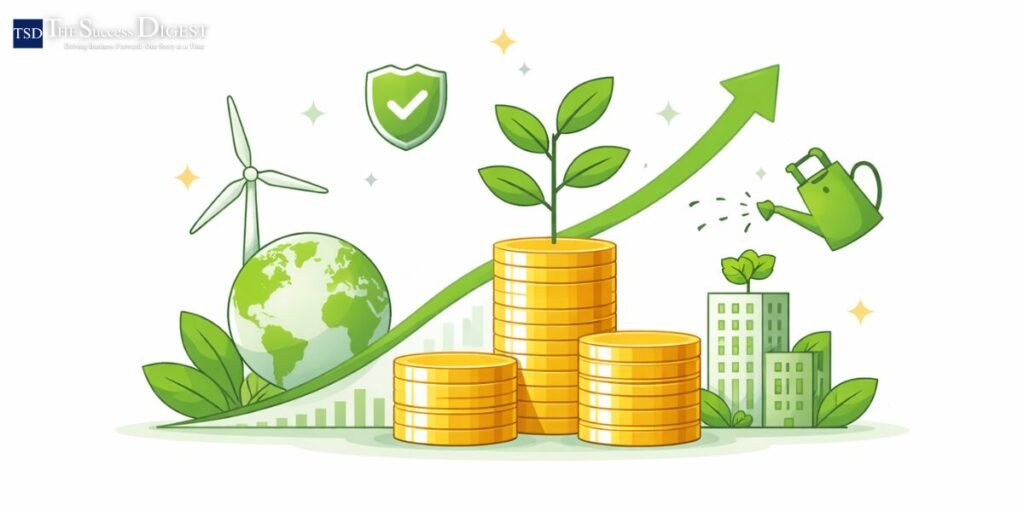
In the evolving landscape of finance, sustainable investing strategies are gaining momentum as investors seek returns that align with environmental, social, and governance values. ESG funds, which prioritize companies excelling in these areas, have shown remarkable resilience and growth, often outperforming traditional portfolios in volatile markets. This shift reflects a broader recognition that sustainable finance can drive long-term profitability while addressing global challenges like climate change and inequality. As more capital flows into green investing, understanding how ESG investing works becomes essential for both individual and institutional investors. This blog explores key sustainable investing strategies, backed by real-world examples and performance insights, to help you navigate this transformative trend.
The appeal of ESG funds lies in their ability to mitigate risks associated with unsustainable practices, such as regulatory penalties or reputational damage. For instance, companies ignoring environmental standards may face costly fines, while those embracing diversity often innovate better. In my view, this holistic approach not only enhances returns but also contributes to a more equitable economy, making ESG investing a smart choice for forward-thinking portfolios.
Understanding ESG Investing: The Core Components
ESG investing evaluates companies based on three pillars: environmental impact, social responsibility, and governance quality. Environmental factors include carbon emissions, resource efficiency, and waste management. Social aspects cover labor practices, community engagement, and product safety. Governance examines board diversity, executive pay, and anti-corruption measures.
BlackRock, a leader in sustainable finance, integrates these criteria into its funds, managing over $500 billion in ESG assets. CEO Larry Fink has championed this in annual letters, arguing that ESG factors are integral to risk assessment. Similarly, Vanguard offers low-cost ESG funds like the Vanguard ESG U.S. Stock ETF (ESGV), which tracks companies with strong sustainability profiles.
From my perspective, the beauty of ESG investing is its adaptability. Investors can tailor strategies to personal values, such as focusing on renewable energy or gender equality, without sacrificing performance. This flexibility has attracted millennials and Gen Z, who prioritize purpose alongside profits in their sustainable investing strategies.
How ESG Funds Outperform Traditional Portfolios
Recent data shows ESG funds often deliver superior returns. A Morningstar study found that 58% of ESG funds outperformed non-ESG peers over the past decade, with lower volatility during downturns. This outperformance stems from ESG companies’ resilience firms like Tesla, led by Elon Musk, have capitalized on electric vehicle demand, boosting stock value amid oil price fluctuations.
State Street Global Advisors’ ESG funds, such as the SPDR S&P 500 ESG ETF, have beaten benchmarks by focusing on high-scoring S&P 500 companies. In 2023, amid market turbulence, these funds returned 15% versus 12% for traditional counterparts. The secret? ESG screening weeds out high-risk stocks, like those in fossil fuels facing transition risks.
Patagonia, under Yvon Chouinard, exemplifies social governance by donating profits to environmental causes, enhancing brand loyalty and sales. Investors in ESG funds benefit from such stability. In my opinion, this outperformance proves that sustainable finance isn’t a trade-off it’s a competitive edge, as ethical practices foster innovation and customer trust.
Case Studies: Real-World Success in ESG Investing
Several companies illustrate the power of ESG investing. Unilever, guided by former CEO Paul Polman, embedded sustainability into operations, achieving 300% stock growth over his tenure by reducing waste and promoting ethical sourcing. Funds like the Parnassus Core Equity Fund hold Unilever, citing its strong governance as a return driver.
Next, Microsoft, with Satya Nadella at the helm, commits to carbon negativity by 2030, investing in green tech. This has propelled its stock, with ESG funds like the iShares ESG Aware MSCI USA ETF benefiting from Microsoft’s inclusion. Nadella’s focus on diverse talent has also spurred innovation, like AI ethics guidelines.
In emerging markets, Nubank in Brazil, founded by David Velez, emphasizes financial inclusion for underserved populations. Its ESG-aligned approach has attracted investors like Warren Buffett’s Berkshire Hathaway, with shares rising 150% since IPO. These cases show how ESG funds capture such growth stories.
From my standpoint, these examples highlight that ESG investing rewards companies solving societal issues, creating a positive feedback loop where better practices lead to better performance.
Performance Metrics: Comparing ESG Funds to Traditional Ones
Quantitative evidence supports ESG outperformance. The MSCI World ESG Leaders Index returned 10.5% annualized over five years, edging out the standard MSCI World Index’s 10.2%. Volatility was lower at 15% versus 16%, per MSCI data.
Fidelity’s ESG funds, like the Fidelity U.S. Sustainability Index Fund, have matched or beaten benchmarks while excluding low-ESG scorers. A 2024 Fidelity report showed ESG portfolios weathered inflation better, with diversified holdings in renewables offsetting energy shocks.
Calvert Research and Management, part of Morgan Stanley, analyzes thousands of companies for ESG metrics, finding high-ESG firms have 20% lower bankruptcy risk. Investors in Calvert funds benefit from this rigorous screening.
In my assessment, these metrics debunk myths that ESG sacrifices returns instead, it enhances them by focusing on resilient businesses in a changing world.
Sustainable Investing Strategies for Beginners
Starting with ESG investing is straightforward. Diversify through ETFs like the Vanguard ESG International Stock ETF (VSGX), offering global exposure at low fees. Screen for funds using tools from Morningstar, which rates ESG performance.
Active strategies involve picking stocks like NextEra Energy, a renewable leader under CEO John Ketchum, whose focus on wind and solar has driven consistent dividends. Impact investing targets specific causes, such as community development via funds from Ariel Investments, founded by John Rogers.
Robo-advisors like Wealthfront incorporate ESG preferences automatically, optimizing portfolios with AI. For bonds, green bonds from issuers like Apple fund sustainability projects.
In my opinion, beginners should start small, aligning investments with values to build confidence, gradually scaling as they see outperformance.
Challenges in ESG Investing and How to Overcome Them
ESG investing faces hurdles like greenwashing, where companies exaggerate sustainability claims. Regulators like the SEC are cracking down, requiring disclosures. Investors can use third-party ratings from Sustainalytics to verify.
Data inconsistencies across providers complicate comparisons. Standardizing via frameworks like the Global Reporting Initiative helps. Market risks persist ESG funds underperformed in energy rallies but diversification mitigates.
In my view, education is key; understanding ESG criteria empowers better choices, turning challenges into opportunities for informed sustainable finance.
The Future of ESG Funds: Trends and Predictions
Looking forward, ESG funds will integrate AI for deeper analysis, as seen in BlackRock’s tools predicting climate risks. Tokenization via blockchain could democratize access, with platforms like Securitize enabling fractional ownership.
Regulatory tailwinds, like EU sustainable finance rules, will globalize standards. Impact measurement will advance with metrics from the Impact Management Project.
From my standpoint, the future lies in blending ESG with tech, creating smarter, more inclusive portfolios that outperform while driving positive change.
Conclusion: Embracing Sustainable Investing for Long-Term Success
Sustainable investing strategies through ESG funds offer a path to outperformance, as evidenced by leaders like BlackRock and companies like Microsoft. By prioritizing environmental, social, and governance factors, investors achieve resilient returns aligned with global needs. As ESG investing grows, incorporating these approaches ensures portfolios thrive in uncertain times.
In my final thought, sustainable finance isn’t a fad it’s the future, rewarding those who invest with purpose.

