
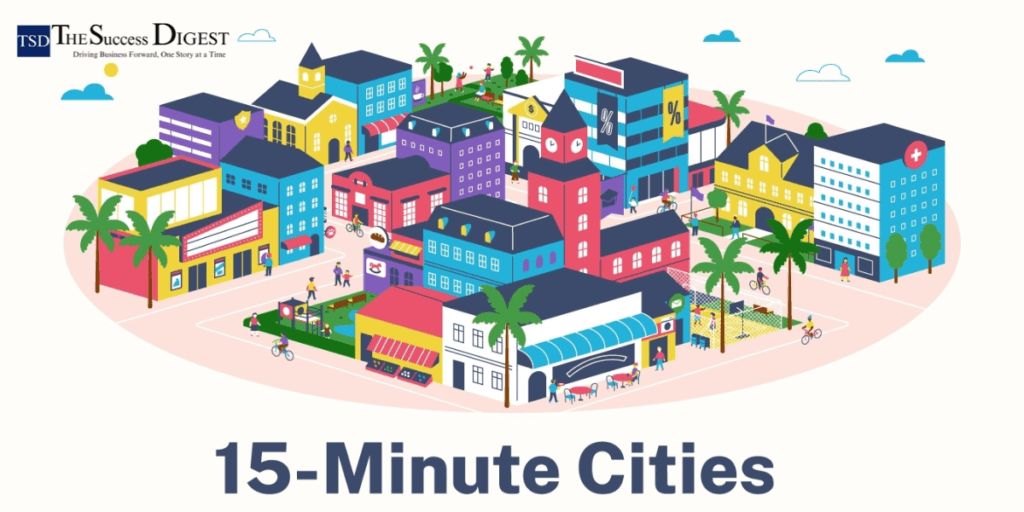
The 15-minute city is an urban planning concept gaining traction worldwide. It envisions a city where residents can access essential services, amenities, and green spaces within a 15-minute walk or bike ride from their homes. This approach prioritizes local living and aims to create more sustainable, equitable, and livable urban environments.
Key Principles of the 15-Minute City:
- Mixed-use Development: Integrating residential, commercial, and cultural spaces within neighborhoods to reduce the need for long commutes.
- Enhanced Public Transportation: Investing in efficient and accessible public transportation options to connect residents to different parts of the city.
- Prioritizing Walking and Cycling: Creating safe and dedicated infrastructure for pedestrians and cyclists, such as bike lanes, pedestrian walkways, and greenways.
- Green Spaces and Parks: Incorporating abundant green spaces, parks, and community gardens to enhance quality of life and promote physical activity.
- Local Businesses and Services: Supporting local businesses and services to create vibrant and self-sufficient neighborhoods.
Benefits of the 15-Minute City:
- Reduced Car Dependency: By making it easier to access essential services within walking or biking distance, the 15-minute city aims to reduce car reliance, leading to decreased traffic congestion, reduced air pollution, and improved public health.
- Improved Quality of Life: Increased access to green spaces, recreational facilities, and community amenities can enhance residents’ overall well-being and quality of life.
- Economic Growth: By supporting local businesses and creating vibrant neighborhoods, the 15-minute city can stimulate economic growth and create jobs.
- Social Equity: By making essential services more accessible to all residents, regardless of income or mobility, the 15-minute city can help to reduce social inequalities.
- Environmental Sustainability: By promoting sustainable transportation and reducing reliance on cars, the 15-minute city can contribute to a more sustainable and environmentally friendly urban environment.
Examples of Cities Implementing 15-Minute City Concepts:
- Paris: Paris has been a pioneer in the 15-minute city concept, with Mayor Anne Hidalgo implementing various initiatives to make the city more walkable and bikeable.
- Madrid: Madrid has also embraced the 15-minute city concept, investing in public transportation and creating “superblocks” to prioritize pedestrian and cyclist traffic.
- Melbourne: Melbourne is another city that has been actively implementing the 15-minute city concept, with a focus on creating vibrant and walkable neighborhoods.
Challenges and Considerations:
- Implementation Costs: Implementing the 15-minute city concept can be costly, requiring significant investments in infrastructure and public transportation.
- Existing Urban Fabric: Adapting existing urban areas to the 15-minute city model can be challenging, requiring careful planning and consideration of existing infrastructure and land use patterns.
- Community Engagement: Successful implementation of the 15-minute city requires strong community engagement and buy-in to ensure that the needs and priorities of residents are reflected in the planning process.
The 15-minute city represents a promising approach to urban planning that can create more livable, equitable, and sustainable cities for all. By prioritizing local living and reducing car dependency, this model can contribute to a healthier, happier, and more sustainable future for urban dwellers.

